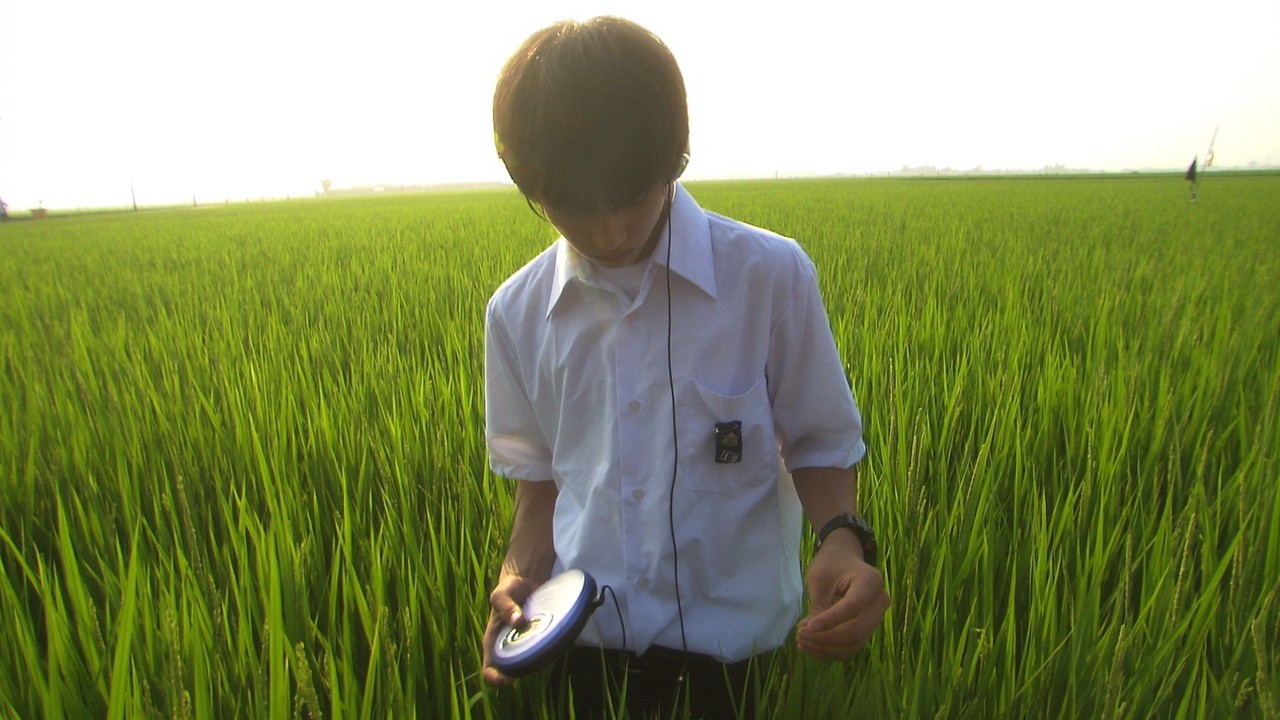
Yuichi is 14-years-old. At school he is a daily victim of bullying and abuse and his life is hell. During this difficult period, the popular singer Lily Chou-Chou is the only thing that matters to him, and only her songs help him to survive. All day long he keeps to his room managing a web fan club on Lily Chou-Chou called “liliphilia.” One day “philia,” (Yuich’s Internet handle) encounters another passionate Lily fan on the site named the “Blue Cat”…. The year before Yuichi had been perfectly happy. He had still never heard of Lily Chou-Chou and he had become friends with Hoshino. They were the best of friends and spent every free moment together. But Hoshino changed over vacation. After beating up and even humiliating the one-time school bully, he becomes the head of his own gang and unbelievably picks out Yuichi as one of his victims. That’s when Yuichi finds Lily Chou- Chou and he draws strength from her. But thanks to Lily Chou-Chou Yuichi meets the Blue Cat, the only one who really understands him. Lily Chou-Chou is giving a concert on December 8, 2000, and Yuichi is understandably very excited. He never dreams that tragedy awaits him…. The films starts off with a Lily Chou-Chou chat site called Lilyholic where fans are hotly discussing the singer. They are trying to decide what affect Lily’s music has on her fans, and they also talk about a case, now several years old, concerning a murdered secondary school student. At the same time one of Lily’s fan sites, “liliphilia,” suddenly stopped working….–Karlovy Vary International Film Festival
The standard bearer of the 1990s new wave of Japanese film, Shunji Iwai cranked out some of that country’s hippest, hottest, and most popular movies. A self-styled eizo sakka, or visual artist, Iwai is a filmmaker equally at home directing commercials, TV dramas, rock videos, and feature length pictures. Though older critics have blasted his films for lacking depth and for borrowing from 1970s experimental auteur Shuji Terayama, Iwai understands that for an audience weaned on MTV, the image is the movie. Slick and oozing with style, his films consistently have an uncanny resonance with 1990s Japanese pop culture, making him one of the most important directors of his generation.
Born on January 24th, 1963, in the northern city of Sendai, Iwai started his filmmaking career in 1988 directing music videos and television dramas. Though he was already garnering considerable buzz by 1993 for his acclaimed one-hour late-night TV dramas Fried Dragon Fish and Uchiage Hanabi: Shita kara… read more
AALCC solves problem of not having a story by making all characters look and dress same to become one omni-character encompassing a spectrum of possible motivations, alignments, & reactions. Yuichi & Hoshino are our oppressed/oppressor entry points, but their individualities disintegrate into an Internet blur familiar to us from daily consensual shellacking by the Feed. We become by typing; evil is but one username.
The kids are not all right in this film. Mesmerizing and unforgettable for so many things: acting, direction, cinematography, music and story. A microcosm of sort of Japanese youth culture: bleak and hopeless, contrary to the powerful image of progress and elegance of this nation's economy. The film's ending is all for the audience to complete. But am all for a brighter hopeful future. Definitely.
If the nineties were the years which marked the return of Japanese cinema on the international film circuit, introducing and establishing
So you’re in the mood for love and devastation but you don’t want to leave the internet? Neither does anyone else! Especially when you’re a nerdy teen filled with oh-so painful emotions(!)
To… read review
I really really love this movie! I totally agree that the story is a bit hard to understand, especially when its mixed with various chatroom conversations and the frequent jump-cuts. Though, firstly… read review
It has many unexplained situations and behaviour, nothing is given first hand and you even have to be aware of the background to get the whole picture. The passivity of the main character is disturbing… read review