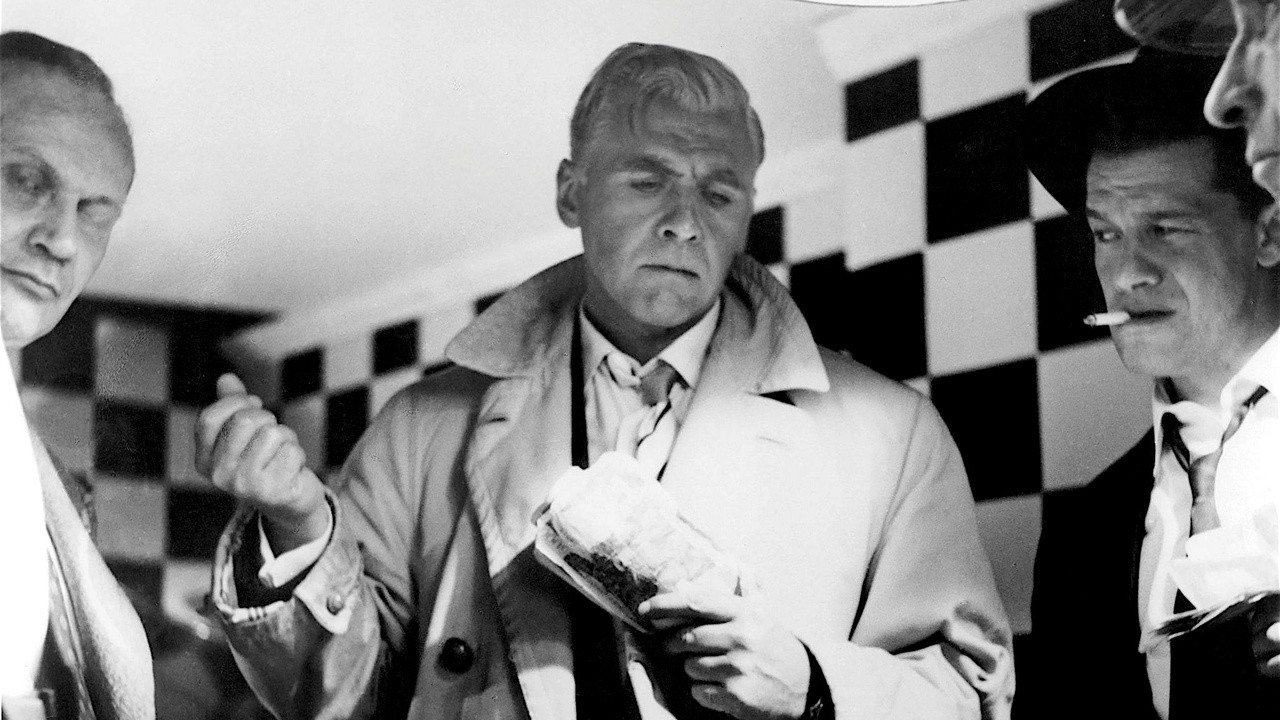
Suffused with wry humor, Jean-Pierre Melville’s Bob le flambeur melds the toughness of American gangster films with Gallic sophistication to lay the roadmap for the French New Wave. As the neon is extinguished for another dawn, an aging gambler navigates the treacherous world of pimps, moneymen, and naïve associates while plotting one last score—the heist of the Deauville casino. This underworld comedy of manners possesses all the formal beauty, finesse, and treacherous allure of green baize. —The Criterion Collection
Jean-Pierre Melville (born Jean-Pierre Grumbach) was an amateur filmmaker as a teenager who, after the start of World War II, began making his own independent short and feature films. He hit his stride in the ‘50s with his memorable adaptation of Jean Cocteau’s novel, Les Enfants Terribles, and, over the next 20 years, specialized in intelligent and exciting crime films, most notably Bob le Flambeur, Le Doulos (aka The Finger Man), Le Samouraï, Le Cercle Rouge, and Un Flic. Melville also acted in his own Deux Hommes Dans Manhattan, as well as Cocteau’s Orphee, Jean-Luc Godard’s À Bout de Souffle (aka Breathless), and Claude Chabrol’s Landru (aka Bluebeard). He died in 1973.
(From http://www.allmovie.com/cg/avg.dll?p=avg&sql=2:102465 )
Melville specialised in bleak crime movies but the first one he made in the crime genre is lighter in tone, if still melancholic. Bob is an ageing ex-con who sets up a raid on a casino after a run of bad luck at gambling leaves him broke. This great film, set mostly between the hours of dusk and dawn, has been described as 'Melville's love letter to Paris' and captures to perfection the moody atmosphere of the city..
A very well made heist film which focuses mostly on the planning of the heist and very little on the execution. The exploration of Bob the Gambler's character and how he relates to the criminals, dames, and cops in his life is fascinating and proceeds with careful slow development.
Certain shots linger in the mind for reasons that are unquantifiable, unexplainable. For some reason this image of a casino at dusk, repeated
Jean-Pierre Melville’s first unquestionably great film is this famous heist yarn from the mid ’50’s, which was so original in its independent spirit, shot on the fly when money was available, that… read review