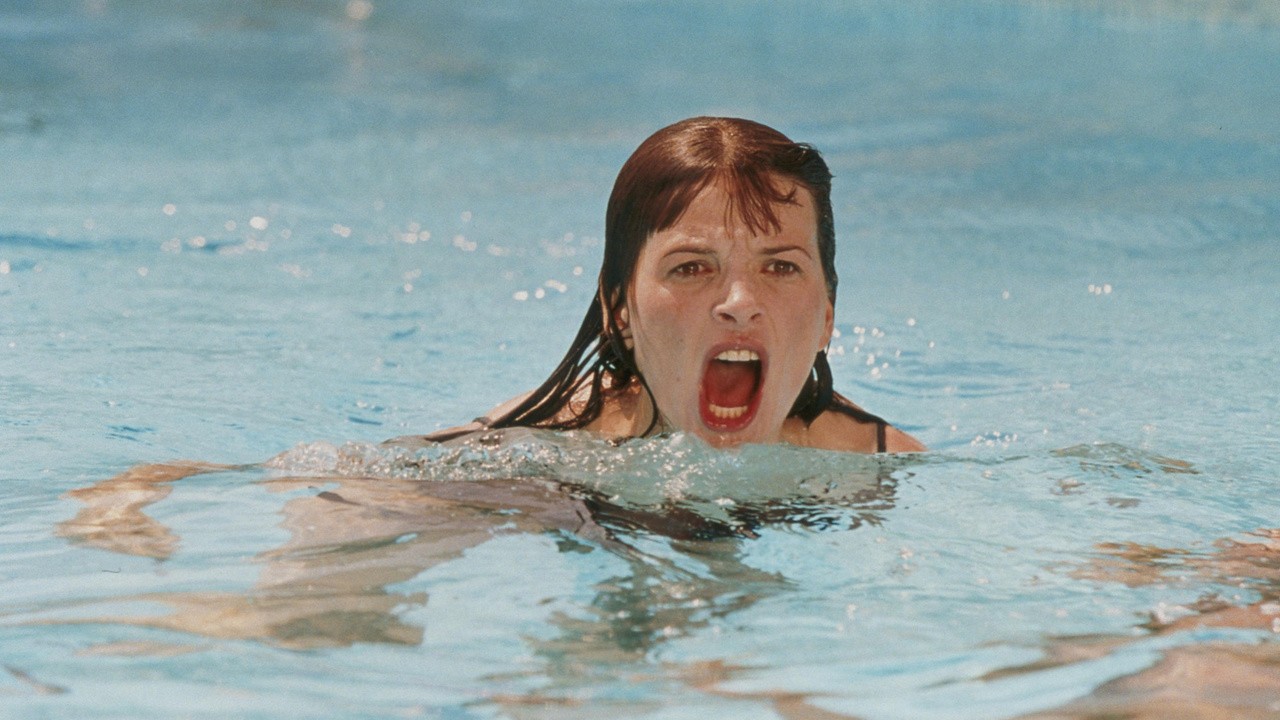
On a busy Paris boulevard, a youth scornfully tosses a crumpled paper bag into the outstretched hands of a beggar woman. This is the bond which, for an instant, links several very different characters: Anne (Binoche), an actress; her war photographer boyfriend Georges; his farmer father and younger brother Jean, who, contrary to his father’s wishes, has no interest in inheriting the farm; Amandou, a music teacher for deaf-mute children, and his family, who originate from Africa; and Maria a Romanian immigrant.
Written and directed by Michael Haneke, one of modern cinema’s most distinctive and ambitious directors, CODE UNKNOWN is a complex film of powerful emotional force and a fascinating study of the subtle connections and barriers between people, social class, race, and the difficulty of communicating in the modern world.
Cheerfully wishing his audience a “disturbing evening” at a London retrospective of his films, director Michael Haneke insists that he is an optimist at heart, despite all of the relentlessly bleak carnage and deeply disturbing imagery so vividly painted and seared into the mind of anyone who has had the uncomfortable experience of viewing his work.
Practically born into show business, to an actress mother and director father, in Munich in March 1942, Haneke spent his early years in a working class suburb of Vienna before an early attempt at fame as an actor and pianist. Failing to achieve early success, Haneke attended the University of Vienna to study philosophy and psychology, and became a film critic and stage director before making his eventual debut as a television director with After Liverpool in 1973. Setting in motion a television career specializing in literary adaptations and small screen films, Haneke would work successfully in that medium until his feature debut… read more
It is extremely difficult to compose a synopsis of Code Unknown. This is not only because of the film’s unconventional narrative structure that interweaves many different stories contained within it… read review