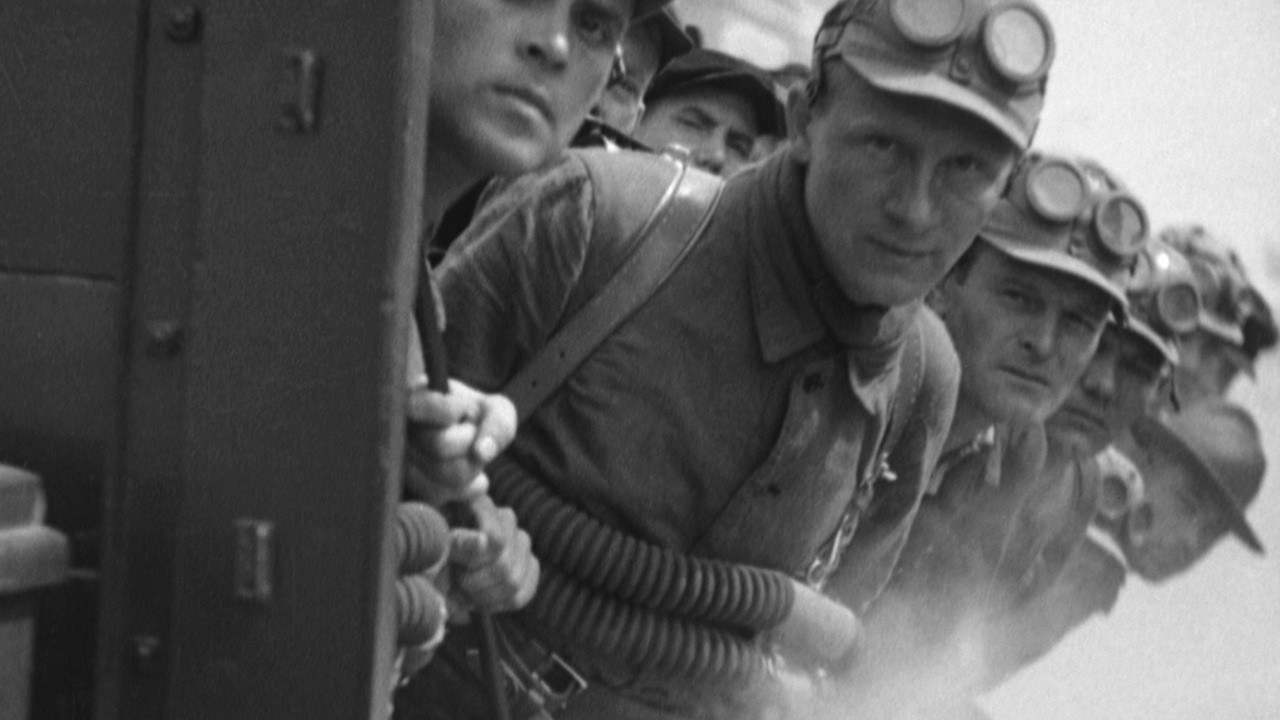
Comradeship is based on a reconstruction of a pit disaster that occurred in Courrières near the border between France and Germany in 1906.
Fire has broken out in the pit on the French side. The management lacks the modern equipment necessary to fight the fire and rescue the trapped miners. All the facilities are available in the adjacent German pit which has been separated off by an underground fence since 1919. However, the directorate only grants permission to start a rescue mission when it is compelled to do so by the miners. A small group breaks through the underground border fence, while other miners speed across the border in trucks to help their French comrades. The opposing forces are shown in a very dense scene: a trapped French miner sees the Germans coming to help him as the enemy from the first World War instead of as rescuers. The successful rescue work is followed by a dual conclusion: the idealistic prospect of international solidarity among the workers and its realistic disillusionment. The fence separating the German and French mines is repaired and then checked by an official; full of satisfaction, he claims that “no one can get through here now”. —German Film Archive
Born in Bohemia to Viennese parents, director G. W. Pabst made only one American film in his career, yet became the darling of U.S. critics and movie historians for a handful of brilliant silent works. Pabst studied at Vienna’s Academy of Decorate Arts, then embarked on a theatrical career in 1906. He worked as a stage director in Europe and briefly in New York with a German-language company until World War I. Back in Vienna in the early 1920s, Pabst was one of the vanguards of the experimental theater movement. This led to an interest in the less-confining vistas of film. Establishing himself as a movie director in 1923, Pabst made his mark by turning out productions of pessimistic realism, intermixed with unstressed impressionism. He directed Garbo in A Joyless Street (1925), then helmed the pioneering Freudian drama Secrets of a Soul (1926). Pabst helped create the “Louise Brooks mystique” by casting the expatriate American actress in two of his most elaborate (and most heavily censored… read more