MUBI brings you a great new film every day.  Start your 7-day free trial today!
Watch a new film every day for $4.99.
Try MUBI for FREE.
 

Contempt

Le mépris

France

1963

103 Min
Color
2.35:1
English, German, Italian, French
  • Currently 4.1/5 Stars.
  • 1
  • 2
  • 3
  • 4
  • 5

   |   

DIR Jean-Luc Godard

PROD Georges de Beauregard, Carlo Ponti, Joseph E. Levine

SCR Jean-Luc Godard, Alberto Moravia

DP Raoul Coutard

CAST Brigitte Bardot, Michel Piccoli, Jack Palance, Giorgia Moll, Fritz Lang

ED Agnès Guillemot

MUSIC Georges Delerue

SOUND William Sivel

Synopsis

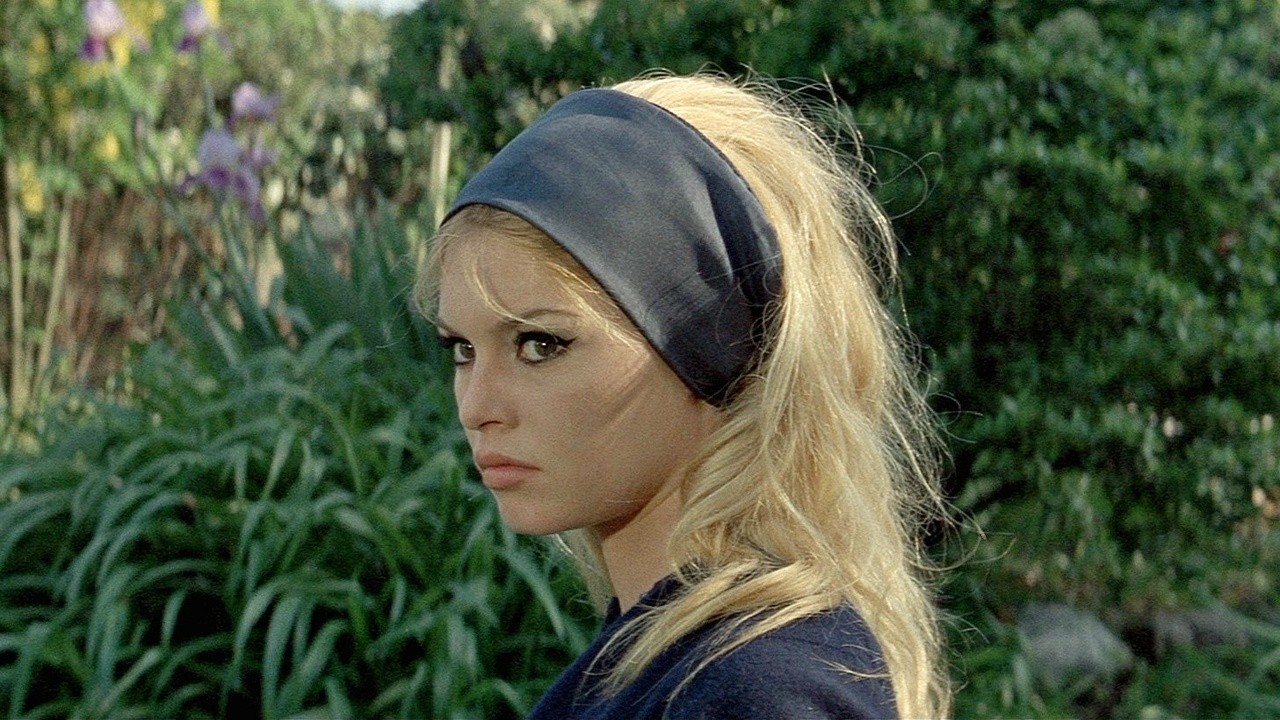
Jean-Luc Godard’s subversive foray into commercial filmmaking is a star-studded Cinemascope epic. Contempt (Le mépris) stars Michel Piccoli as a screenwriter torn between the demands of a proud European director (played by legendary director Fritz Lang), a crude and arrogant American producer (Jack Palance), and his disillusioned wife, Camille (Brigitte Bardot) as he attempts to doctor the script for a new film version of The Odyssey. —The Criterion Collection

Director

Original

Jean-Luc Godard

The lynchpin of the French New Wave, Jean-Luc Godard was arguably the most influential filmmaker of the postwar era. Beginning with his groundbreaking 1959 feature debut A Bout de Souffle, Godard revolutionized the motion picture form, freeing the medium from the shackles of its long-accepted cinematic language by rewriting the rules of narrative, continuity, sound, and camera work. Later in his career, he also challenged the common means of feature production, distribution, and exhibition, all in an effort to subvert the conventions of the Hollywood formula to create a new kind of film.

Godard was born in Paris on December 3, 1930, the second of four children. After receiving his primary education in Nyon, Switzerland – during World War II, he became a naturalized Swiss citizen – he studied ethnology at the Sorbonne, but spent the vast majority of his days at the Cine-Club du Quartier Latin, where he first met fellow film fanatics Francois Truffaut and Jacques Rivette. In May… read more

Wall

Displaying 4 of 84 wall posts.
Picture of laurence besnard-scott

laurence besnard-scott

5Jun13

The ultimate definition of what cinema is: -Jerry Prokosh: 'You've cheated me, Fritz. That's not what is in that script'. -Frizt Lang: 'It is!' -J.P.: 'But it's not what you have on that screen!' -F.L.: 'Naturally, because in the script it is written, and on the screen, it's pictures. Motion pictures, it's called'.

Picture of ElTigreNegro

ElTigreNegro

2Jun13

“Someone like Jean-Luc Godard is for me intellectual counterfeit money when compared to a good kung fu film.” -Werner Herzog

Picture of actingoutpolitics

actingoutpolitics

14May13

Jean-Luc Godard’s “Contempt/Le mepris” (1963) is the first part of his religious trilogy, followed by “Hail, Mary” (1985) and “Woe Is Me” (1993). While “Contempt” examines the psychological mechanism of relations between humans and gods of pagan “design” – the human humans (the people with psychology of god-worshippers) and the human gods (people with psychology of unconscious identification with gods), “Hail, Mary” analyzes the psychological roots of the Christian cult of Saint Mary, and “Woe is Me” – the return of pagan gods into post-Christian modernity in a form of technological constructions, tools and toys dominating people’s life in Western democracies. In his analysis of religious psychology Godard separates people from religious (in a narrow sense) practices and metaphorizes these practices on personal and social relations between people in order to make their religious essence more articulate and vivid for the perception of the viewers. Religious psychology is not necessary creates loyalty to despotic dogmas (many atheists are very religious by psychology). In “Contempt” Godard shows how religious feelings show itself in private relations between Paul (Michel Piccoli), a modest writer of detective stories but educated and with an exceptional existentially spiritual taste person, and his wife Camille (Brigitte Bardot), a monumental beauty, and in social relations between Paul (identifying with Homer and Odyssey) and the mighty Hollywood producer Jeremiah Prokosch (the new incarnation of Poseidon/Neptune), played by Jack Polance in the only intellectually serious performance of his whole career. The both “gods” – Camille and Prokosch, are depicted with tender and subtle caricaturishness, while Paul’s destiny Godard generalizes as that of us all, the humanity. Godard deconstructs the relations between humans and gods as known in history - as metaphoric constructions of markedly sociomorphic relations between human beings as such (personified by Paul) and the human gods (personified by Camille and Prokosch). On the level of the plot the film describes the disagreements between Paul (the author of screenplay), Fritz Lang (the director) who plays himself, and Prokosch (the producer) – all trying together to make a film based on Homer’s Odyssey. But Godard’s scholarly intentions in the film are not limited to symbolizing a certain type of relations between human beings into relations between humans and gods. The second important scientific contribution of Godard in “Contempt” is his classification of the types of bonds human beings are prone to establish between themselves and our historical past, and themselves and any work of art they perceive and react on. Here Prokosch personifies the type of perception of the past which is based on our projection into the historical past of our self-aggrandizement (our megalomaniacal need). For him Ancient Greece is a kind of Olympus in comparison with today’s life. This is, essentially, a conservative position based on authoritarian/totalitarian behavioral habits including the proneness for religious or secular cult of ancestors. The second position is represented by Lang who tends to “objectively” study the human past without the need for any identification with it. This position is that of liberal scholars – it’s the accumulation of a kind of an archival knowledge about the past without any worshipful or critical emotions. The third position is represented by Paul who sees in people of the previous epochs our existential brothers. He learns from the past and from the art and understood that people who lived before us made their own attempts to resolve their problems with gods as idealized models (theologized, from Olympus, or living on the Olympus of the tops of the social hierarchy), as we today trying to with the human gods of our times. Existential identification with our ancient ancestors is simultaneously brotherly and critical. The same three positions – projection of self-aggrandizement (or its negative reflection – the dismissal: “I love-I hate” approach), “objective” position of “neutral/truthful” representation, and existential identification Godard discerns in our relations with works of art. “Contempt” occupies not only a unique place in history of cinema and Western culture in general, but a distinguished place of an exemplary work of art. Victor Enyutin Please, visit: www.actingoutpolitics.com to read an essay about the film (with analysis of stills from it) – “Psychology of Human Obsession with Super-human (Human Need for Association with Gods as a Result of Problems in Relations between People)”.

Ibnu Akbar likes this

Picture of Sudipto Basu

Sudipto Basu

22Apr13

Finally a Godard film that I can claim to love, and not just admire from a distance. I love how manipulative and yet distancing the grand score is (precisely because it takes the manipulation to an extreme with those crescendos). Also, even though it's almost counter-intuitive, the winding nature of conversations is truer to life than we may accept at first.

Armina Stepan likes this

Related Films

Fans

Displaying 5 of 3343 fans.

Articles

Our roundup of essays and articles on this film.
W184

The Noteworthy: Interiors, Zona, and Shots in the Dark

By Adam Cook on July 18, 2012

This week we highlight a unique film journal, a couple of recent Q&As and a review of a new book on Andrei Tarkovsky’s Stalker.

read article
W184

Daily Briefing. Bergman's Videos, Antonioni's Docs and More

By David Hudson on April 6, 2012

Also: Posters for this year’s Directors’ Fortnight and Critics’ Week, “Great Directors” in San Francisco, Picasso in London and more.

read article
W184

Michel Piccoli @ 85

By David Hudson on December 27, 2010

"Admirers of Michel Piccoli know better than to ignore any film, however slight, that is anchored and calmed by his presence," wrote Anthony

read article
W184

Lost Sounds and Soundtracks. The Other "Contempt"

By Ignatiy Vishnevetsky on December 19, 2010

The shocking reveal of an alternate score to Godard’s Contempt, one for the Italian release, done by the prolific Piero Piccioni.

read article
W184

Topics/Questions/Exercises Of The Week—13 November 2009

By Glenn Kenny on November 13, 2009

On The Evolution Of CinemaScope: Or, of you're going to be a stickler about names of formats and such, "The 2.35:1 Or So Aspect Ratio." Above

read article
W184

The Auteurs Daily: NYFF. Everyone Else

By David Hudson on October 8, 2009

"Following her 2003 debut The Forest for the Trees, 32-year-old German writer-director Maren Ade's trenchant, funny, and sensitive Everyone

read article
W184

Some notes on "Made in USA": Detective

By David Phelps on January 7, 2009

One of the greatest mysteries of Jean-Luc Godard’s Made in USA (1966) is just what the mystery is. Ex-journalist Anna Karina slinks around in

read article

Lists

Displaying 5 of 663 lists.

Reviews

Displaying 4 of 10

Le Mépris (1963)

By Igor Varga on December 12, 2010

Again the issue is – a couple. The faces are different (Michel Piccoli, Brigitte Bardot), but the couple that is disappearing before our eyes are Jean-Luc Godard and Ana Karina. Long scenes preview…  read review

Untitled

By Rocco on November 30, 2009

I’m not equipped to write a full review but I must express my contempt for this film. I’ve attempted to watch it on three or more occasions and cannot get past the hour mark. The film’s pacing is so…  read review

Untitled

By timotay​o on September 6, 2009

In short, a contemplative, contemporary and curious look at…contempt.

Jean-luc Godard is fascinating. I am drawn to his audacity. To deliberately go against whatever…in the medium of film…  read review

Untitled

By HUSKY CZECH on September 2, 2009

Honestly, in a movie this drawn-out, I don’t care how important the message is. It was okay for the first ~45 minutes, and yes, the casa malaparte is amazing, brigitte is beautiful, the music is catchy…  read review

Forum

Displaying 8 of 9 discussion topics.

Film Industry's View of Itself

46 posts by 10 people about 1 month ago

LIst your top 10 threads...

15 posts by 7 people almost 2 years ago

REFERENCE OF "AMERICAN IN PARIS" IN "CONTEMPT"

2 posts by 2 people about 3 years ago

Blu-ray release

25 posts by 18 people about 3 years ago

"8 1/2" reference?

6 posts by 6 people about 3 years ago

Bridget Bardot was feigning disinterest the whole time.

2 posts by 2 people over 3 years ago

head: Le mépris, tails: Méditerranée ??

2 posts by 2 people over 3 years ago

DVD

Buy the DVD from The Criterion Collection.