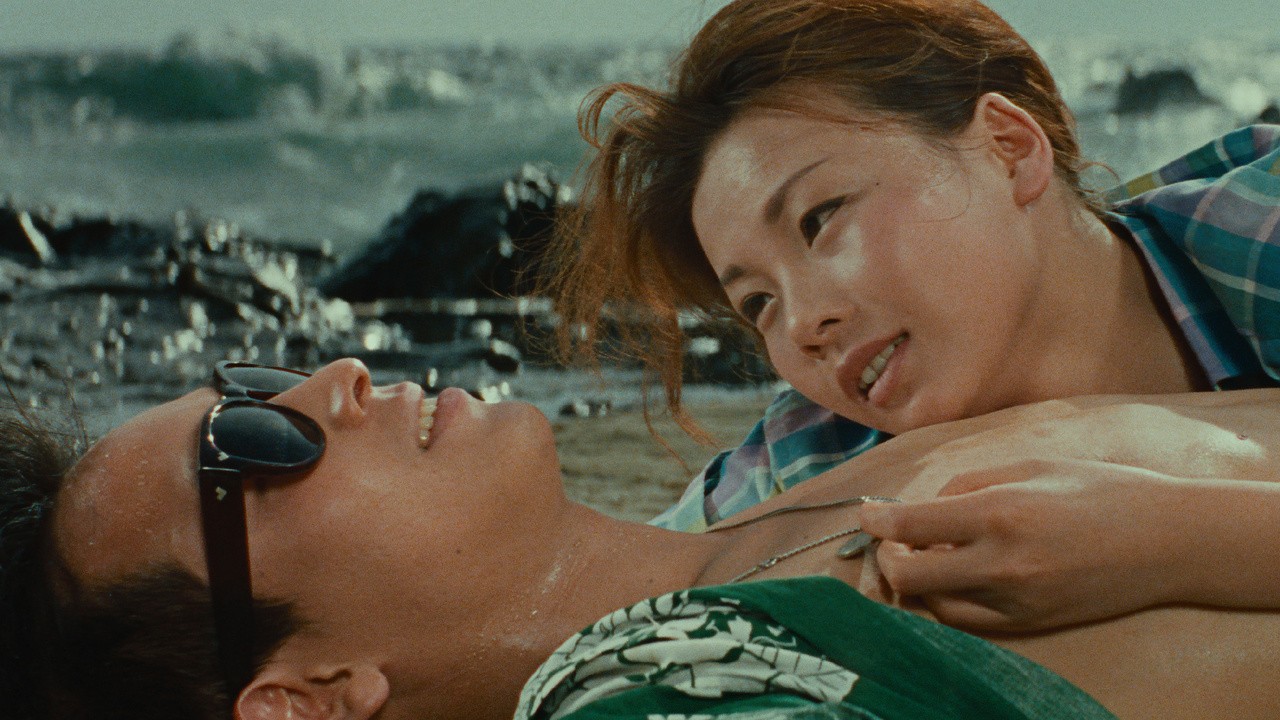
Oshima’s second feature is a shocking tale of youthful delinquency in post-Hiroshima Japan. Conveying the pent-up sexuality and disillusionment among Japan’s post-war generation it tells the story of teenage lovers Makoto and Kiyoshi. She’s a good-girl-gone-bad, dropping out of school and out of home; he’s a violent hoodlum, gambler and hustler. Making a living by performing shakedowns and attempting blackmail on unsuspecting middle-aged men, the film affords a bleak, nihlistic take to the ‘taiyozako’ (Japanese cinema’s ‘delinquent youth’ films).
Often cited as Japan’s Rebel Without a Cause, Naked Youth / Cruel Story of Youth tops that film’s nihilism, and lacks that film’s optimism – Oshima’s delinquent rebel Kiyoshi is filled only with rage and disgust. All of life’s harsh realities await Makoto and Kiyoshi. This is no morality lesson or cautionary tale, just a window into a terrible vision of humanity. –Yume Pictures
Nagisa Oshima’s career extends from the initiation of the “Nuberu bagu” (New Wave) movement in Japanese cinema in the late 1950s and early 1960s, to the contemporary use of cinema and television to express paradoxes in modern society. After an early involvement with the student protest movement in Kyoto, Oshima rose rapidly in the Shochiku company from the status of apprentice in 1954 to that of director. By 1960, he had grown disillusioned with the traditional studio production policies and broke away from Shochiku to form his own independent production company, Sozosha, in 1965. With other Japanese New Wave filmmakers like Masahiro Shinoda, Shohei Imamura and Yoshishige Yoshida, Oshima reacted against the humanistic style and subject matter of directors like Yasujiro Ozu, Kenji Mizoguchi and Akira Kurosawa, as well as against established left-wing political movements. Oshima has been primarily concerned with depicting the contradictions and tensions of postwar Japanese society. His… read more
35mm really payed off. There is nothing like diving in the strong colors of this eclectic complex film- at times it becomes unbearable, with all his ruptures, the complex character emotions and shocking moments. I surprised myself wishing it lacked tone, so it woulnd't be so hard to watch.
Starts off not very well as a story on an relationship that seems emptily abrasive in tone. As it progresses however and the characters develop more depth it becomes a striking character drama that shows the confrontational style Oshima was known to have, the disenchantment of the characters matching the environment around them. Its flaws are pulled to see the virtues capsulated in the bleak ending.
Vabbé, finalmente rivisto con colori decenti. Non c'è manco bisogno che dica che roba è.
The year is 1960. Television is the dreaded enemy of the cinema. So across the world have been released a large number of films with colour, widescreen and increasingly adult themes, even in America… read review