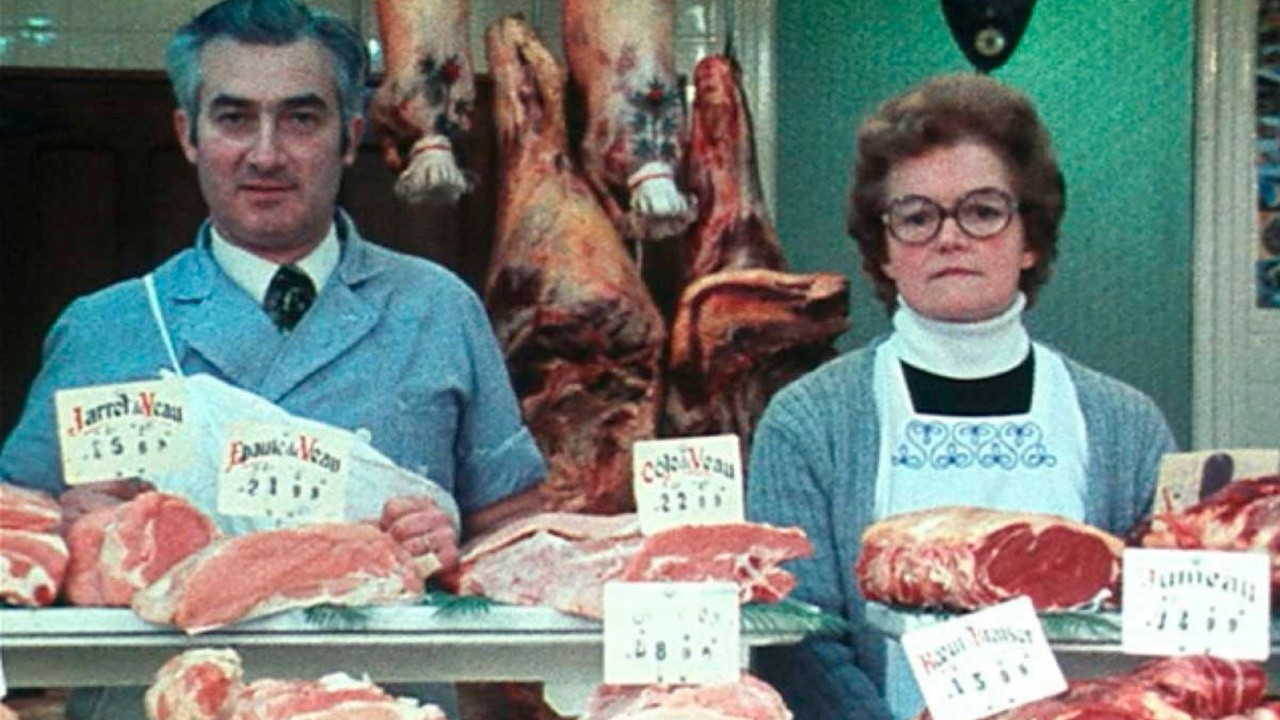
Daguerréotypes is not a film about the Rue Daguerre (a picturesque street in the fourteenth district of Paris where I live), it is a film about one block of that street (between the number 70 and the number 90). This is not an inquiry nor a sociological study of the inhabitants, even though it tells a great deal about the “silent majority.” It is more or less a casual look at my neighbors. The film could be an archive for archeologists and sociologists in the next century. As I shot L’opéra-mouffe on rue Mouffetard, Daguerréotypes is my L’opéra-daguerre. —Agnès Varda
Agnès Varda has been called the “Grandmother of the New Wave,” a well-meaning if curious tribute for a woman who directed her first feature film at the age of 26. Born in Brussels, Varda studied literature and psychology at the Sorbonne, and art history at the École du Louvre. She’d originally wanted to be a museum curator, but a night-school course in photography changed her mind. Rapidly establishing herself as a top-rank still photographer, Varda became the official cameraperson for the Theatre Festival of Avignon and the Theatre National Populaire, and then pursued a career as a photojournalist.
Encouraged by filmmaker Alain Resnais, Varda made her movie directorial bow in 1955 with La Pointe Courte. She based the film on a William Faulkner short story, to which she was attracted because of its parallel plotlines (a recurring device in her later films). That same year, she accompanied another future New Wave director, Chris Marker, to China as visual advisor for his Dimanche… read more
Varda's focus on the wife of perfumier/sundry shopkeeper as a silent, gentle captive is especially exquisite.
Seemingly quotidian, Varda's cinematic observations of small business poetically compares their blue collar work to the magic of a traveling magician: money multiplies from the magician's hands just as income is produced from the hands of a baker, butcher, tailor, etc. Varda further compares her cinematic interviewees to the magician's participants: hesitant, self-aware, yet entertaining and revelatory! Amazing.
A compassionate portrait of Parisian shopkeepers, playing both here and in New York.
To celebrate the Le cinema d’Agnès Varda, the virtual retrospective currently running on The Auteurs, I thought I'd take a look at Varda’s
Even the most ordinary human face is ennobled by a daguerreotype. Agnes Varda ennobles tradespeople and shopkeepers of her neighbourhood in the Rue Daguerre in her film Daguerreotypes by a deeply affectionate… read review