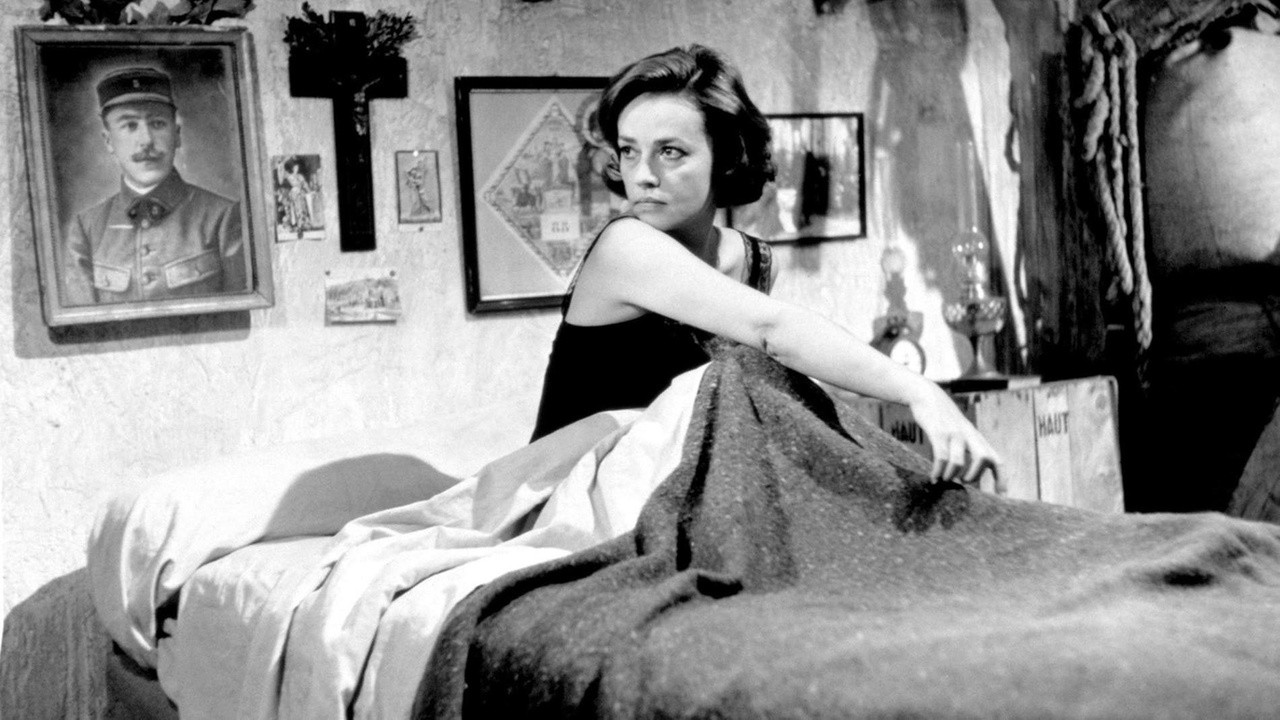
This wicked adaptation of the Octave Mirbeau novel is classic Luis Buñuel. Jeanne Moreau is Celestine, a beautiful Parisian domestic who, upon arrival at her new job at an estate in provincial 1930s France, entrenches herself in sexual hypocrisy and scandal with her philandering employer (Buñuel regular Michel Piccoli). Filmed in luxurious black-and-white Franscope, Diary of a Chambermaid is a raw-edged tangle of fetishism and murder—and a scathing look at the burgeoning French fascism of the era. —The Criterion Collection
Sent off for a Jesuit education by his prosperous Spanish parents, Luis Buñuel went on to attend the University of Madrid, where he first became interested in the burgeoning European film industry. Upon graduating from Paris’ Academie du Cinema, his first movie job was as an assistant to French-based directors Jean Epstein and Mario Nalpas. In partnership with an old friend, Spanish painter/sculptor Salvador Dali, Buñuel put together the three-reel surrealist masterpiece Un Chien Andalou (1928), the film that features dead donkeys on a piano, a razor slashing an eyeball, and other deliberately shocking images that cineastes have either praised or damned for the past seven decades.
Buñuel’s first feature film, L’Age d’Or, was banned from public exhibition almost immediately from the moment of its 1930 premiere; its principal opponents were high-ranking members of the Catholic church, who condemned the film as savagely sacrilegious. After 1932’s Land Without Bread, an uncompromising… read more
While superficially one of Buñuel's most lucid and orderly works, Diary Of A Chambermaid is regardlessly one of his most beguiling, inexplicable, and unsettling pictures, containing some of his most indelible and erotically-charged imagery––the snails slithering over Claire's corpse; Jeanne Moreau's lovely legs, footwear, and maid's uniform––amidst a tapestry of pastoral repression.
i live in a country were the lefts killed millions and have vigilantly kept an open-air all-national prison for 50 years , but it matters little for art.. if the right can get the worse out of people, then why do we still need psychiatrists? the self-liberating experiments of the sixties should have known that mein kampf is better for individual exorcism than screaming. thr film is nice , but it needs a sequel,
There are very few films that I have ever seen that have such a strong subtext of sensuality as to inspire genuine arousal, and very few still that are as perfectly executed, as this gem of a masterpiece. As Criterion so perfectly states, it's "classic Buñuel".