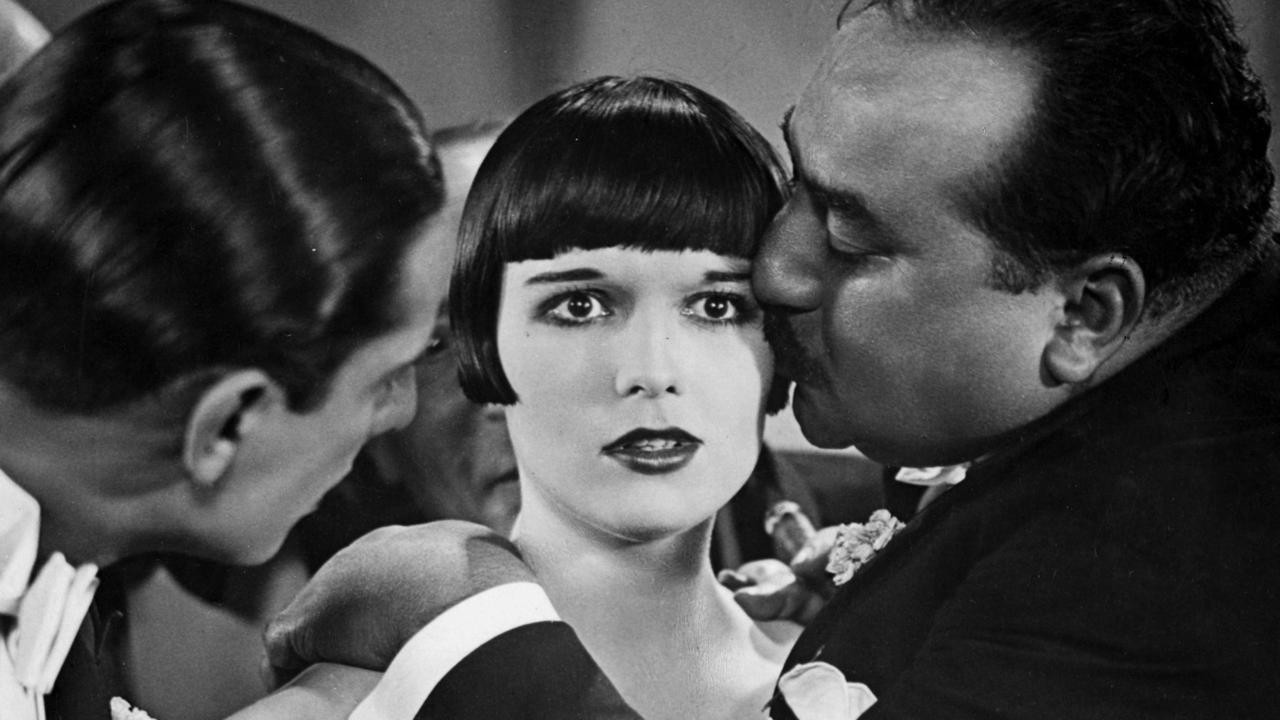
A masterwork of the German silent cinema whose reputation has only increased over time, Diary of a Lost Girl [Tagebuch einer Verlorenen] traces the journey of a young woman from the pit of despair to the moment of personal awakening. Directed with virtuoso flair by the great G. W. Pabst, Diary of a Lost Girl represents the final pairing of the filmmaker with screen icon Louise Brooks, mere months after their first collaboration in the now-legendary Pandora’s Box [Die Büchse der Pandora].
Brooks plays Thymian Henning, an unprepossessing young woman seduced by an unscrupulous and mercenary character employed at her father’s pharmacy (played with gusto by Fritz Rasp, the degenerate villain of such Fritz Lang classics as Metropolis, Spione, and Frau im Mond). After Thymian gives birth to his child and rejects her family’s expectations for marriage, the baby is stripped from her care, and Thymian enters a purgatorial reform school that seems less an institute of higher learning than a conduit for fulfilling the headmistress’s sadistic sexual fantasies. —Masters of Cinema
Born in Bohemia to Viennese parents, director G. W. Pabst made only one American film in his career, yet became the darling of U.S. critics and movie historians for a handful of brilliant silent works. Pabst studied at Vienna’s Academy of Decorate Arts, then embarked on a theatrical career in 1906. He worked as a stage director in Europe and briefly in New York with a German-language company until World War I. Back in Vienna in the early 1920s, Pabst was one of the vanguards of the experimental theater movement. This led to an interest in the less-confining vistas of film. Establishing himself as a movie director in 1923, Pabst made his mark by turning out productions of pessimistic realism, intermixed with unstressed impressionism. He directed Garbo in A Joyless Street (1925), then helmed the pioneering Freudian drama Secrets of a Soul (1926). Pabst helped create the “Louise Brooks mystique” by casting the expatriate American actress in two of his most elaborate (and most heavily censored… read more
Whatever happened to Edith Meinhard? Someone asks but no one knows. http://immensedarkblossom.blogspot.com/2012/05/whatever-happened-to-edith-meinhard.html http://immensedarkblossom.blogspot.com/2012/06/update-edith-meinhard.html Better than Pandora for Pabst & Brooks collaboration.
Watched a copy without any music. Slept quite a little bit, some things I just didn't seem to understand: yet, I can only say that it looked quite ahead of its time and still... a bit dated. But, it's always interesting to watch a silent german gem from the late 20s about high and low society and how an individual fits or not in those societies.
A very good film, in spite of the valiant attempts of the remastering's composer to make it otherwise.
Louise Brooks is like a beautiful alien. I've never seen an actress look so other-worldly in motion. Also, the scene with the headmistress practically orgasming while directing the girls to do calisthenics is probably one of the most successful combinations of humor and perversity I've seen in a film (whether or not that was intentional, I don't know).
"The San Francisco Silent Film Festival (SFSFF) is the biggest and most prestigious event of its kind in the Americas," writes Michael
As opposed to the malevolent, unintentionally distructive Lulu of Pandora’s Box, Thymian of Diary of a Lost Girl is innocent and faun like, showcasing a range of skill from Louise Brooks. Her and Pabst… read review