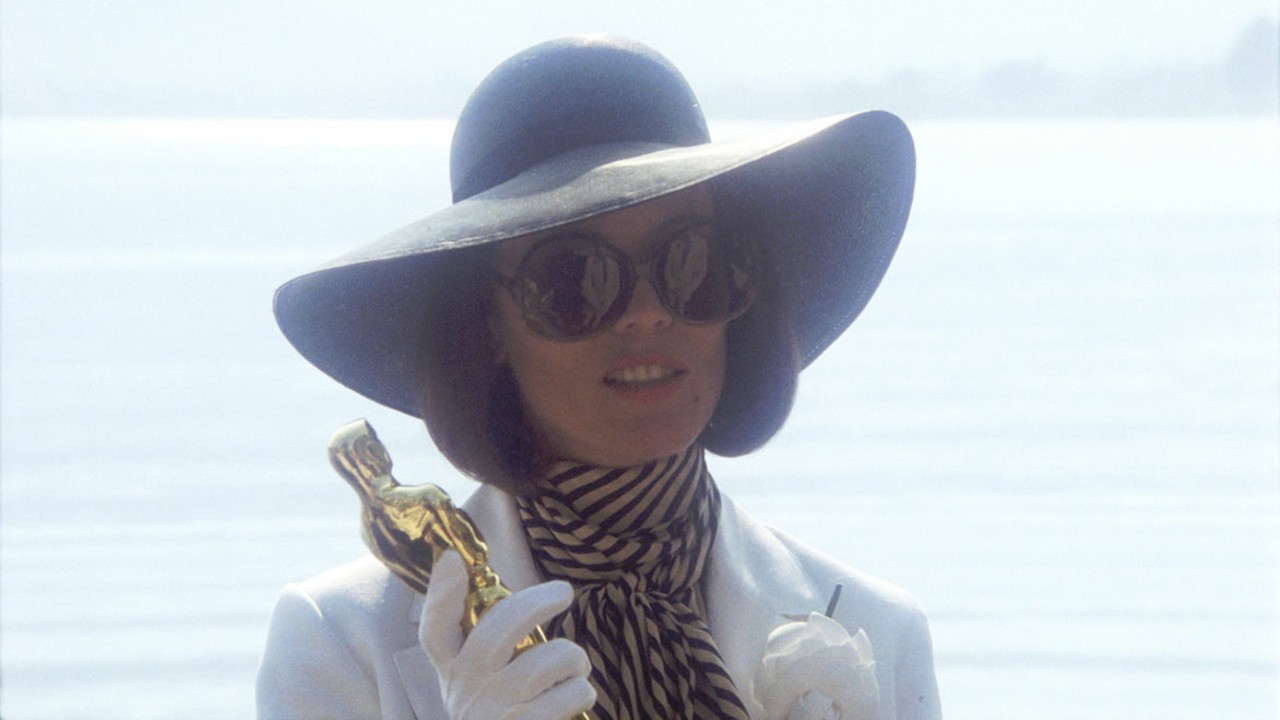
Fedora, a Hollywood legend who never seems to age, commits suicide. When her friend and confidant, producer Dutch Detweiler, becomes suspicious of the circumstances surrounding her death, he uncovers a truth stranger than any Tinseltown fantasy.
Originally planning to become a lawyer, Billy Wilder abandoned that career in favor of working as a reporter for a Viennese newspaper, using this experience to move to Berlin, where he worked for the city’s largest tabloid. He broke into films as a screenwriter in 1929, and wrote scripts for many German films until Adolf Hitler came to power in 1933. Wilder immediately realized his Jewish ancestry would cause problems, so he emigrated to Paris, then the US. Although he spoke no English when he arrived in Hollywood, Wilder was a fast learner, and thanks to contacts such as Peter Lorre (with whom he shared an apartment), he was able to break into American films. His partnership with Charles Brackett started in 1938 and the team was responsible for writing some of Hollywood’s classic comedies, including Ninotchka (1939) and Ball of Fire (1941). The partnership expanded into a producer-director one in 1942, with Brackett producing, and the two turned out such classics… read more
"The kids with beards have taken over, with their zoom lenses and handheld cameras," Hollywood producer Barry 'Dutch' Detweiler sarcastically remarks in 'Fedora'. He was referring to the new generation of filmmakers who reinvented Hollywood in the '70s and who would later be documented in 'Easy Riders, Raging Bulls'. Read my full review: http://www.brnrd.net/blog/archive/2010/01/04/fedora
On the icon of Cannes’ 65th anniversary edition. Plus, new DVD/Blu-ray releases and a multi-faceted analysis of the early 21st century.