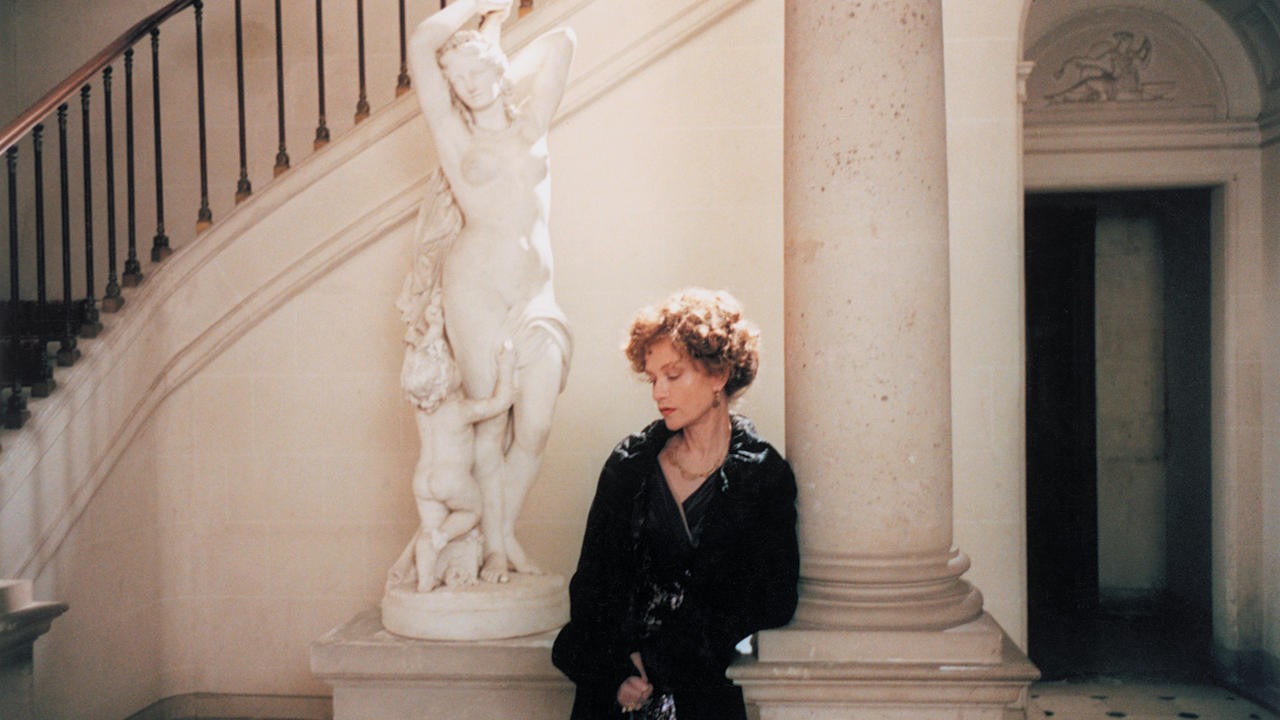
It’s a house where people like to come to spend long evenings listening, looking, laughing, defending an idea and then its opposite. The advantage of being part of a social circle is that everyone knows each other well. Outbursts of frankness or excessive secretiveness, moments of doubt, or of well-founded or unfounded joy… there’s a place for everything, much to the pleasure of everyone, guests and hosts combined. The hosts’ existence is the envy of everyone; they’re a perfect couple, their lives are a success. But, all of a sudden, the motor falters. One day, one of them leaves, and is slow to return. And when the doorbell finally rings, the world is a different place. One day, a man and a woman find themselves in the house and truly see each other for the first time. One wanted this, the other didn’t. One wants to talk, the other doesn’t. It’s difficult being together in the same house when you no longer want the same things.
Based on Joseph Conrad’s short story, The Return. By acclaimed theater and film director Patrice Chéreau. Starring Isabelle Huppert and Pascal Greggory.
Primarily known as a stage director in his native France, Patrice Chéreau has also made quite a name for himself in the realm of cinema with such acclaimed features as Queen Margot (1994) and Intimacy (2001). The Lezigne native crossed from stage to screen with the 1975 thriller Flesh and the Orchid, and the auspicious debut earned its up-and-coming director two César nominations. In 1984, Chéreau shared a Best Writing César with Hervé Guibert for his feature The Wounded Man, and in 1994, Chéreau scored his biggest hit to date with the bloody historical drama Queen Margot. Adapted from Alexandre Dumas’ novel, Queen Margot was nominated for Best Costume Design at the 1995 Academy Awards in addition to taking home top prizes at the Cannes Film Festival and the César Awards. Following a pair of successful television endeavors, Chéreau returned to the screen to great success with the emotional drama Those Who Love Me Can Take the Train (1998). An introspective tale of an artist’s final… read more
Incredibly perceptive work! Of fidelity, whom bridges the "two worlds" of the sexes? Men are of belief and application of societal rules, convictions as goals achieved, expository declarations and alignment of words and ideals. Women of implicit passions, truth in actions rather than contemplations, and the comprehension of the male "rules" without the need of their belief. One manages diffusion only with sacrifice.
an engaging and interesting work of film. a really effective period piece, with some interesting use of alternating black and white and colour to display different points of action. sedate and well paced, this film has a real ethereal mood to it. isabelle huppert gives the painful, tortured kind of performance she has become the best in the world at with a kind of unseen emotional violence.
Patrice Chereau filme d'une facon assez subtile les non-dits qui hantent les couples, et d'une efficacite rare.Huppert est extraordinaire, tandisque la performance de Pascal Greggory est habitee tel que l'on a encore jamais vu aujourd'hui.Il semble se defouler, devient fou, se mondre posseseur de demons.Les sequences noir-blanc/couleurs sont plutots pretentieuses, mais elles cachent un quelconque symbolisme.
Persecution may very well be Patrice Chéreau's most abrasive film. That's saying a lot. After the Cannes-ready provocations of Queen Margot