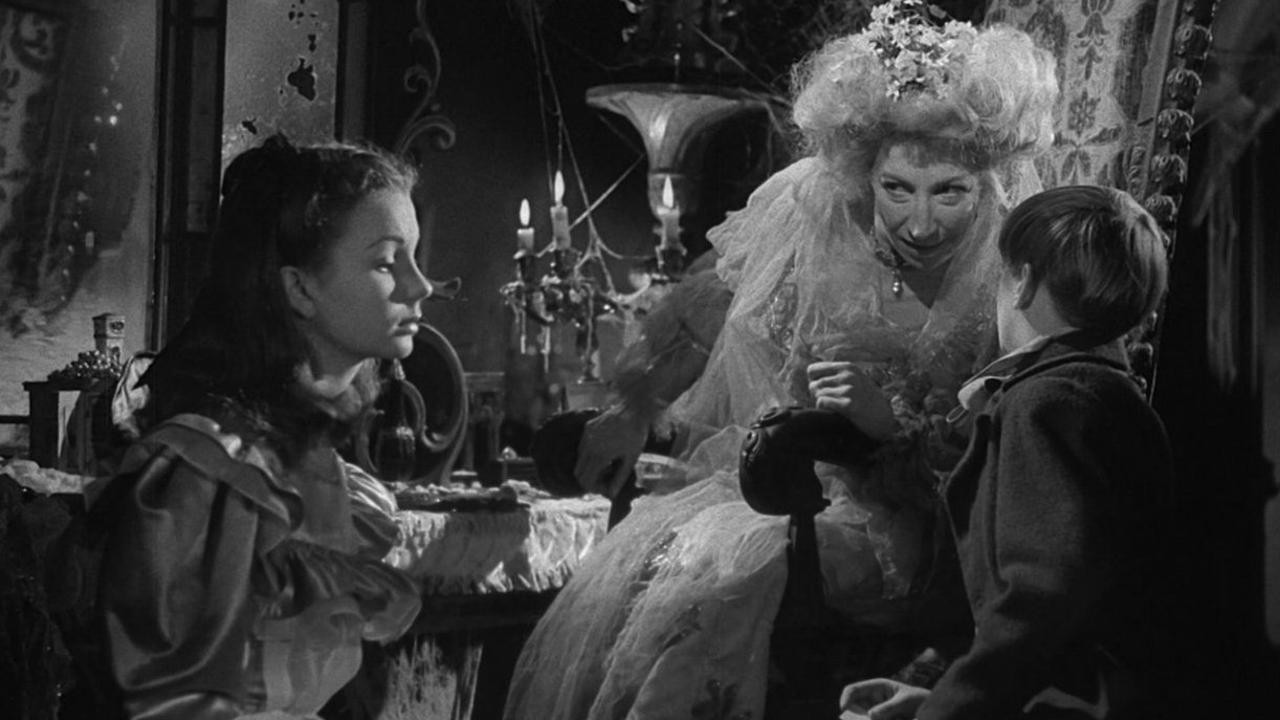
One of the great translations of literature into film, David Lean’s Great Expectations brings Charles Dickens’s masterpiece to robust onscreen life. Pip, Magwitch, Miss Havisham, and Estella populate Lean’s magnificent miniature, beautifully photographed by Guy Green and designed by John Bryan. —The Criterion Collection
Director, writer, and producer David Lean, grew up in a strict religious background in which movies were forbidden, to become one of the world’s most celebrated filmmakers. Beginning as a tea boy in the mid-‘20s, he was lucky enough to move into editing just as sound films were coming on the scene. By the mid-’30s, he was regarded as one of the top in his field. Lean turned down several chances to make low-budget films, and got his first directing opportunity (unofficially) on Major Barbara (1941), one of the most celebrated movies of the early ‘40s. Noel Coward hired Lean as his directorial collaborator on his war classic In Which We Serve (1943), and, after that, Lean’s career was made. For the next 15 years, he became known throughout the world for his close, intimate, serious film dramas. Some (This Happy Breed 1944, Blithe Spirit 1945, and Brief Encounter 1945) were based upon Coward’s… read more
Still following the typical palatial atmosphere, the Dir plays the rising of a man from his hashes, how he learns to fly and when he leaves the nest. The admirable way of filming in this softer penumbras, compared to the sharper contrasts noticeable in BE, OT or H'sC, keeps DL's drive to focus on macro monumental characters within a B/W film. The predictable happy ending crushed my expectations.
"Jean Simmons, a radiant British actress who as a teenager appeared opposite Laurence Olivier in Hamlet and emerged a star whose career flourished