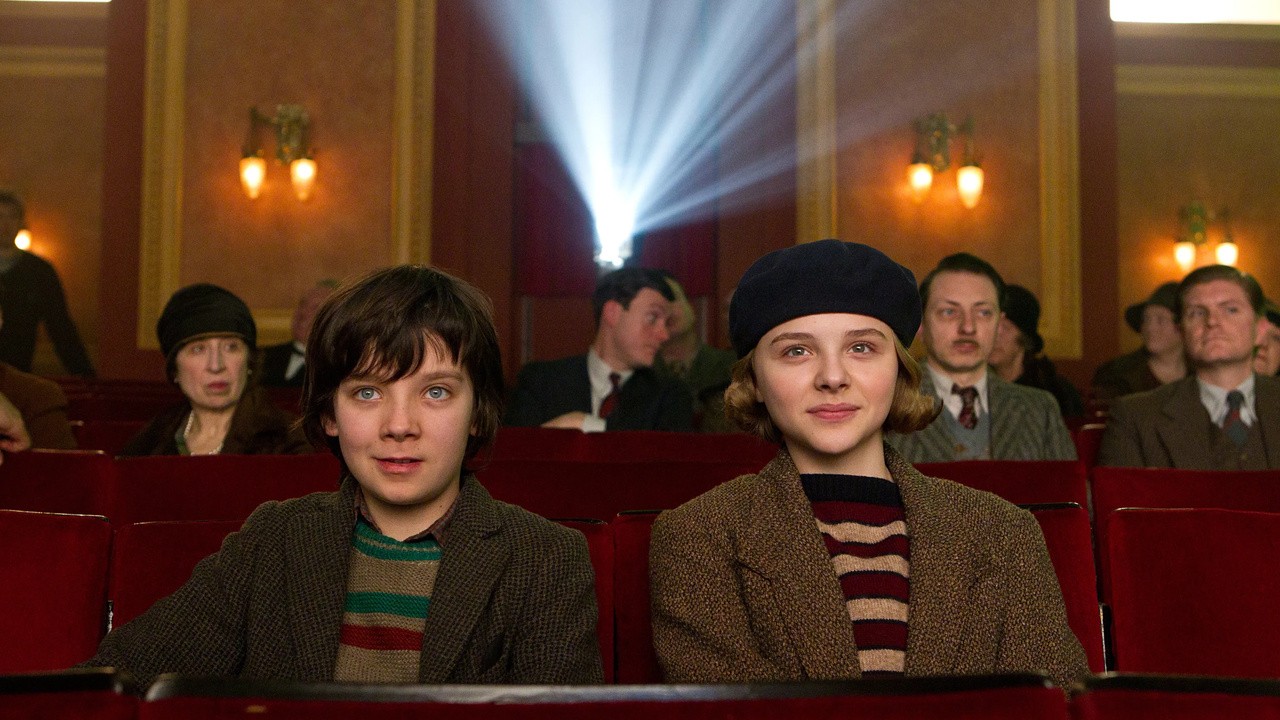
Hugo tells the story of an orphan boy living a secret life in the walls of a Paris train station. With the help of an eccentric girl, he searches for the answer to a mystery linking the father he recently lost, the ill-tempered toy shop owner living below him and a heart shaped lock, seemingly without a key. Based on Brian Selznick’s award winning and imaginative New York Times bestseller, The Invention of Hugo Cabret, this magical tale is Academy Award-winner Martin Scorsese’s first film shot in 3D. –apple.com
Martin Scorsese was born in New York City and soon developed a passion for cinema and a particular admiration for neo-realist cinema which inspired him and influenced his view or portrayal of his Sicilian heritage. After graduating from NYU Film School in 1966 and making a number of shorts, he shot his first feature-length film Who’s That Knocking at My Door (1968) with fellow student, actor Harvey Keitel, and editor Thelma Schoonmaker both of whom were to become long-term collaborators. Mean Streets followed in 1973 and provided the benchmarks for the ‘Scorsese style’. After Scorsese directed Alice Doesn’t Live Here Anymore, the trio was reunited for the dark journey of Travis Bickle in Taxi Driver. After New York, New York Scorsese released Raging Bull. The acclaimed biography of middleweight fighter Jake LaMotta was followed by exploration of fans as pariah in The King of Comedy, dark-comic dreams in After Hours and pool sharks in The Color of Money. Scorsese outraged some religious… read more
Visually amazing. It's definitely unusual adventure. Oh and thanks God I've seen so many classic films through this. Great job Scorsese :)
The full list of nominees and winners of this year’s Academy Awards.
Also: Adam Curtis on Dead of Night, life, the universe and everything. And more.
On the conflicting ideologies of Hugo and The Artist and their divergent approaches to the history of cinema.
Hugo and The Artist lead, but there are also a few surprises here.
The Artist leads. Conspicuous in their total absence: Melancholia and The Tree of Life.
Serge Bromberg celebrates Georges Méliès. Also recognized will be Peter Kubelka, Pablo Ferro, Jean Epstein, Raúl Ruiz and Bart Vegter.
According to the Passiondex™, the real winner this year was made 20 years ago.
Strong showing for Margaret, Hugo and Moneyball.
As the pioneer turns 150, Hugo is reminding audiences of his vital legacy.
Also: FX Feeney on George Hickenlooper, Edgar Wright in LA and yet more awards news.
This restless phantasmagoria is fond, melancholy and not quite serene.
The runner-up here, with three mentions, is clearly The Descendants.
“Like nearly all of Scorsese’s films, Hugo can be taken as personal allegory.”
Also: Ebert Presents At The Movies looking for an angel. New projects for Kaurismäki, Figgis, De Niro and more.
Another big Criterion Tuesday. Also: The Tree of Life, Joan Didion, Martin Scorsese and more.
Also: Docs by John Akomfrah, Unauthorized: The Harvey Weinstein Project and remembering cinematographer Andrew Laszlo.
The greatest forms of salutation to movie magic and filmmaking we’ve ever seen in the modern age. By utilizing modern filmmaking practice such as CGI,Hugo surprisingly manage to brings out those majestic… read review
I can’t say I have loved any of the other Scorsese pictures I’ve seen, but I highly respect the work he does for film preservation. It was a pleasure to see this fantastic story (in 3D) about an orphaned… read review
Title: Hugo
Year: 2011
Language: English
Country: USA
Genre: Adventure, Drama
Director: Martin Scorsese
Writers:
John Logan
Brian Selznick
Cast:
Asa Butterfield… read review
Not entirely successful as an entertainment, but still a marvel to behold. The expert use of 3D creates depth and texture, though much of the production looks artificial. This may be – actually it… read review