Few directors have addressed the issues of the past decade as courageously as Denmark’s Susanne Bier. With the much celebrated Brothers, she raised troubling questions about the First World’s relationship with the Third. After the Wedding pursued this subject further, contrasting the conflicting demands of the domestic and the societal. Her latest, In a Better World, explores similar terrain while offering a devastating critique of masculinity.
In a war-torn African nation, physician Anton (Everlasting Moments’s Mikael Persbrandt) confronts a steady stream of tragedy and loss. Much of what he faces can be traced back to a vicious and sadistic local warlord. Back home in Denmark, his estranged wife, Marianne (Trine Dyrholm), is concerned about their eldest son, Elias, who is picked on mercilessly by the class bully, Sofus.
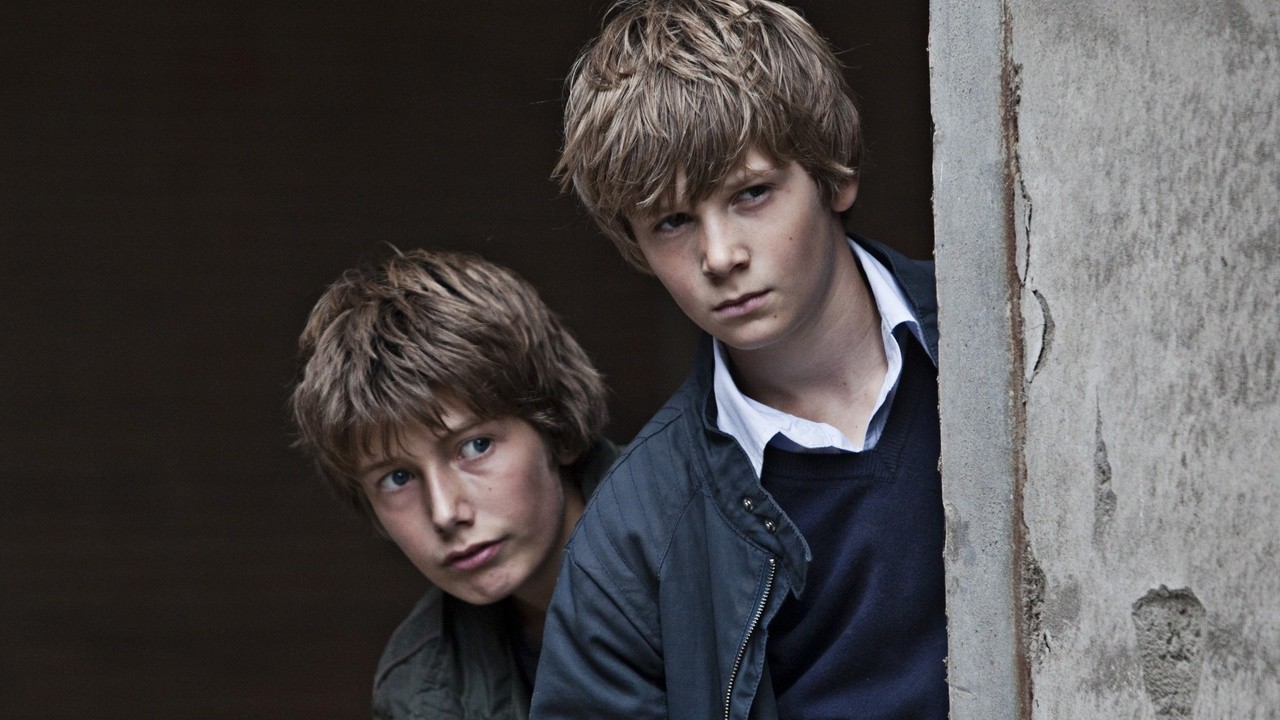
When new kid Christian arrives in class, he and Elias bond over a mutual hatred of Sofus. Surly and vicious since the loss of his mother, Christian is hardening into a rigid and ferocious manifestation of masculinity. His heartbroken father, Claus (Ulrich Thomsen), is finding it impossible to cope with Christian’s behaviour. The volatile situation is exacerbated by Anton’s return home and by an encounter between Anton, Elias, Christian and a violent, bullying mechanic (_Pusher_’s Kim Bodnia).
At the heart of the film is the issue of male responsibility, specifically what it means to stand up for yourself and others. Troubled and confused by what he faced in Africa, Anton has no credible response to Christian’s demand that he answer the mechanic’s abusive behaviour in kind. The painful, dangerous rift between Christian and Claus, and the growing distance between Elias and his distracted parents, only makes the situation worse. Left alone to solve their problems, Elias and Christian grow even closer. As their clandestine acts of vengeance become more drastic, the film builds to an almost unbearable intensity. Far more than a mere exercise in suspense, the film raises essential questions about a world that has grown increasingly complex. –TIFF
Director and occasional scriptwriter Susanne Bier essayed a series of helming assignments in her native Denmark during the late ‘90s and early 2000s, that clocked in as lucrative and popular enough to kick-start a highly respectable career for the filmmaker. Though Bier’s credits officially date back to 1992, she achieved her first significant breakthrough in 1999, when she directed The One and Only — a well-received romantic comedy about dating, marriage, child-rearing, and adultery. That film reportedly grossed a heftier amount than any picture in Danish history; a follow-up, the Dogme 95 drama Open Hearts (2002), brought Bier her first international crossover hit and paved the way for much additional success. Shot according to Lars von Trier’s hyper-ascetic filmmaking rules, it told of two couples whose lives become hopelessly and tragically enmeshed following a severe automobile accident. Bier’s Danish-language drama Brothers(2004) explored the feud that… read more
Fotografia eccezionale per questo bellissimo film della Bier. Nonostante il titolo originale (che tradotto dal danese suona come: La vendetta) sia molto più azzeccato, anche quello scelto per la versione nostrana (tradotto dall'inglese per qualche strano meccanismo che non afferro) rende bene il senso della lotta "passiva" contro il male in tutte le sue forme. Il personaggio del medico è stupendo. 4*
Strong acting and pretty shots can't make up for The Whitest Movie in the History of Ever. Even brunettes can't catch a break in this one. Only blondes can achieve subtlety and/or nuance.
The movie absolutely presented a world where the only people that show depth, conscious, or internal conflict were white collar and blonde. Africans and blue collar workers in this movie are basically subhuman. I did not presume that part; I didn't imagine it. It's there. I presume that the director/writer didn't *intend* to show off their ingrained prejudices. They managed to do it without intent. I am being generous with that. Maybe it *is* intended to dehumanize the poor, pitiable non-blondes of the world.
Lars von Trier’s Melancholia leads with eight.
We'll be moving along a lot more swiftly in this second round than in the first. Ready, set, go. "In A Better World is another strong entry
Sabe quando você sai do cinema sabendo que acabou de assistir à um grande filme, mas por algum motivo não conseguiu se envolver? Foi o que aconteceu comigo logo após a sessão de “Em Um Mundo Melhor”… read review
Anton is a doctor who commutes between his home in an idyllic town in Denmark, and his work at an African refugee camp. In these two very different worlds, he and his family are faced with conflicts… read review
‘In a Better World’ takes place in a small-town Denmark and a refugee camp in Africa. Anton, a swedish doctor, lives between his home and a refugee camp in Sudan. He and his wife, Marianne, are close… read review