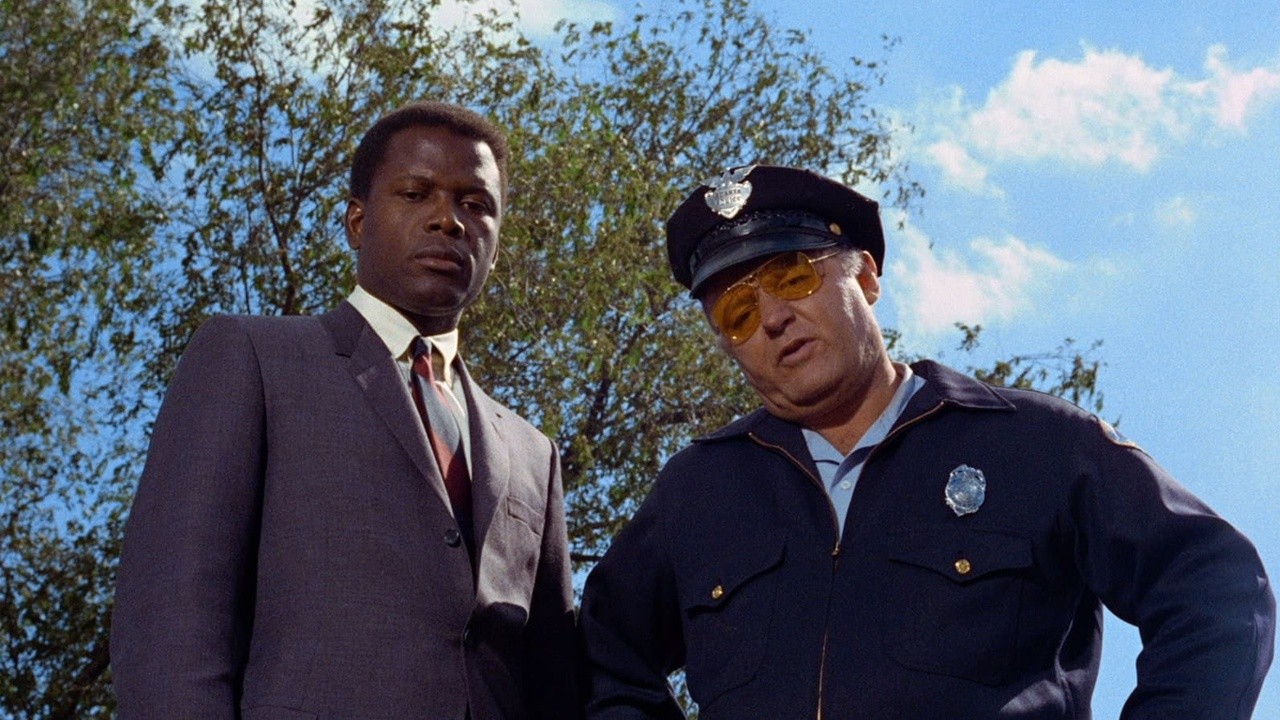
Detective Virgil Tibbs is caught up in the racial tension of the US South when he is arrested after the murder of a prominent businessman. Tibbs was simply waiting for his next train at the station in Sparta, Mississippi and the confusion is soon resolved but when local police chief Gillespie learns that Tibbs is the Philadelphia PD’s number one homicide expert, he reluctantly asks for his assistance. The murdered man, Mr. Colbert, had come to Sparta from the North to build a new factory and his wife and business associates immediately point the finger at Endicott, the most powerful man in the county and the one who had the most to lose if a major new employer comes to the area. Tibbs’ life is clearly in danger but he perseveres in a highly charged and racially explosive environment until the killer is found. —IMDb
Receiving his undergraduate education at Malvern Collegiate Institute, Victoria College and University of Toronto, Ontario-born director and producer Norman Jewison also studied piano and music theory at the Royal Conservatory. Following service in the navy and a brief sojourn as a cab driver, Jewison worked as an actor and scenarist in London. From 1953 through 1958, he was one of the top directors with the Canadian Broadcasting Corporation television service; he continued to turn out top-ranked TV work when he was signed by CBS in New York, winning three Emmys between 1958 and 1961. His first feature film was 40 Pounds of Trouble (1962), which led to a long-term contract with Universal. In 1963, Jewison took on the daunting task of executive producing the much-troubled Judy Garland Show, emerging from this failed 26-week project with little if any egg on his face. The first of Jewison’s films to be greeted with the same critical effusion as his TV work was The Cincinnati Kid (1965… read more
Great acting, wow the police and business are so corrupt. Gotta believe that the police which are supposed to serve individuals instead are guided by power or government and especially business.
I put off watching this for years because, on paper, it sounds like typical Hollywood moralizing, yet this is everything I thought it wouldn't be: nuanced instead of blugeoning, even-handed instead of two-dimensional, artistic rather than commercially "relevant." A film worthy of its reputation.