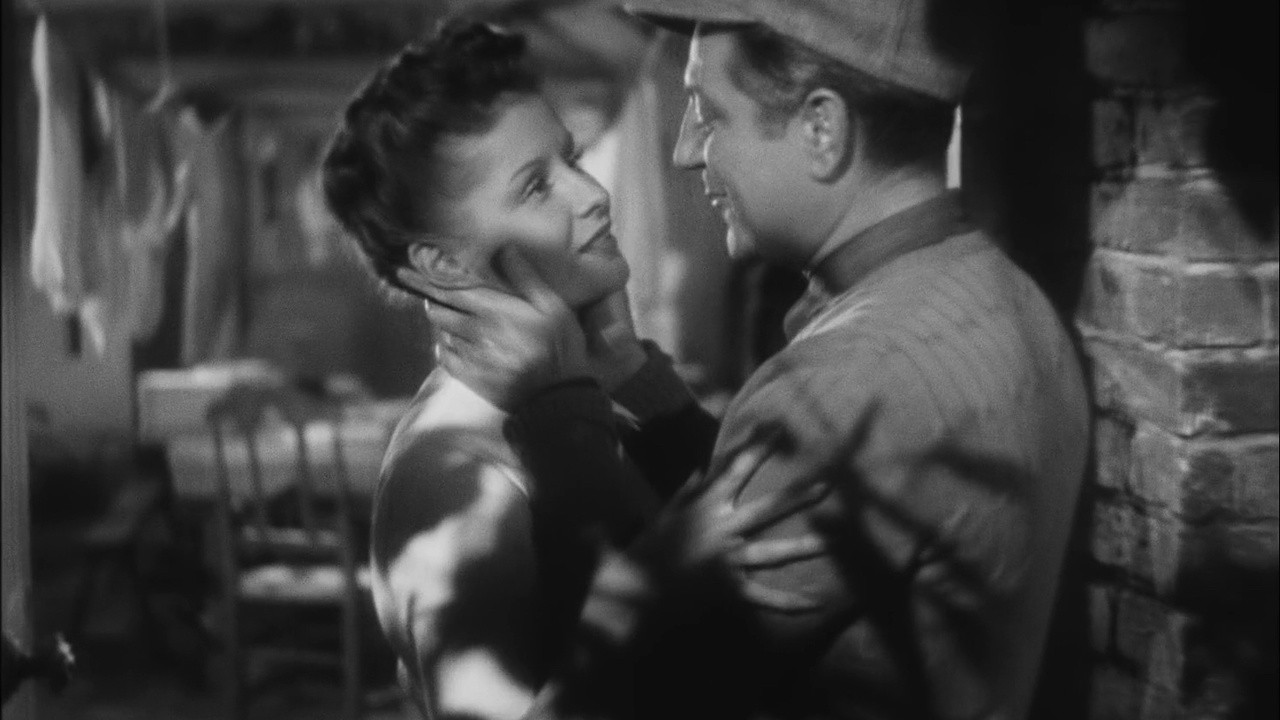
The culmination of Poetic Realist cinema of the 1930s, Le jour se lève was Marcel Carné’s third collaboration with screenwriter and poet Jacques Prevert. A story of obsessive sexuality and murder—in which working class everyman François (Jean Gabin) resorts to killing in order to free the woman he loves from the controlling influence of another man—Le jour se lève cemented the enormous reputations of Gabin and Carné. —The Criterion Collection
Between 1936 and 1946, Marcel Carné was among the chief proponents of poetic realism, a studio-bound film style that combined theatrical themes with elaborate dialogues which depicted ordinary people attempting to contend with the unalterable nature of destiny. The shadowy fatalism of poetic realism presaged the more popular American film noir. Though the style was created by Jacques Feyder, with whom Carné apprenticed, it was Carné and poet/screenwriter Jacques Prévert who brought it to its full fruition with Enfants du Paradise (Children of Paradise) (1945), a work still considered one of France’s greatest films. Born and raised in Montmarte, Carné was originally slated to work for an insurance agency by his father, a cabinetmaker. Carné, however, was more interested in movies and secretly attended evening classes on cinematography with the Paris city council-sponsored Association Philomantique. Without telling his father, Carné left the agency in 1928 to work as an assistant cameraman… read more
What a dumb reason to cap someone. That was one hell of a final scene, though.
Though not as good as Enfants du Paradise, which is one of my favourite films ever, this movie is a fine example of Carné's excellence as a director, with some of the most beautiful and haunting images in cinema. The cinematography, the music, not to mention Gabin's masterful performance, all contribute to make this film a memorable experience.
A year after their masterpiece Port Of Shadows, the Carné/Prévert team reuinted with Gabin for another exemplary example of poetic realism. Holed up in his attic room awaiting arrest by the police, a factory worker reflects on how he ended up in this hopeless position. Less than a decade later the film was remade in Hollywood as The Long Night with Henry Fonda in the Gabin role. It was nowhere near as good as this...
Gabin is badass as usual, but with added vulnerability in this one. The look of finally released rage as he shoots Jules Berry is quality acting. It seems to sum up the vituperative mood of the tumultuous times in one explosive moment.
A look at some of the best original French posters for the films in Film Forum’s current series: The French Old Wave.
Above: Alexandre Trauner's sketch for Canal Saint-Martin and Hotel (second building from right). Besides classical Hollywood, one of the other
Le Jour Se Leve is another gleaming gem in the Marcel Carne canon. His work from the mid 1930’s to the late ’40’s represents some of the finest sustained filmmaking in the history of cinema, and when… read review