MUBI brings you a great new film every day.  Start your 7-day free trial today!
Watch a new film every day for $4.99.
Try MUBI for FREE.
 

Synopsis

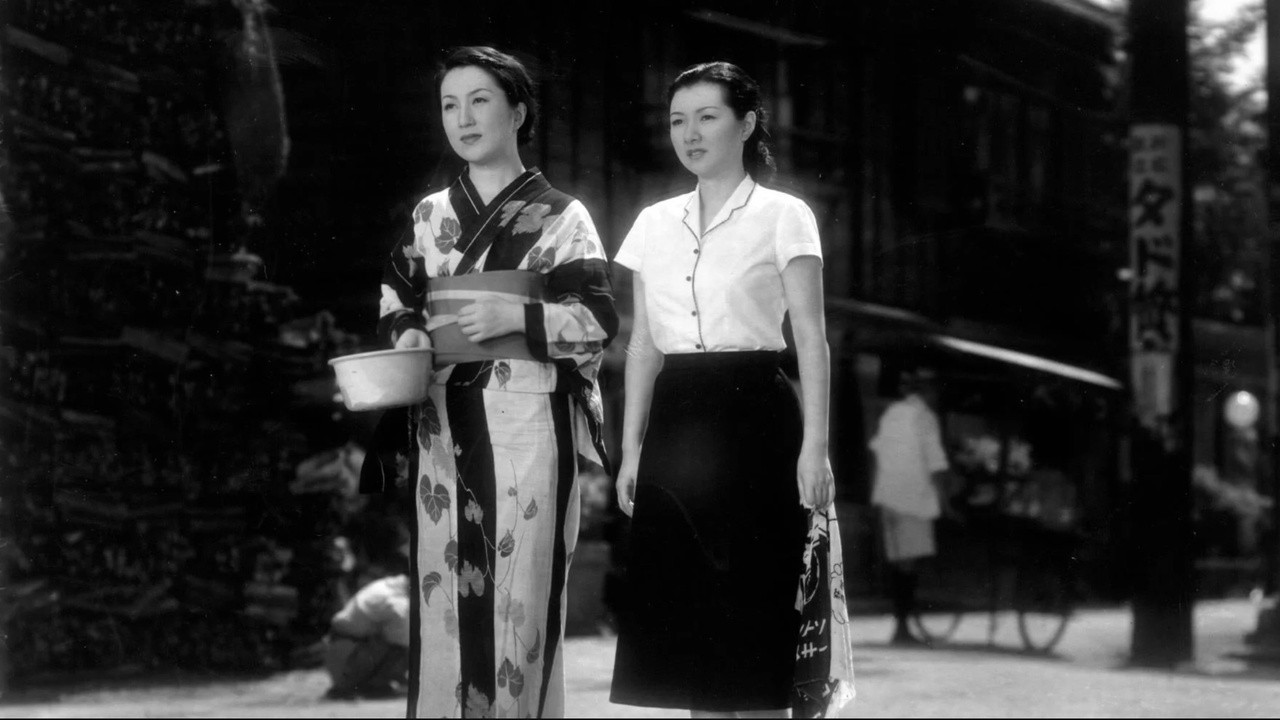
The story of Kiyoko, a young woman who has successfully managed to make a break with her dysfunctional family who have been trying to arrange a marriage for her with a disagreeable man whom she has rejected. She finds herself a new apartment in the suburbs and as she sits at a window, she sees a lightning flash that seems to crystallize the break she has made with her past. —bfi

Director

Original

Mikio Naruse

Mikio Naruse is one of the least known of Japan’s early master directors, both in the West and in Japan, yet he created some of the most moving, darkly beautiful works in Japanese cinema. Like Kenji Mizoguchi, Naruse showed an uncanny understanding for the psychology of women. Like Yasujiro Ozu, he preferred subtle shifts of character over broad strokes of plot. Unlike either of these early greats, however, Naruse’s vision of humanity was much darker and more clinical. He stripped all vestiges of hope or acceptance from his films, what remains is only a willful struggle to endure. His relentlessly negative view of human existence has resulted in Naruse’s often being labeled a nihilist.

Born in Tokyo, in 1905, Naruse was the youngest of three sons of a desperately poor embroiderer. Although he excelled in elementary school, his family could not afford to further his education. He was instead enrolled in a two-year technical school. There, he spent virtually all of his free time… read more

Wall

Displaying 1 wall posts.
Picture of Arsaib

Arsaib

20Feb13

It could be argued that the poetry in Naruse's cinema is as simultaneously constant yet opaque as it is in our physical world, noticeable perhaps only to the attentive, thoughtful viewer, and possibly requiring a retake. A paradox, indeed. It certainly isn't known to 'arrive' on the scene in the form of an artfully composed tableaux à la Mizoguchi or charged pillow-shots à la Ozu. And even when a poetic moment appears in condensed form as it does about midway through Lightning, a shot no more than 10 seconds long of a boat passing under a walkway and leaving ripples in the stream behind it, the only such moment in the entire film, it doesn't register very strongly, at least not at first, due to its placement in the overriding sequential structure and, just as importantly, the surrounding dramatic texture. In Narurse, it's the cumulative effect of the shots that matters the most. Adapted from a Hayashi Fumiko novel, Lightning, which finished second in Kinema Junpo's annual poll behind Kurosawa's Ikiru, is often regarded as one of Naruse's lighter, more hopeful films, but that would be to ignore its incisive reflection on the the dissolution of the Japanese patriarchal family and any remaining ties and bonds than can both nurture and destroy.

Mehdi Jahan and Gondo like this

Related Films

Fans

Displaying 5 of 21 fans.

Articles

Our roundup of essays and articles on this film.
W184

Movie Poster of the Week: "Rickshaw Man" and the posters of Hideko Takamine

By Adrian Curry on January 7, 2011

The great Japanese actress Hideko Takamine, who passed away on December 28 at the age of 86, has been eulogized beautifully on MUBI already

read article
W184

Hideko Takamine

By Dan Sallitt on January 4, 2011

2010 began and ended with the deaths of great octogenarian film artists. Eric Rohmer died on January 11, a few months shy of his 90th birthday;

read article

Lists

Displaying 5 of 18 lists.

Reviews

No reviews yet — Write the first

Forum

Displaying 0 discussion topics.