Watch unlimited films online for $6.99.
Try MUBI for FREE.
 

Lightning Over Water

West Germany, Sweden

1980

90 Min
Color
1.66:1
English
  • Currently 3.7/5 Stars.
  • 1
  • 2
  • 3
  • 4
  • 5

   |   

DIR Nicholas Ray, Wim Wenders

PROD Pierre Cottrell, Chris Sievernich, Wim Wenders

SCR Nicholas Ray, Wim Wenders

DP Edward Lachman, Martin Schäfer

CAST Nicholas Ray, Susan Ray, Wim Wenders, Edward Lachman, Tom Farrell

ED Peter Przygodda, Wim Wenders

MUSIC Ronee Blakley

Transilvania (3X3), São Paulo (Special Presentations)

Synopsis

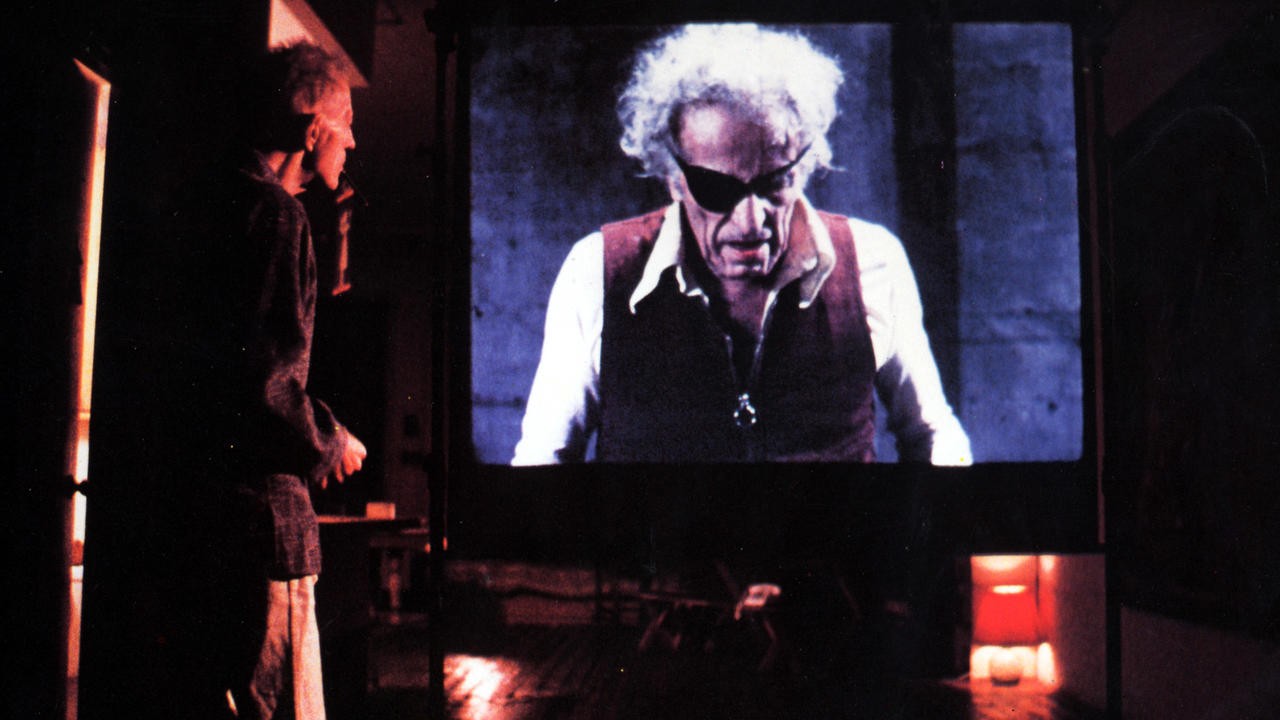
Lightning Over Water is a penetrating and touching film of the last days of cult American director Nicholas Ray, most well-known for Rebel Without a Cause. “I knew that he wanted to work, to die working”, Wim Wenders says in the movie. And through his work with Wenders and the crew, Ray transformed his dying into an act of collaboration and a work of art. Dying slowly of terminal cancer, Ray chose to stay in his modest New York City loft, surrounded by his closest friends – a sharp and poignant contrast to the comparative luxury of his Hollywood years. Ray reflects on a lifetime of accomplishments, failures and compromises, and reminisces about Joan Crawford, James Dean and the many other Hollywood stars that appeared in his films. —IMDb

Director

Original

Nicholas Ray

Born in small-town Wisconsin in 1911, Nicholas Ray’s early experience with film came with some radio broadcasting in high school. He left the University of Chicago after a year, but made such an impression on his professor and writer Thorton Wilder that he was recommended for a scholarship with Frank Lloyd Wright, where he learned the importance of space and geography, not to mention his later love for CinemaScope. When political differences came between the seasoned architect and his young protégé, Ray left for New York and became immersed in the radical theater. He joined the Theater of Action and later the Group Theater, which is where he met his good friend Elia Kazan. Times were tough and money was tight, but Ray loved the bohemian lifestyle of the close-knit group and enjoyed one of the happiest times of his life. Anybody who met him always noted his intellect and amazing energy. During this period he, along with his fellow Theater Group members, was also active in Socialist/Communist… read more

Original

Wim Wenders

Born in Dusseldorf just after the end of World War II, German film director Wim Wenders grew up with an insatiable appetite for American movies. Not all that interested in big-budget products, he, instead, developed a fascination with B-movies, notably melodramas and Westerns. After studying Medicine and Philosophy in his native country, Wenders took up art in Paris (a mecca for viewing American films), and then returned to his homeland to attend Munich’s Academy of Film and Television. Like many of his French movie-fan brethren, Wenders began his career writing film criticism before directing a few short subjects of his own, and, in 1970, he and several other young filmmakers formed a production-distribution firm, Filmverlag Der Autoren. Summer in the City (1970) was Wenders’ first feature film, but it was his 1973 adaptation of Nathaniel Hawthorne’s The Scarlet Letter that first brought him attention outside of Germany. The film included many accomplishments, most notably coaxing… read more

Wall

Displaying 1 wall posts.
Picture of VENIMOS LOS JODIMOS Y NOS FUIMOS

VENIMOS LOS JODIMOS Y NOS FUIMOS

9Sep10

Desde principios hasta mediados de 1979, Wim Wenders se dedicò a registrar al detalle (previo consentimiento) los ultimos dias de vida, agonia y muerte del cineasta Nicholas Ray. Por supuesto, esta cinta recibiò feroces criticas de quienes acusaban a Wenders por su poca etica por filmar un asunto tan espinoso. Aùn asi, para todos los familiarizados con la obra del aleman (y morbosos como yo) resulta muy interesante.

Related Films

Fans

Displaying 5 of 65 fans.

Lists

Displaying 5 of 20 lists.

Reviews

No reviews yet — Write the first

Forum

Displaying 0 discussion topics.