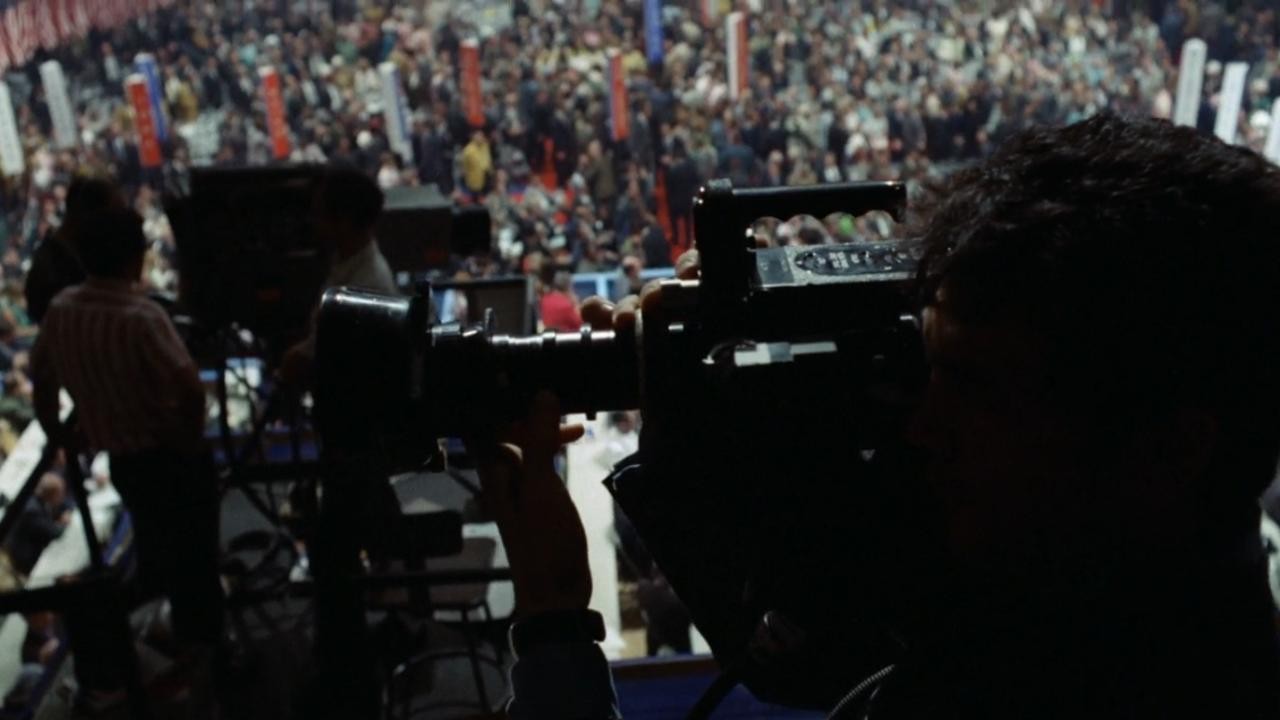
A detached TV news cameraman and a warmhearted Appalachian woman are engulfed in a wave of fear and violence during Chicago’s 1968 Democratic National Convention, in a style where the lines between a documentary and a fictional film become blurred. –Inbaseline
Two-time Academy Award-winning cinematographer Haskell Wexler was adjudged one of the ten most influential cinematographers in movie history, according to an International Cinematographers Guild survey of its membership. He won his Oscars in both black & white and color, for Who’s Afraid of Virginia Woolf? (1966) (1966) and Bound for Glory (1976) (1976). He also shot much of Days of Heaven (1978) (1978), for which credited director of photography Nestor Almendros — who was losing his eye-sight, won a Best Cinematography Oscar that Wexler feels should have been jointly shared by both. In 1993, Wexler was awarded a Lifetime Achivement award by the cinematographer’s guild, the American Society of Cinematographers. He received five Oscar nominations for his cinematography, in total, plus one Emmy Award in a career that has spanned six decades. Now 86 years old, Wexler was active as r recently as 2007.
In addition to his masterful cinematography, Wexler directed the seminal late… read more
It is relevant because it deals with the mass media's awareness of its interdependence with reality and its ardour to engage with populist movements; it is chilling because it is all too aware that this same ardour was born in an age of assassination.
Coming to the Collection, baby. Up there with one of the most daring films of the 1960s.
Much has been made and said about the 1960s in terms of the decade’s impact on political, social, and cultural history. I am not one to necessarily subscribe to the reactionary rockist worship of the… read review