MUBI brings you a great new film every day.  Start your 7-day free trial today!
Watch a new film every day for $4.99.
Try MUBI for FREE.
 

Synopsis

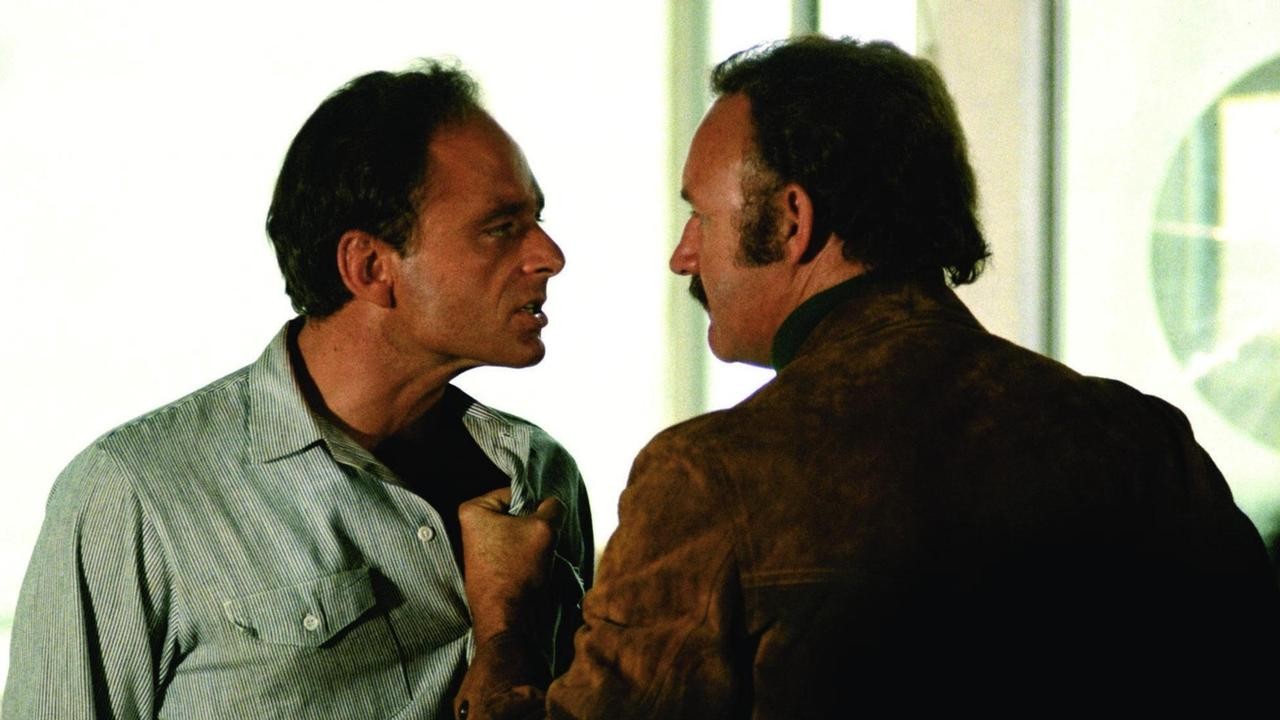
The classic noirs of the forties and fifties didn’t have the Watergate scandal to draw on and with it that 1970s style of disillusionment––the misdeeds did go all the way to the top. It’s this American malaise that weighs on Harry Moseby, a world-weary private eye out to find a young runaway. The clues pursued by this clueless dick take him to the Florida Keys where Delly, a needy nymphet, is shacked up with her slithery stepfather and his tough-as-nails girlfriend Paula, a sexy knockabout with a sardonic wit. Back in L.A., Harry’s marriage is tumbling (into someone else’s bed) and Harry, being the snarky snoop he is, never saw it coming. Hackman is brilliantly bruising as the doggedly vulnerable dick puzzled by his own mystery. Like a midnight ménage, Night Moves moves among Harry’s three women, each a complicated coupling. Like the other great seventies noirs, The Conversation, The Long Goodbye, and Chinatown, Penn darkly divulges that behind every mystery is more of it. —Steve Seid

Director

Original

Arthur Penn

Once the vanguard of 1960s-1970s Hollywood New Wave, director Arthur Penn saw his cinematic fortunes decline with the mid-‘70s rise of more straightforward blockbuster entertainment. Even as he struggled through the ’80s and ’90s, however, Penn’s legacy was assured by such films as Little Big Man (1970), Night Moves (1975), and the pivotal masterwork Bonnie and Clyde (1967).
Born in Philadelphia, Penn was trained to follow in his father’s footsteps as a watchmaker, but by high school, he knew he preferred theater. While stationed at Fort Jackson, SC, during World War II, Penn formed a small drama circle with his fellow infantrymen, and continued his education as an actor at school in North Carolina and Italy after the war. Though Penn acted in Joshua Logan’s theater company and studied with Michael Chekhov at the Actors Studio’s Los Angeles branch, he opted for a career behind the scenes when he got a job at NBC TV in 1951. By 1953, Penn was writing and… read more

Wall

Displaying 4 of 16 wall posts.
Picture of tibber

tibber

7Jun13

I feel like Hackman's character at the end. Either I'm really confused or this is a brilliant subversion of the standard private eye story. http://sensesofcinema.com/2010/feature-articles/loose-ends-in-night-moves-2/

Picture of Mr. Arkadin

Mr. Arkadin

15Jan13

Watching this for the second and third times I still think it has some glaring flaws—certain aspects of the dialogue and characterization, plus the goofiest use of music I've heard in a while—but I found myself being more entranced by (and aware of) its structure, those sudden, sometimes harsh cuts from scene to scene that keep the film’s interlocking mysteries (already a tangled path) all the more

  • Picture of Mr. Arkadin

    Mr. Arkadin

    15Jan13

    disorienting, discouraging, and completely opaque, both to Harry and the audience. I didn't used to, but I'm beginning to prefer its neonoir hopelessness to that of *The Conversation*.

Picture of João Eça

João Eça

11Dec12

"I saw a Rohmer filme once. It was kind of like watching paint dry", says Gene Hackman's character. That's the problem with Penn's movie, since he tries to do something arty with a Hollywood sub-genre (the detective movie) that has nothing of arty whatsoever. And he fails: the movie is a bore, the dialogues are pretentious and the twists are just silly. Though the ending is good, it is not enough to save the picture.

Picture of Daniel S.

Daniel S.

4Oct12

The main theme of the movie seems to be the search of a missing 16 years old girl. But Arthur Penn is more interested in psychological searches and quickly gives to his characters a discreet but nonetheless certain mythical dimension. So Marv Ellman, the dead stuntman with the eyes eaten by fishes, will be discovered by the young Delly who's got a quasi-incestuous relation with her stepfather. A mythical movie. A masterpiece.

Related Films

Fans

Displaying 5 of 194 fans.

Articles

Our roundup of essays and articles on this film.
W184

Arthur Penn, 1922 - 2010

By David Hudson on September 29, 2010

"Arthur Penn, the stage, television and motion picture director whose revolutionary treatment of sex and violence in the 1967 film Bonnie

read article
W184

Senses of Cinema 55, Lynch's 90s, Resnais's Next

By David Hudson on July 13, 2010

"Is it in the destiny of certain filmmakers to be in plain view within the borders of their national cinemas, yet out of sight in an international

read article

Lists

Displaying 5 of 80 lists.

Reviews

No reviews yet — Write the first

Forum

Displaying 1 discussion topic.

not the plot, the characters

3 posts by 3 people over 3 years ago