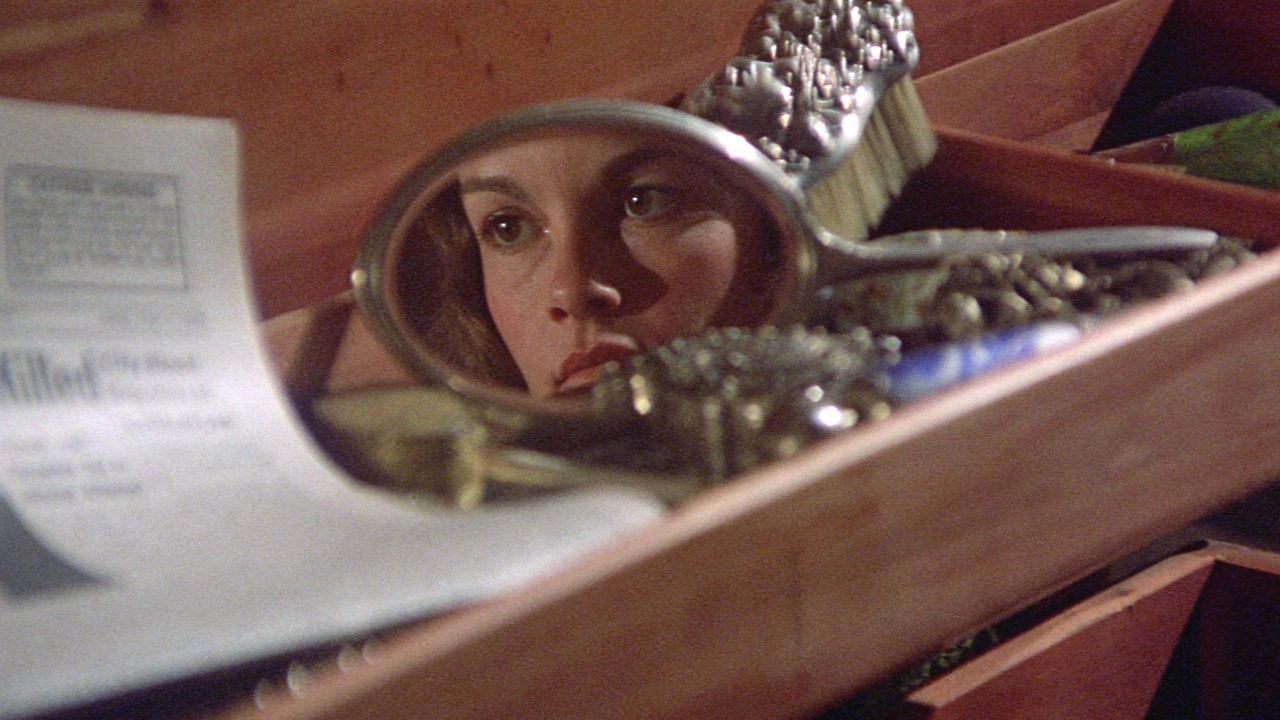
New Orleans businessman Michael Courtland’s life is shattered when his wife and daughter are tragically killed in a botched kidnap rescue attempt. Many years later whilst visiting Italy he meets and falls in in love with Sandra Portinari, who bears a striking resemblance to his wife. —IMDb
Brian De Palma is one of the well-known directors who spear-headed the new movement in Hollywood during the 1970s. He is known for his many films that go from violent pictures, to Hitchcock-like thrillers.
Born on the 11th of September in 1940, De Palma was born in New Jersey in an American-Italian family. Originally entering university as a physics student, de Palma became attracted to films after seeing such classics as Citizen Kane (1941). Enrolling in Sarah Lawrence College, he found lasting influences from such varied teachers as Alfred Hitchcock and Andy Warhol.
At first, his films comprised of such black-and-white films as Bridge That Gap (1965). He then discovered a young actor whose fame would influence Hollywood forever. In 1968, de Palma made the comedic film Greetings (1968) starring Robert de Niro in his first ever credited film role. The two followed up immediately with the film The Wedding Party (1969) and Hi, Mom… read more
This always feels like the most successful of his Hitchockian propositions about adjacent protagonist positions. While the questions about alternative familial relationships are fascinating (especially the ending), what makes this most successful for me is the manner by which tropes of homage do not overshadow the story and emotional development that further allow for a more successful narrative shift than Sisters.
De Palma's stylised melodrama - a southern gothic with Florentine excursion - is a film obsessed with recurrence and imitation. From the fresco in the church - a painting covering a painting, impossible to repair one without destroying the other - to the romantic affiliation between Courtland and the mirror of his dead wife, emotional manipulation of the audience is sustained through the recreation of familiar scenes and images in a variety of different contexts.
The relationship in the film is presented as an extended 'homage' to the central relationship in Hitchcock's Vertigo, itself a metaphor for the connection between a director and their star. This is an idea that De Palma would continue to build on with subsequent films, such as Body Double and Dressed to Kill.
The suggestive dance scene in the beginning was a clever move, but all in all the movie was a poor man's Vertigo - a derivative work that loses to its precursor in every aspect.
Focusing on Sandra's obsession to become the protagonist's late wife was the only chance this movie had, but De Palma and Schrader wasted it on a plot twist (a kind of a "it was all a dream" solution)
I've never minded his constant cribbing from Hitchcock (and Antonioni, and Argento, and the whole giallo genre), especially when his films amount to more than the sum of their cribbed parts. Having now finally seen Obsession from beginning to end, I'd rank it *just* below Sisters, with Blow Out being head and shoulders above those two, and Dressed to Kill being the peak of his fever-dream-Hitchcock form.
Looks like this roundup of festivals and events is becoming a regular Thursday feature. We begin this one in New York, sweep across the