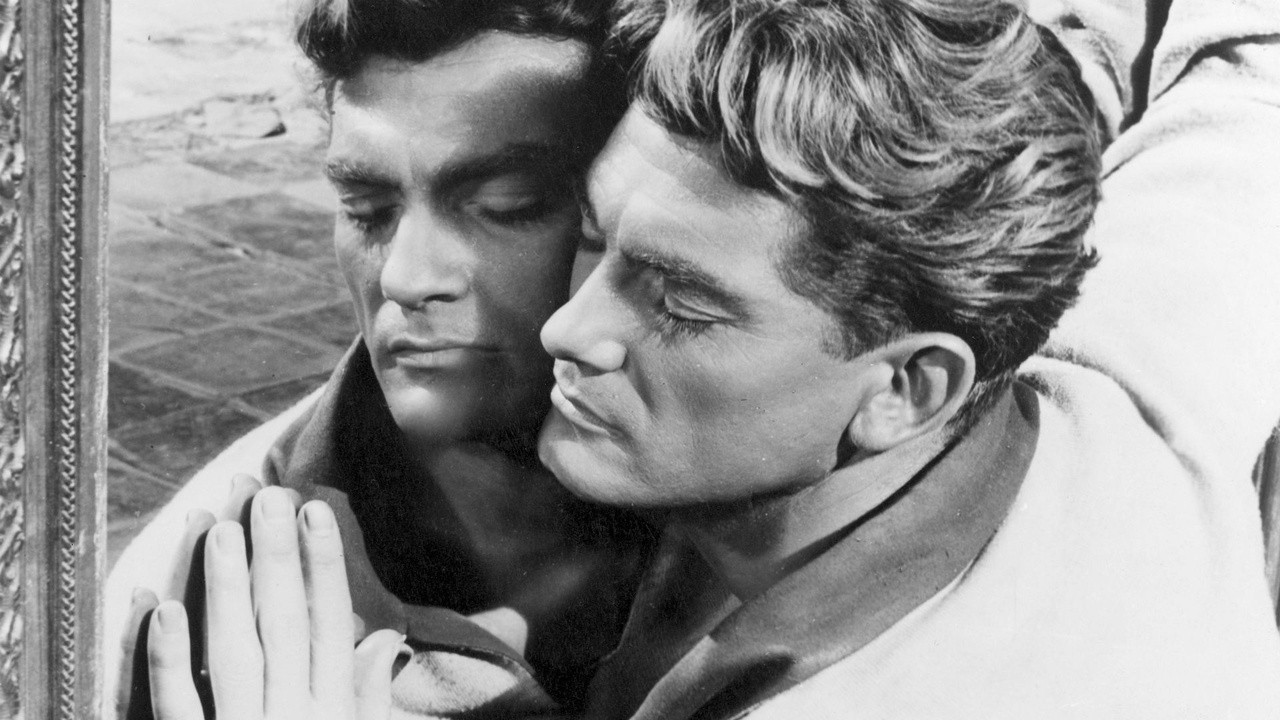
This 1950 update of the Orphic myth by Jean Cocteau depicts a famous poet (Jean Marais) scorned by the Left Bank youth, and his love for both his wife Eurydice (Marie Déa) and a mysterious princess (Maria Casarès). Seeking inspiration, the poet follows the princess from the world of the living to the land of the dead through Cocteau’s famous mirrored portal. Orpheus represents the legendary Cocteau at the height of his abilities for peerless visual poetry and dreamlike storytelling. —The Criterion Collection
More than simply one of avant-garde’s most successful and influential filmmakers, Jean Cocteau ranked among the century’s most diversely talented artists, also enjoying success as an accomplished poet, novelist, and illustrator. Cocteau was born July 5, 1889, in France and was raised primarily in Paris. Educated at the Lycee Condorcet, he became infatuated with another boy, Pierre Dargelos; their relationship was never consummated, and Pierre’s ghost often haunted Cocteau’s later adult work, his image embodying recurring themes of longing and solitude. He made his first splash while still a teen, reading his poetry at the Theatre Femina as a protégé of the actor Edouard de Max and becoming a darling of the intellectual set. By the middle of World War I, he was composing for the Ballets Russes, for Parade, which featured decor by no less a figure than Pablo Picasso, and music from Erik Satie, premiering in 1917. His subsequent wartime experiences later became the subject of a 1923 novel… read more
One of my formative film experiences when I videoed it on Betamax tape when I was sixteen. I still think it's a beautiful and rich film, all these years on...
After being so enchanted by Cocteu's Beauty and the Beast I was disappointed with Orpheus. The art and the invention was still present but little of the awe. It felt like successful experimentation rather than a unique perspective on the myth.
Films by Fassbinder and Eisenstein are also out this week on DVD and Blu-ray.
From Aether, by Harry Kumel (Malpertuis) and Herman Wuyts. The RED car speeds through the dark tunnel. In the driver's seat — The Girl
Jean Cocteau’s famous interpretation of the Orpheus legend finds the mythical wanderer (Jean Marais) traversing Left Bank poet cafes and being hounded by a Death Princess (Maria Casares) wearing dominatrix… read review
Orphée was made before the birth of the French ‘New Wave’ movement and occupies the ground between fantasy and realism. It was produced shortly after the Second World War, the effects of the war on… read review