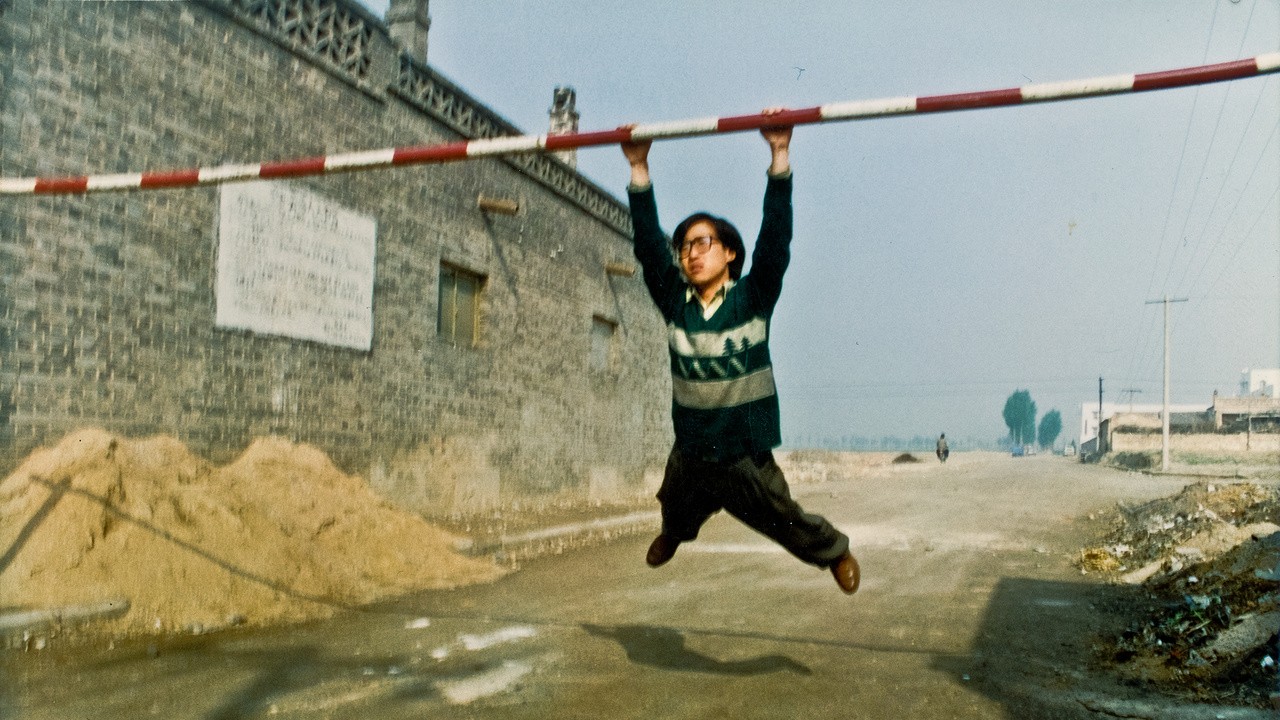
From award-winning 6th generation Chinese director Jia Zhangke (The World) comes the story of Xiao Wu. A small town pickpocket, like his friends never having managed to get away from the streets, he finds himself alone with his troubles. A local cop is out to get him and his love affair with Mei Mei, the local karaoke hostess, is going no where. He realizes it’s times to think about his future, but can he find the force to break with his criminal past? A new look at modern China in the debut film of one of contemporary cinema’s greatest artists.
Early Work
While a student at the Beijing Film Academy, Jia would make three short films to hone his skills. The first, a ten minute short documentary on tourists in Tiananmen Square entitled One Day in Beijing, was made in 1994 on self-raised funds. Though Jia has referred to his first directorial effort as inconsequential and “naive”, he also described the short day and half shoot as “excitement…difficult to express in words.” But it was Jia’s second directorial effort, the short film Xiao Shan Going Home (1995), that would bring him to the attention of the film world. It was a film that helped establish Jia’s style and thematic interests and, in Jia’s words, was a film that “truly marks the beginning of my career as a filmmaker.” Xiao Shan would eventually to screen abroad where it won a top prize at the 1997 Hong Kong Independent Short Film & Video Awards. More significantly, the film’s success brought Jia in contact with cinematographer Yu Lik-wai and… read more
A series of events in the day to day life of a petty criminal.Yes,he is self absorbed,but there are scenes about keeping one's dignity while trying to survive.Especially,when friends reject him and he is unable to do anything about it.
what i find extraordinary about jia zhangke's cinema is the ability to tell small, provincial stories of characters that happen to be, despite themselves, in the middle of momentous changes in the history and culture of China: the lack of identity, the sense of loss, the cultural displacement with western models and, above all, the violence, the disregard of a political system only able to exploit its own people.
A self described homage to King Hu and Chang Cheh reveals itself to be strongly rooted in the consistency and strength of Jia’s film world.
The Festival del film Locarno (August 4 through 14) has announced that it will award the Pardo d’onore Swisscom (Leopard of Honour) to Jia Zhangke
If you're going to talk about cinema at present, even if you're not talking very thoroughly, it's inevitable that Yu Lik-wai's work, if not
It took Jia 3 weeks to make this feature debut during his last year as a student in the Beijing Film Academy. What’s amazing is that it could be the opus of most other directors’ careers, and compared… read review
Xiao Wu is a mature exploration of the gritty and downbeat existence of a pickpocket. Never employing cheap melodrama or hasty generalisations, Jia pulls out his sublime narrative skills to force us… read review
Here we see the young Zhang Ke Jia starting to get loose, his first steps. I think he even shot chronologically because the movie itself gets closer to the style that we all know he has. How the individual… read review
Cinematically and culturally interesting, but ultimately left me bored and exasperated with the main character. I was really pulling for him to do something or make some effort to change throughout… read review