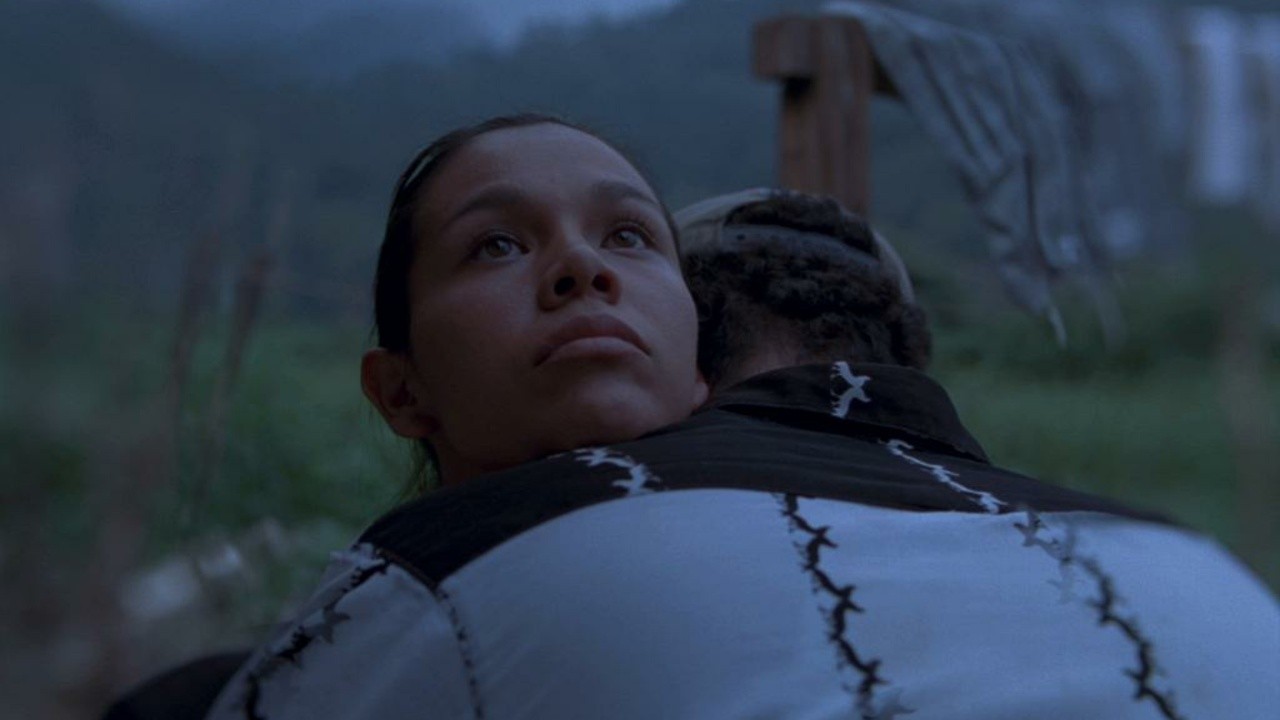
Juan and his young urban family live in the countryside of Mexico. There, they enjoy and suffer a world that understands life in a different way. Juan wonders if those worlds are complementary or, truly, they fight unconsciously to eliminate one another. —Cinando
Carlos Reygadas Castillo is a Mexican filmmaker known for his three films Batalla en el Cielo, Japón and Stellet Licht (Luz Silenciosa). After Batalla en el Cielo he was known for his raw depiction of sex on his films and the use of old or ugly characters. With Stellet Licht Carlos competed once more for the Palm d’or at the 2007 edition of the Cannes Film Festival, and has become one of the most prominent writer/directors of modern cinema.
In 1987 Carlos Reygadas discovered his filmic passion after watching the films Andrei Tarkovsky. He studied Law in Mexico, afterwards he specialized in Armed Conflicts in London and worked for the United Nations.
In 1997 Carlos participated in a film competition in Belgium with his first short film, Maxhumain. Shortly after that, in 1999 he began writing his first long film: Japón, which he didn’t began to shoot until 2001. The film was presented at the Rotterdam Film Festival and received a special metion on the Caméra d’Or award at… read more
A difficult work. My initial response is a positive one, though with some reservations. Reygadas presents a clear vision, though some of his aesthetic choices are distracting (e.g. the water drop lens effect). His expressionist approach to the story is borderline pretentious but also enchanting. Ultimately an absorbing work and better paced than Silent Light. Thematically complex and rewarding, if not entirely fresh.
Mind = Blown. Reygadas is a hero of mine and he may have just topped Battle in Heaven with this one in my books. Transcendent.
Expertly made, with beautiful compositions throughout of the rural mountains of Mexico, I especially loved the distortion effect on the lens: the extended scene up in the trees was sublime. However, these interesting, non-linear episodes seemed like outtakes of a larger drama & story that could have been brought more to the forefront. This is a film that's meant to be seen & heard on the big screen along.
An evaluation of the feature films programmed in TIFF’s Wavelengths section.
The third entry of our two-critic TIFF correspondence highlights films by Reygadas, Assayas, Bertolucci and Baumbach.
The Palme d’Or goes to Michael Haneke’s Amour. Also, a comprehensive list of all the award winners.
Léos Carax’s long-awaited return to Cannes is a loud one, and Carlos Reygadas’ Post Tenabras Lux sounds like a divisive highlight.
On the opening day of the 2012 Cannes Film Festival: a poster round-up of the films in competition.
Cronenberg, Resnais, Carax, Hong, Kiarostami, Reygadas, Wakamatsu, Miike…
I tip my hat to Reygadas for doing something unusual, but that’s where my praise stops for this thing.
I’ve always wondered if Reygadas has even seen a film other than those of Tarkovsky. Frankly… read review
Carlos Reygadas is one of the few exhilarating filmmakers alive and actively making movies. His films are never easy viewing. His films’ images and his films’ soundtrack stun your senses with their… read review
Post Tenebras Lux sure is a strange beast. Nobody liked it, neither the critics nor the public. And I guess they weren’t supposed to. I haven’t quite made my mind up yet. Surely while watching it you’ll… read review