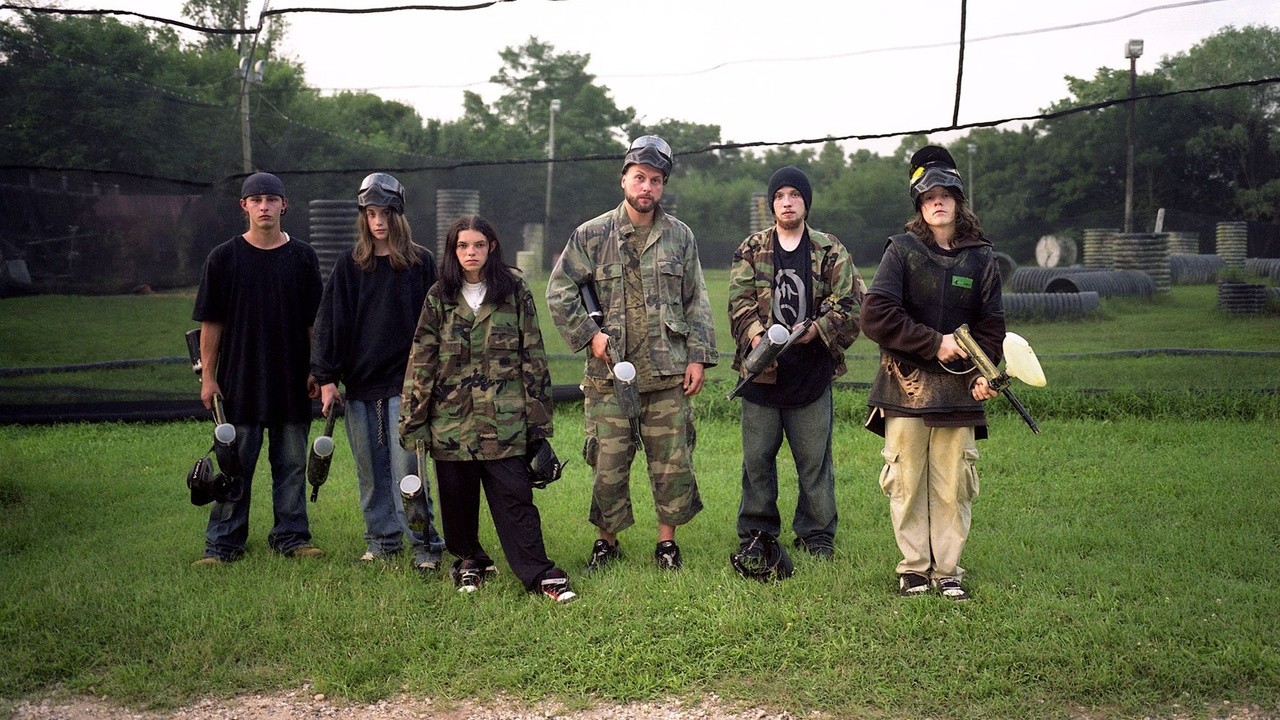
The first shot shows an untidy room, empty. This is where Cory lived, before he died of an overdose at 24. The film is set on the day before his funeral and shows his family and friends, who are beginning to get on with their lives again, although the sense of vulnerability caused by such a sudden death is still written all over their faces. Observing them in an almost documentary fashion, the film captures a mood and a milieu at the same time. Teenagers that come across as strangely exhausted by the impositions of growing up, only finding freedom in the small patch of green by the river or at the skate-park; adults whose lives are not just marked by tattoos. It is the film’s great gentleness that allows both the places and the protagonists to speak for themselves. An invisible, yet omnipresent interviewer asks them questions, listening to their answers about their relationship to Cory, about the funeral, about school, about what comes after death. A documentary touch in a film that moves most delicately between staging and improvisation, you might think. Or rather a method to allow precisely this boundary between filmic narrations to take center stage in the film. –Berlinale
Matt Porterfield was born in Baltimore, Maryland on October 6, 1977. He studied film at New York University’s Tisch School of the Arts. In 2006, he made his first feature film, Hamilton. Along with working as a director and screenwriter, Porterfield also teaches screenwriting and production at the Film and Media Studies Program at Johns Hopkins University. Putty Hill is his second feature film. –Berlinale
Without a main character it has the ability of never losing interest. Review and rating: http://alwayswatchgoodmovies.blogspot.com/2012/03/putty-hill-2010.html
Also: Adam Curtis on Dead of Night, life, the universe and everything. And more.
Also: Miriam Bale’s new film journal, Wavelength in LA and more.
“Not much happened in Matthew Porterfield’s first film, Hamilton, which was sort of the point,” writes Paul Schrodt in Slant…
Above: the first Golden Donkey winner, Reha Erdem's Kosmos (2009). Little did the Ferroni Brigade anticipate the earth-shattering importance
More of a supplement to Part 1 than a second half, this collection of roundups on films screening at Sundance, Rotterdam, Berlin and SXSW this
A largely improvised film about the death of a young drug abuser which allows for various characters to recall memories of their relationship to the deceased. Often shot as series of interviews, the… read review