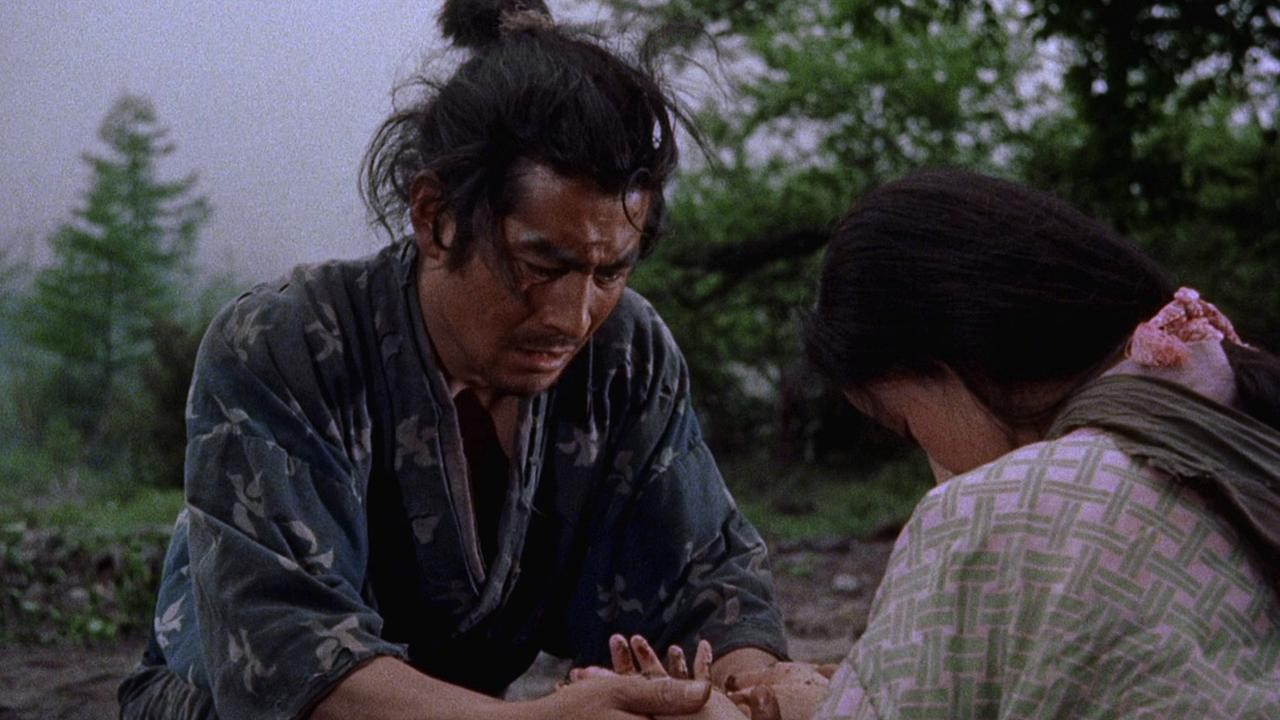
Hiroshi Inagaki’s acclaimed Samurai Trilogy is based on the novel that has been called Japan’s Gone with the Wind. This sweeping saga of the legendary seventeenth-century samurai Musashi Miyamoto (powerfully portrayed by Toshiro Mifune) plays out against the turmoil of a devastating civil war. The Trilogy follows Musashi’s odyssey from unruly youth to enlightened warrior. In the first part, Musashi Miyamoto, the hero’s dreams of military glory end in betrayal, defeat, and a fugitive lifestyle. But he is saved by a woman who loves him and a cunning priest who guides him to the samurai path. This installment won the 1955 Academy Award for Best Foreign Film. —The Criterion Collection
Inagaki’s career in film began as an actor—a child actor, in fact, appearing in numerous silent films beginning at the very dawn of Japanese cinema. This is probably why he was promoted to director at the unusually (for Japan) young age of 22. Along with producer Mansaku Itami (later the father of another acclaimed director, Juzo Itami), Inagaki concerned himself with the genre of Japanese period films. He also wrote (under a pseudonym) similar films for the short-lived director Sadao Yamanaka. The work of Inagaki, Itami and Yamanaka, singly and together, directly influenced the likes of Kenji Mizoguchi later, and helped define the very genre of the period film. Inagaki would direct dozens of them over his career, including two versions of Chushingura, and the Oscar winner for Best Foreign Film Samurai (1954, released in Japan as Miyamoto Musashi). For all his success, Inagaki grew more and more frustrated with his assignments over the years. Although proud of his final effort, Furin… read more
I loved this film, but I could never find the sequels in the library where I borrowed it from. I want to rent them but don't know where I can get a hold of them, short of buying.
The first part of this trilogy was overall enjoyable but I still can't shake how poorly adapted it was from the original novel. I admit that isn't a fair assessment as technically the film is an adaption of the play that was adapted from the text.
Takezo goes to battle trying to make a name for himself. His friend Matahashi follows him, leaving behind a fiance. The battle does not go well and as they stagger back home they stop to be cared… read review