MUBI brings you a great new film every day.  Start your 7-day free trial today!
Watch a new film every day for $4.99.
Try MUBI for FREE.
 

Scattered Clouds

Midaregumo

Japan

1967

108 Min
Color
English, Japanese
  • Currently 4.3/5 Stars.
  • 1
  • 2
  • 3
  • 4
  • 5

   |   

DIR Mikio Naruse

PROD Sanezumi Fujimoto, Masakatsu Kaneko

SCR Nobuo Yamada

DP Yuzuru Aizawa

CAST Yûzô Kayama, Yôko Tsukasa, Mitsuko Kusabue, Mitsuko Mori, Mie Hama, Daisuke Katô

ED Hideshi Ohi

PROD DES Satoshi Chuko

MUSIC Tôru Takemitsu

SOUND Masao Fujiyoshi

Synopsis

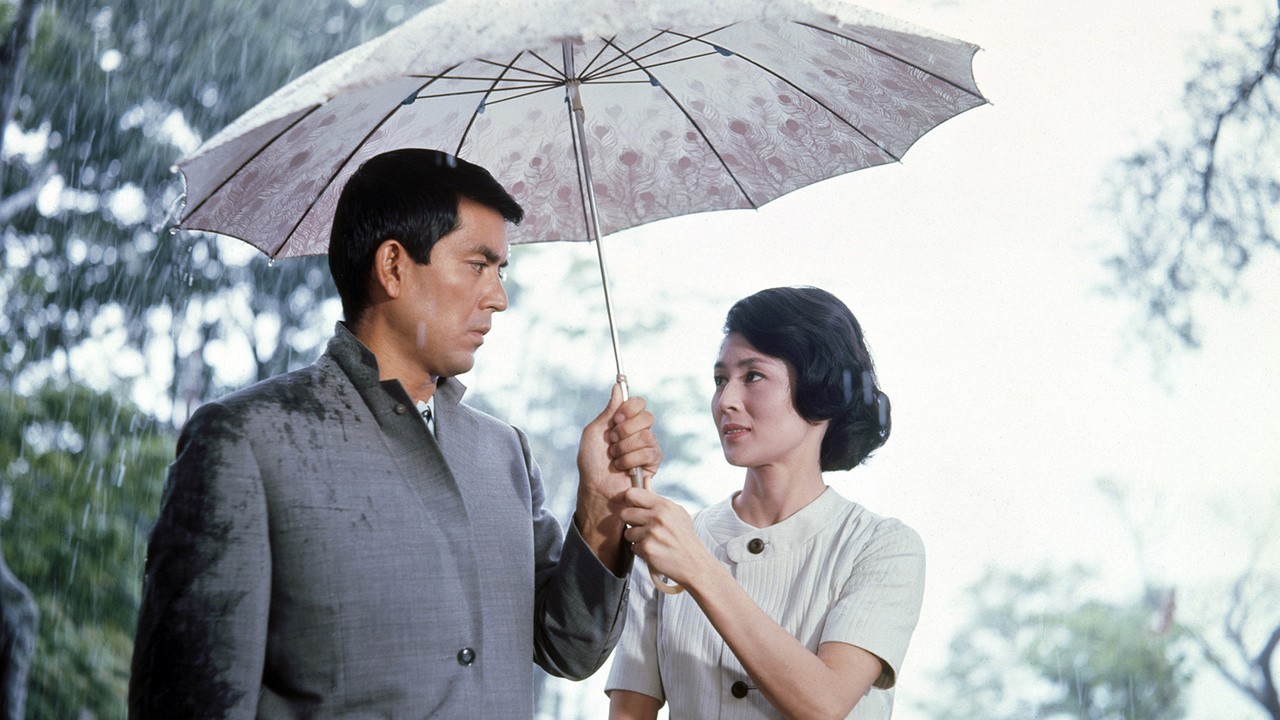
Naruse was already aware that he was dying when he made this deeply moving drama about a young woman haunted by her husband’s death in a car accident. She at first refuses to forgive the driver of the car, who approaches her in sincere contrition. After the two meet again by chance in Hokkaido, a fated bond slowly grows between them, although the past continues to cast its long shadow. Phillip Lopate called this “one of [Naruse’s] strangest and strongest. It is eerie to see how well his style worked inside the mode of the late sixties; how curiously modernist it looks in CinemaScope, with its cool, restrained colors and spare compositions; how suitable his theme was to the age of alienation, though it is only Naruse’s old song: that people keep scheming to get a little of what they want in a world designed for unhappiness.” —BAM/PFA

Director

Original

Mikio Naruse

Mikio Naruse is one of the least known of Japan’s early master directors, both in the West and in Japan, yet he created some of the most moving, darkly beautiful works in Japanese cinema. Like Kenji Mizoguchi, Naruse showed an uncanny understanding for the psychology of women. Like Yasujiro Ozu, he preferred subtle shifts of character over broad strokes of plot. Unlike either of these early greats, however, Naruse’s vision of humanity was much darker and more clinical. He stripped all vestiges of hope or acceptance from his films, what remains is only a willful struggle to endure. His relentlessly negative view of human existence has resulted in Naruse’s often being labeled a nihilist.

Born in Tokyo, in 1905, Naruse was the youngest of three sons of a desperately poor embroiderer. Although he excelled in elementary school, his family could not afford to further his education. He was instead enrolled in a two-year technical school. There, he spent virtually all of his free time… read more

Wall

Displaying 4 of 5 wall posts.
Picture of rischka

rischka

19Apr13

breathtaking compositions, amazingly modern yet eternally bleak

A_F_I likes this

Picture of Mohtar

Mohtar

21Mar13

Very beautiful portrayals of a tragic romance. This movie is what they called save the best for last. Beaut

Picture of Falderal

Falderal

14Mar13

The master tells us goodbye by resurrecting Yearning's Koji only to have him fall for Reiko's troubled younger sister. And art becomes reality. A reality where missing your bus, sick and caught in the rain, becomes a small celebration, as it means one more frivolous hour with her...

Aguaespejo and Gondo like this

Picture of Adam Suraf

Adam Suraf

23Oct11

Naruse's last film, an elegant, depressing romance between a widow and the remorseful driver who accidentally killed her husband. As with Naruse's best films, which this is one, the conventions of society, economy, modesty, and tradition act as barriers to any kind of long term happiness. With a sweeping, typically lovely score by Toru Takemitsu.

Cedric and Falderal like this

Related Films

Fans

Displaying 5 of 40 fans.

Lists

Displaying 5 of 41 lists.

Reviews

Displaying 1 of 1

The Unfairness of Life

By Rohit on October 9, 2011

Naruse ends his film making journey with a premise that we are used to associate with him. Here we have another dysfunctional relationship between a man and a woman whose husband gets killed in a car…  read review

Forum

Displaying 0 discussion topics.