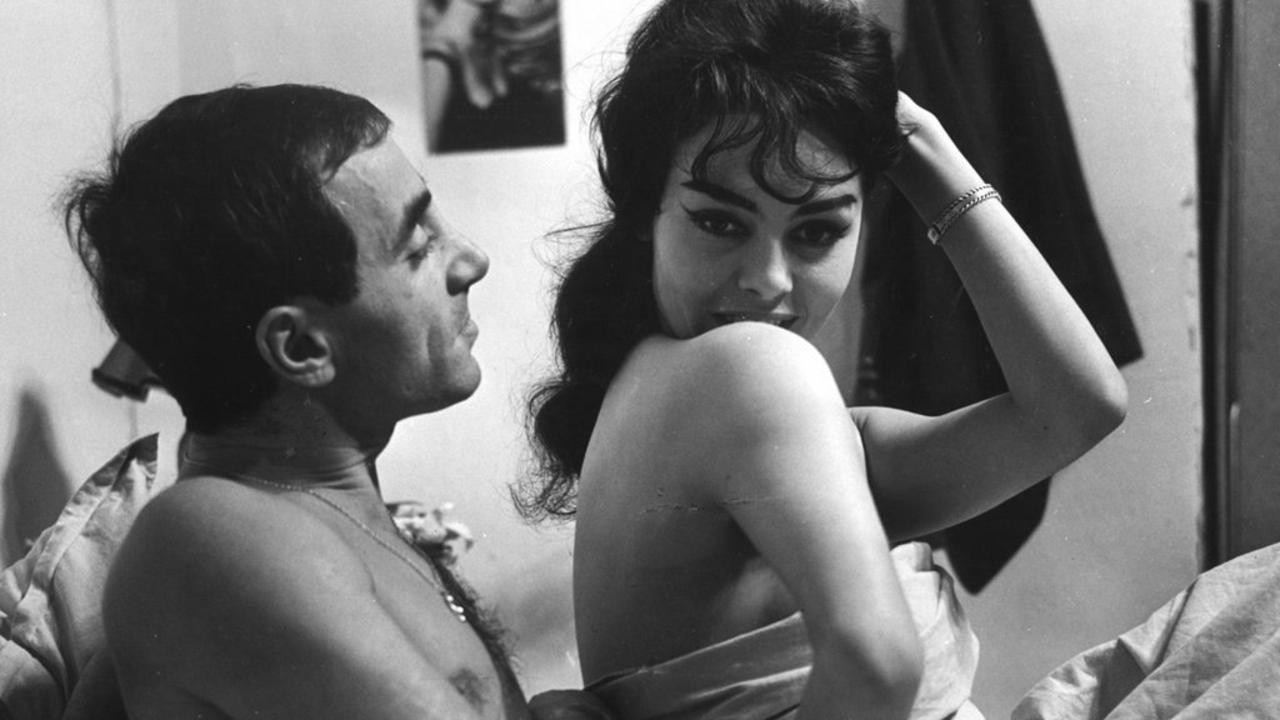
François Truffaut is drunk on the possibilities of cinema in this, his most playful film. Part thriller, part comedy, part tragedy, Shoot the Piano Player relates the adventures of mild-mannered piano player Charlie (Charles Aznavour, in a triumph of hangdog deadpan) as he stumbles into the criminal underworld and a whirlwind love affair. Loaded with gags, guns, clowns, and thugs, this razor-sharp homage to the American gangster film is pure nouvelle vague. —The Criterion Collection
The product of an unhappy, loveless home, Truffaut began using films to escape the exigencies of reality at age seven, virtually living in various Parisian movie houses. He left school to go to work at 14, and, one year later, founded a film club, which brought him to the attention of influential cinema critic Andre Bazin. Over the next few years, Bazin both financed and protected Truffaut. In 1953, Bazin hired Truffaut as a critic/essayist for Cahiers du Cinema. It was in the January 1954 edition that Truffaut published his landmark essay “A Certain Tendency in the French Cinema,” in which he attacked directors who merely ground out films without any personal cinematic vision; he also propounded the auteur theory, which opined that the only directors worth serious consideration were those who left their own individual signatures on each of their films. Truffaut noted that writing critiques enabled him to understand why he loved films and to rationalize his reasons for liking them… read more
What a charming little film. Not the most representative from the French New Wave but surely the most amusing. Aznavour is such a babe.
“The drive went into the filmmaking, in an effort to render an image of that fleeting apparition known as human experience.”
After the stellar triumph of his debut, the deeply personal ‘The 400 Blows’, Truffaut followed up with one of the oddest entries in his entire oeuvre, ‘Shoot The Piano Player’. To see it at this distance… read review
in the same way cocteau only made sense to me after seeing ‘les enfants terribles’ and then i couldn’t help myself but fall madly in love, truffaut only made sense to me after seeing this (despite… read review
I have seen many Truffaut films, and always felt him to be less intellectually potent though more heart-felt in his film making than his contemporaries in the New Wave. It was Goddard that transcended… read review