Philippe Jesus Grandrieux is a French film director born in 1954.
He studied movies at the INSAS (Institut National Supérieur des Arts du Spectacle) in Brussels and started his career as a moviemaker by shooting fictional films and documentaries. Grandrieux then worked as an experimental filmmaker in Belgium where he exhibited his video works at local museums. Since the eighties, he has been working in collaboration with the French Institut National de l’Audiovisuel (INA) where he has been inventing new cinematographic forms and formats that put into question central notions in film writing: for instance the notions of documentary, information and film essay. In 1990, he created the film research lab “Live” which produced one hour long sequences by Thierry Kuntzel, Robert Kramer and Robert Frank. He also taught movies from time to time at la FEMIS (Fondation Européenne pour les Métiers de l’Image et du Son) and at l’Ecole à l’Ecole Nationale Supérieure des Beaux Arts (Paris).
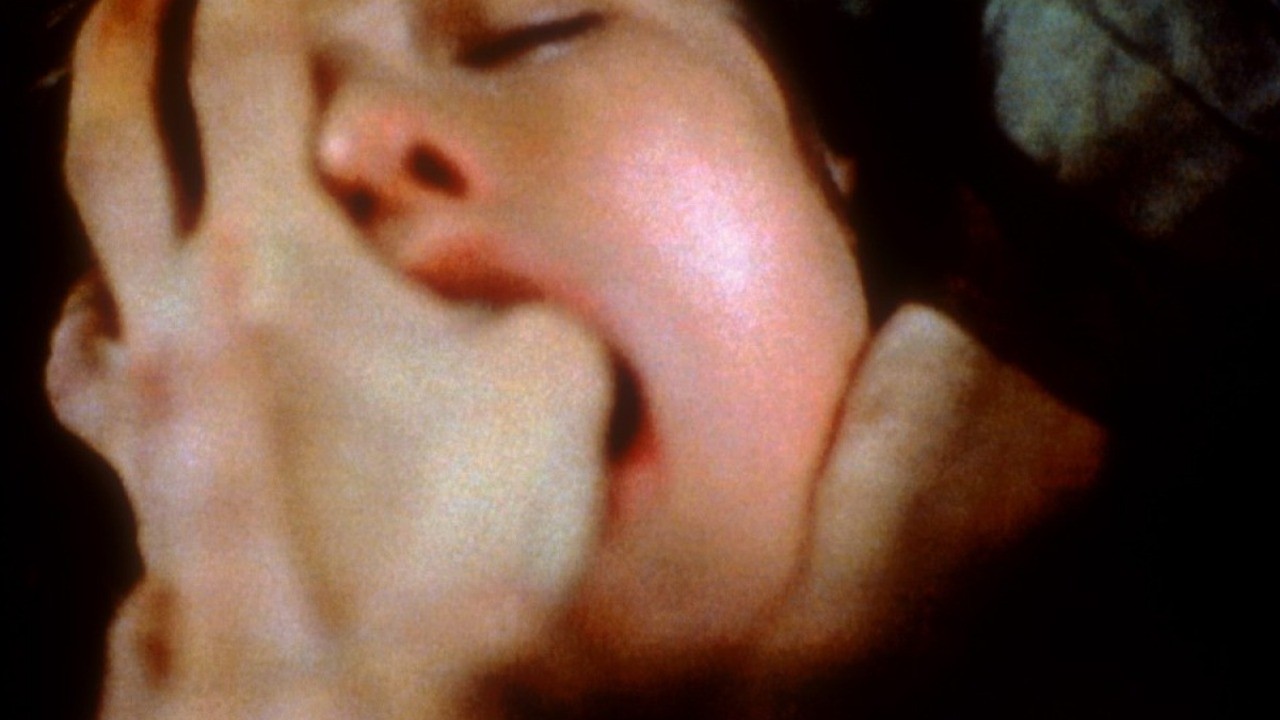
Grandrieux’s work covers several cinematographic fields : TV experimentation, video art, research movie, film essay, documentary and museum exhibition. His uncompromised vision of Art, leads him to push the boundaries of the cinematographic fields he is working on. As a consequence, he is always producing an inventive and radical cinema. His first two full-feature movies Sombre (which won an award at the Locarno Film Festival) and La Vie Nouvelle (A New Life) are exemplar of Grandrieux’s creativity in photography, sound and narration. Following the work of Teinosuke Kinugasa, Jean Epstein and Pier Paolo Pasolini who were constantly looking for and inventing new narrative forms that would only fit films, Grandrieux’s films, deriving from horror movies and experimental movies, give the viewer intense sensorial experiences. His goal is to make the viewer psychologically involved in his movies. Its films actually express a whole world of energies based on sensations and affects despite a linear narration and an iconography that relies on archetypes that refer to the archaic images of the fairy tale and the legend. Tim Palmer situates Grandrieux’s work within an ongoing tendency of a cinema of the body, linked to other filmmakers such as Marina de Van, Diane Bertrand, Damien Odoul and Claire Denis.
For his soundtrack, he worked with Alan Vega (on Sombre) and with the musicians, poets and performers of the band “Etant Donnés” (on A New Life). The American actor Zachary Knighton played the main character with Anna Mouglalis. The writer Eric Vuillard also participated in the writing of the script of A New Life. A part of the email exchange between Grandrieux and Vuillard about the script has been published in the French film review Trafic.
The psychanalist Jean-Claude Polack declares about Grandrieux’s movies that they “carefully try to understand the exact inner-working of one’s psychic, and more especially the part that deals with desire and transformation. How does desire work? What are the elements that this energy-matter is using to expand its empire? What are the social repressions that desire has to face? Unlike Pasolini who is really interested in the way that society is theatrically transforming the ceremony of predating into a show, there is here an experimental cinema; it is true; that is trying to register, thanks to the camera, what humans eyes would never be able to see in order to deconstruct and analyze reality. Grandrieux’s films are analytical films, like a microscope, that give the viewer the possibility to see more accurately what is movement, emotion, sensation, colour, darkness and the emergence of the image (either material or thought). What is the process that enables something to become an image in the dark? Why can this process only be seen as a threat?”
In 2006, Grandrieux appeared in Sarah Bertrand’s documentary There is no direction.
In 2007, the singer Marilyn Manson, who admits having seen La Vie nouvelle several times, asked Grandrieux to direct his video-clip for his song Putting Holes in Happiness that belongs to the album Eat Me, Drink Me.
In 2008, Japan paid homage to Grandrieux’s work, thanks to the French Ambassy, in the famous Uplink movie theater of Tokyo, under the title “Extreme Love – around Philippe Grandrieux”.
The same year, the Tate Modern of London, along the retrospective « PARADISE NOW ! Essential French Avant-Garde cinema 1890-2008 », played Putting Holes in Happiness, A New Life, The Late Season and an excerpt of A Lake, his latest movie, which was not completed back then.
A Lake was ready for the 65th Venice Film Festival (2008) where he won a Special Mention in the Orrizzonti Section which rewards movies that initiate new cinematographic trends.
His work has been influenced by the work of Edmond Bernhard, his teacher at the INSAS, Murnau, Robert Bresson, Jean-Marie Straub, Danièle Huillet, Rainer Werner Fassbinder, Stan Brakhage and also by his readings of Marc-Aurèle, Spinoza and Gilles Deleuze’s work. —Wikipedia