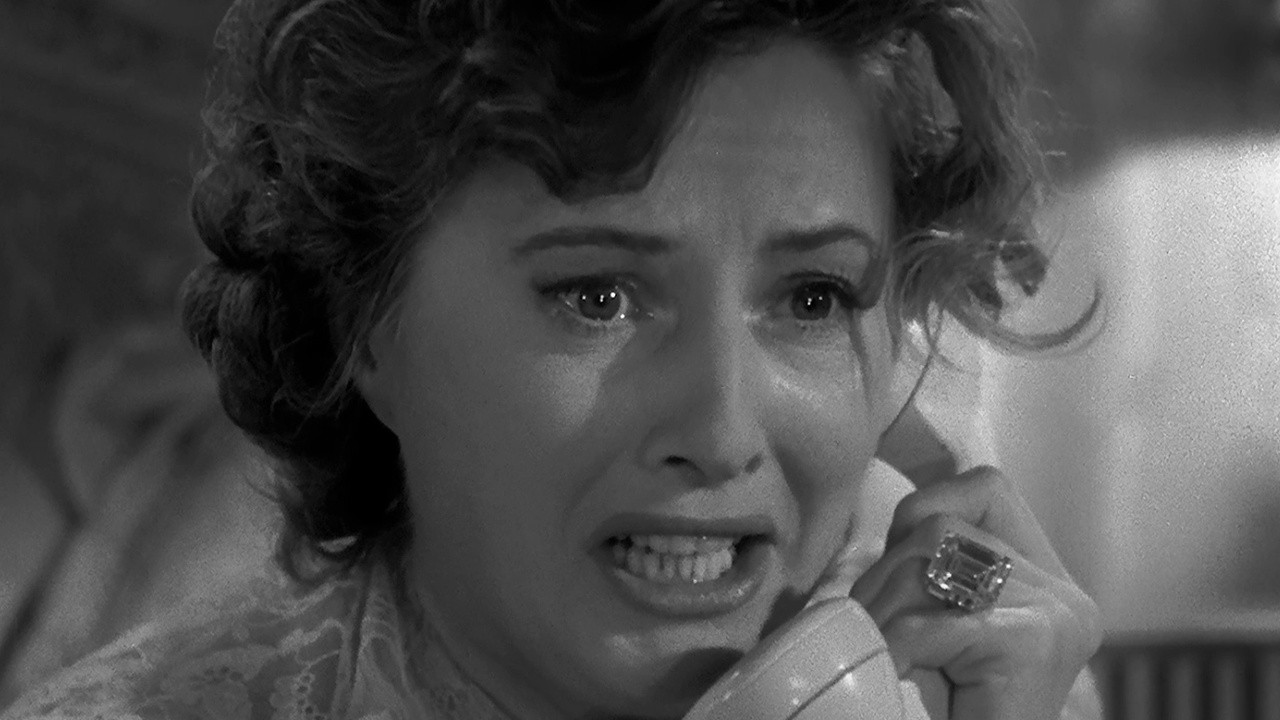
Leona Stevenson is an alluring, wealthy, and irritating hypochondriac whose psychosomatic illness has her bedridden. Leona’s only lifeline is the telephone, which she uses to excess. One evening, Leona impatiently tries to locate her henpecked husband Henry who is late in coming home. However, when phone lines cross, she overhears two thugs plotting a murder. Desperate to thwart the crime, Leona begins a series of calls—to the operator, to the police, and others—and eventually deduces the shocking identity of the victim. Meanwhile, unbeknownst to Leona, Henry is having problems of his own—he’s become involved in a swindle and is being blackmailed. The film follows Leona, trapped in her lush apartment, as she tries to prevent an innocent from being murdered. —IMDb
Born in Kiev, Michael Anatole Litwak was a stage actor and assistant director as a teenager. He entered Soviet cinema in 1923, working in Nordkino studios as a set decorator and assistant director. He directed his first film, the 1925 release Tatiana (Hearts and Dollars), but left the Soviet Union that year for Germany, where he edited G.W. Pabst’s Die Freudlose Gasse (The Joyless Street, 1925), assistant directed, and helmed the early ‘30s features Dolly Macht Karriere (1931), Nie Wieder Liebe (1932), and Das Lied Einer Nacht (1933). Fleeing the Nazis, Litvak directed films in England and France, among them the international hit Mayerling (1936). He came to Hollywood in 1937, where he helmed many handsome and polished features, specializing in crime films (The Amazing Dr. Clitterhouse, Confessions of a Nazi Spy, Castle on the Hudson, Out of the Fog) and romantic dramas (The Sisters, All This and Heaven Too). He worked on several Army documentaries during World War II, and co-directed… read more
Convoluted, but satisfying noir. Stanwyck makes a great "hopeless invalid" with daddy issues, while Lancaster acts like a wooden Indian. A splendid Franz Waxman score too!
WWI aerial drama from Anatole Litvak.