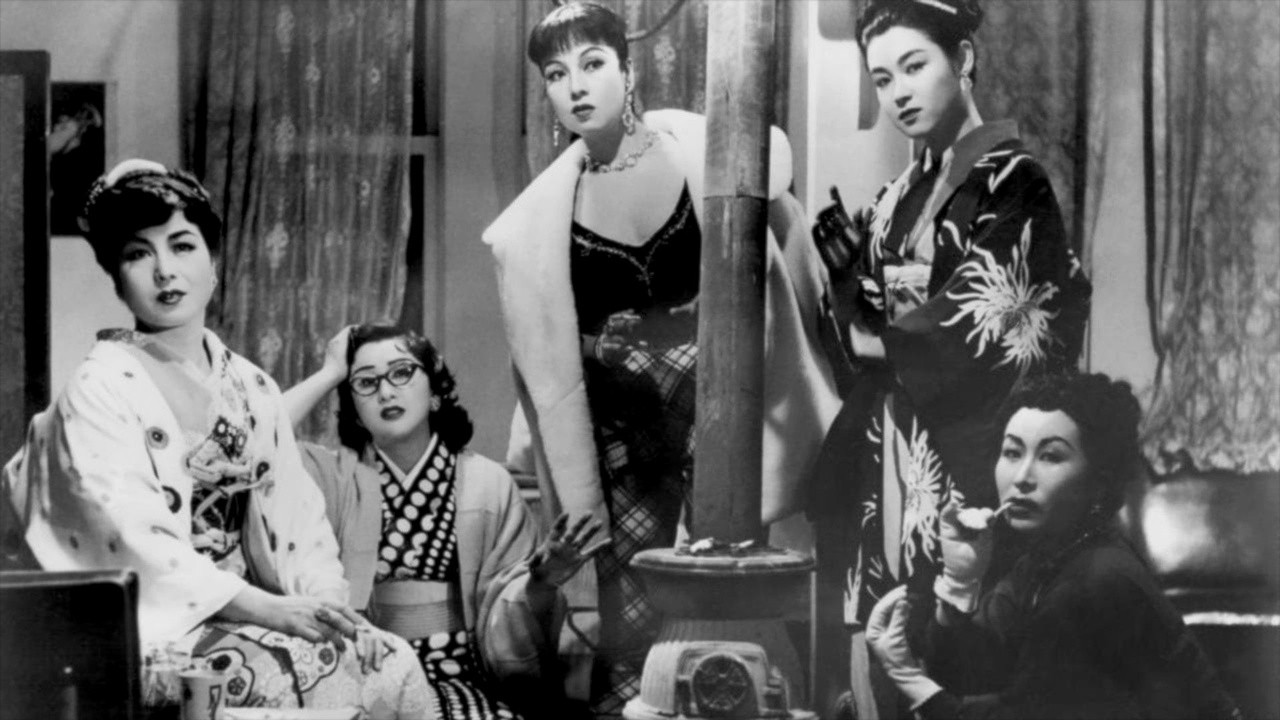
For his final film, Mizoguchi brought a lifetime of experience to bear on the heartbreaking tale of a brothel full of women whose dreams are constantly being shattered by the socioeconomic realities surrounding them. Set in Tokyo’s Red Light District (the literal translation of the Japanese title), Street of Shame was so cutting, and its popularity so great, that when an antiprostitution law was passed in Japan just a few months after the film’s release, some said it was a catalyst. —The Criterion Collection
Kenji Mizoguchi entered the film world as a promoter of Western novelty in Japanese cinema and exited it as an acclaimed international director who exemplified Japan at its most traditional. After The Life of Oharu and Ugetsu won prizes in successive Venice Film Festivals in the early ‘50s, Mizoguchi became an icon for the nascent French New Wave. His mastery of mise-en-scène was lauded by Jacques Rivette, while Jean-Luc Godard praised his metaphysics and his stylistic elegance. Mizoguchi is still recognized as one of the 20th century’s greatest filmmakers. Born in Tokyo, in 1898, Mizoguchi was the middle child of a roofer/carpenter. His family’s financial situation went from modest to desperate when his erratic, dreamer father tried to make a killing by selling raincoats to the military during the Russo-Japanese war. Not having enough money for food, Mizoguchi’s older sister was put up for adoption at age 14. She was later sold to a geisha house. Mizoguchi himself… read more
99filmo's Mizoguchi marathon begins on a highnote, what a brilliant film that says everything it is trying to be in the perfect fashion. The soundtrack is mindbending!
after read mizoguchi's biography, somehow i thought that those women are all himself and i felt strangely connected with him and picturing his life in my head. it was surely an experience. thank you, mizoguchi-sensei.
I think that the scene where Yumeko meets her son outside the factory is one of the most painful moments I have ever seen on film. It is truly amazing how Mizoguchi manages to make the audience feel so much with the characters. Not many directors end their career with such a great film. Respect.
A look at the early work of one of the great designers of the Golden Age of Polish movie posters.
Starting today, and for most of April, Film Forum in New York will be honoring five of Japan’s greatest actresses in a portmanteau retrospective
“We live in a fishbowl, and people love to talk.”– Sisters of the Gion Famously, Mizoguchi’s camera is a spy: peeking in behind bars and curtains
خیابان شرم (۱۹۵۶)، آخرین فیلم کارگردان بزرگ ژاپنی کنجی میزوگوچی ( ۱۸۹۸ -۱۹۵۶) . این کارگردان طی دوران کاریش که از سینمای صامت شروع میشه و تا اواخر دهه 50 و سینمای ناطق می رسه بیش از 90 فیلم ساخت… read review
D:\Watching the final sequence of Mizoguchi’s final film, all I could think of was how it’s like his final statement to his audience, telling us “take a look at how messed up life is, I’m outta here… read review