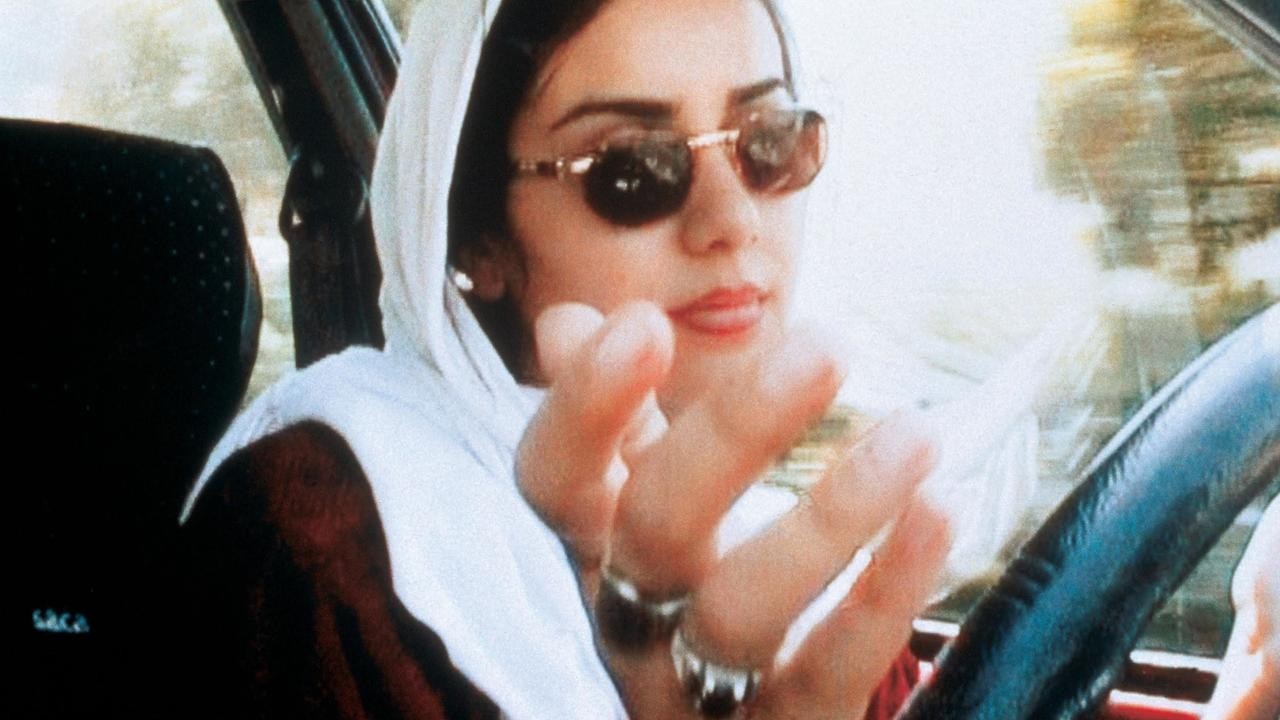
Celebrated Iranian writer-director Abbas Kiarostami (Taste of Cherry, Close-up) once again casts his masterful cinematic gaze upon the modern sociopolitical landscape of his homeland, this time as seen through the eyes of one woman as she drives through the streets of Tehran over a period of several days. Her journey is comprised of ten conversations with various female passengers, including her sister, a hitchhiking prostitute and a jilted bride, as well as her imperious young son. As Kiarostami’s ‘dashboard cam’ eavesdrops on these lively, heart-wrenching road trips, a complex portrait of contemporary Iran comes sharply into focus. Calling it a ‘work of inspired simplicity,’ A.O. Scott in The New York Times wrote that Kiarostami, “in addition to being perhaps the most internationally admired Iranian filmmaker of the past decade, is also among the world masters of automotive cinema… He understands the automobile as a place of reflection, observation and, above all, talk.” –Zeitgeist Films
Abbas Kiarostami was born in Tehran, Iran, in 1940. He graduated from university with a degree in fine arts before starting work as a graphic designer. He then joined the Center for Intellectual Development of Children and Young Adults, where he started a film section, and this started his career as a filmmaker at the age of 30. Since then he has made many movies and has become one of the most important figures in contemporary Iranian film. He is also a major figure in the arts world, and has had numerous gallery exhibitions of his photography, short films and poetry. He is an iconic figure for what he has done, and he has achieved it all by believing in the arts and the creativity of his mind. —World Cinema Foundation
Kiarostami uses the automobile to the hilt in this film on the joys, sorrows and ambitions of modern women in Iran. It tells you how you can use even a static space with two camera angles to convey a story, and that too an insightful one. Fascinating stuff!
One of the worst movies I've ever seen. It's completely formless, has nothing to say about the complicated issues of women in Iran, or women in general, or life in general. It's the anti-thesis of film, it's nothing. It barely exists in whatever shallow, superficial, non-entity, critic baiting world it's created. Dog shit has more to say about the human condition than this sub-reality show crap.
Do you even know how this film was made? Even if you don't like it, you can give 1 star or not to rate it at all; Why the hateful words?! Since when you know a lot about women's condition in Iran?
Abbas Kiarostami's Shirin continues his journey into the avant-garde world of Five Dedicated to Ozu, his 2003 excursion into long take minimalist