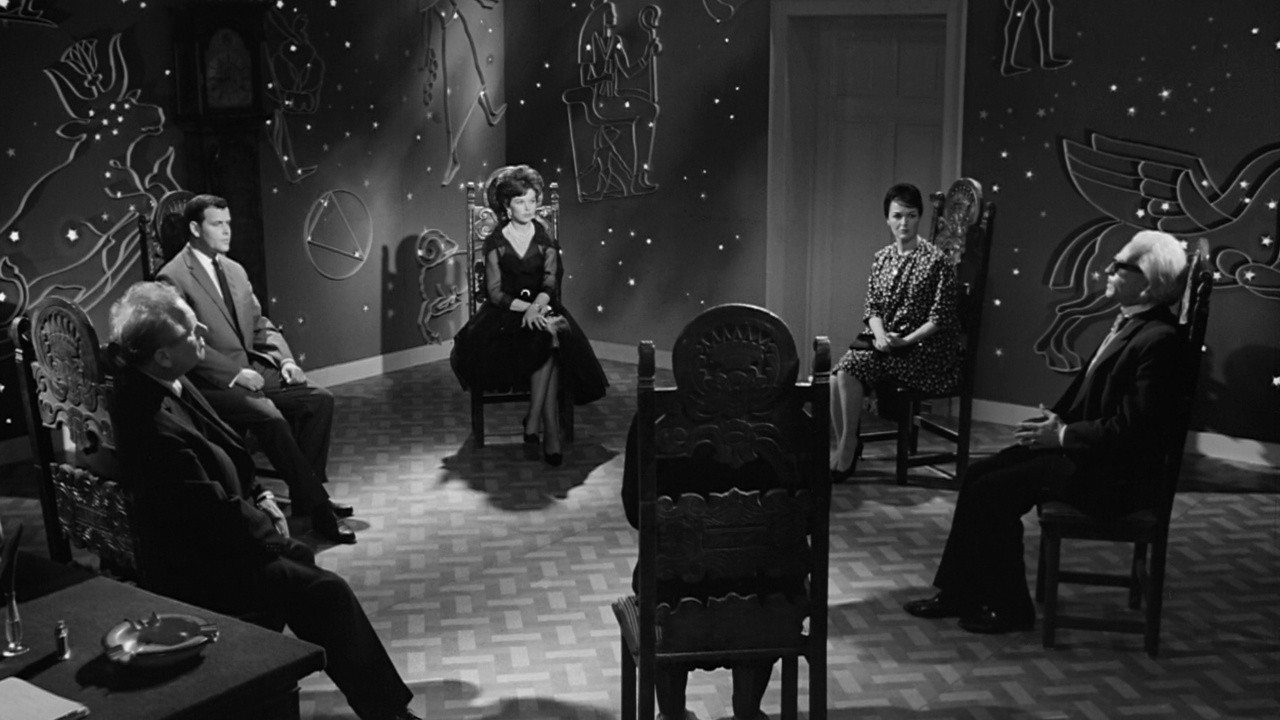
Reporter Peter Barter gets murdered while driving to his tv station. Commisioner Kras gets a phone call from clairvoyant Cornelius who saw Barters death in a vision. But a dark force prevents Cornelius from seeing the man behind the crime. Meanwhile the policemen concentrate their activities on the hotel Luxor. There exist too many links between the hotel and the unsolved crimes. Trevors, a rich American, rents a room in the hotel at the same time. He can prevent the suicide of the young woman Marion Menil at the last minute. But what is the reason for Miss Menils doing? Why is she initimidated? Could it be that Dr. Mabuse, a genius in crime believed to be dead, is back? —IMDb
Bringing to the screen an obsessive and fatalistic world populated by a rogues’ gallery of strange and twisted characters, Lang staked out a uniquely hostile corner of the cinematic universe; despair, isolation, helplessness, all found refuge in the shadows of his work. A product of German Expressionist thought, he explored humanity at its lowest ebb, with a distinctively rich and bold visual sensibility which virtually defined film-noir long before the term was even coined. Born Friedrich Christian Anton Lang in Vienna, Austria, on December 5, 1890, he initially studied to become an artist and architect. He first entered the German film industry as a writer, penning a series of horror movies and thrillers beginning with 1917’s Hilde Warren Und Der Tod. In 1919, he and director Robert Wiene teamed on the script of The Cabinet of Dr. Caligari, and although Lang exited in the pre-production stages to begin work on another project, his major contribution to the story, a framing device… read more
Lang continues his partnership with Artur Brauner, revisiting the criminal mastermind that played such a big role in his German career, comes out with a sometimes confusing, stilted, but typically Langian spy thriller worthy enough to stand as the last gasp of an aging, blinding, master.
Lang's final film is one of his most underrated. Stylistically, it's some of his best work, even if it sadly lacks the strong resonance and political implications of the two previous Mabuse films. But what comes across most strongly is a vindicated sense of nostalgia for an old-school brand of thrills. Here's a swan song built for pure enjoyment. What can I say? The man went out on a high note.
A pale shadow Mabuse's previous incarnations. Repeats much of what has come before with little relevance.
These notes are for Bill Ryan. One would hope that for pretty much every cinephile reading this, the object announced above (from—you'd never
Maybe you see further than I can see, or maybe things just look differently. Maybe I'm nothing but a shadow on the wall. Maybe love's a tomb
Fitting that Fritz Land returned to his most famous, or infamous character, Dr.Mabuse to end his filmmaking career. The Mabuse character can be described as an allegory for many things, including… read review