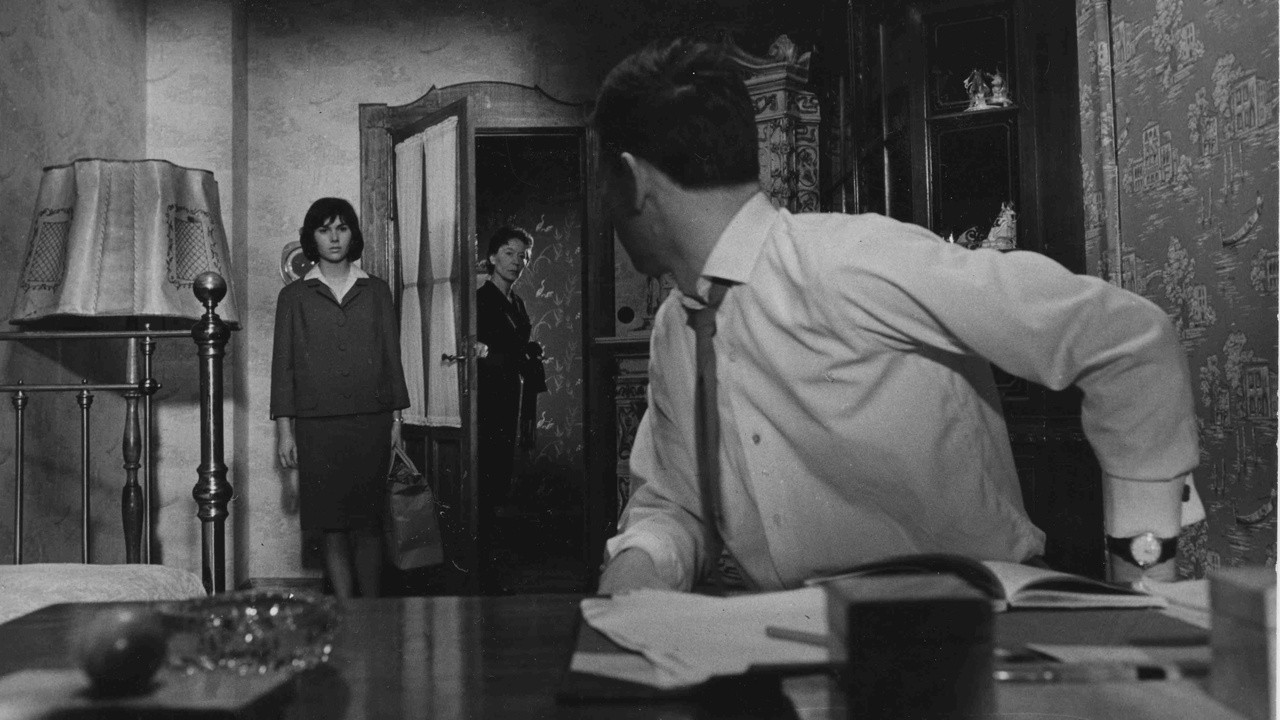
Following a nervous breakdown, Rita Seidel returns to the village of her childhood. She has been told to get some proper rest. She wants to regain her strength and uses this period of convalescence to mull over her past.
She met Manfred Herrfurth, a chemist ten years her senior, and fell irresistibly in love with him precisely because his mind was so utterly unlike her own. He was uncommonly intelligent and a keen observer of both people and things. Rita is a natural, open-minded person, full of expectations for the future. Herrfurth, on the other hand, has become cynical as a result of bitter experience. Rita moves to town to live with her lover, to begin a new life as it were and to become a teacher. Many things are new and thrilling; town life itself as well as her work. But living with Manfred turns out very differently from what she originally dreamt of. He is embittered and after seeing a chemical process which he has developed and whose realisation he has pinned his hopes on rejected, he becomes totally discouraged and leaves for West Berlin. He is convinced that Rita will follow him. But she does not. Being separated from him, taking leave of her great love, triggers a psychological crisis and breakdown. Of course, some wounds will remain, but Rita is a strong woman who will overcome this crisis. —German Film Archive
Konrad Wolf was born in Hechingen in 1925 and died in Berlin in 1982. In 1933, his family emigrated to the Soviet Union. At the age of 18, he joined the Red Army and came to Germany as a lieutenant in 1945. He studied Directing at the Moscow Film School in 1949 and worked as an assistant director to Kurt Maetzig at the DEFA Studios in 1953. His first feature film was Einmal ist keinmal (1955). From 1965, Wolf was president of the East German Academy of Arts. His major films include: Genesung (1956), Lissy (1957), Sun Seekers (Sonnensucher, 1958), Stars (Sterne, 1959), The Divided Sky (Der geteilte Himmel, 1964), I Was Nineteen (Ich war 19, 1967), The Naked Man in the Stadium (Der nackte Mann auf dem Sportplatz, 1974), and Mama, I’m Alive (Mama, ich lebe, 1976). —german films
Her most popular novel, The Divided Sky, was adapted by Konrad Wolf.
"The great French critic André Bazin said of director Luchino Visconti that he filmed the Sicilian fishermen in La Terra Trema as if they