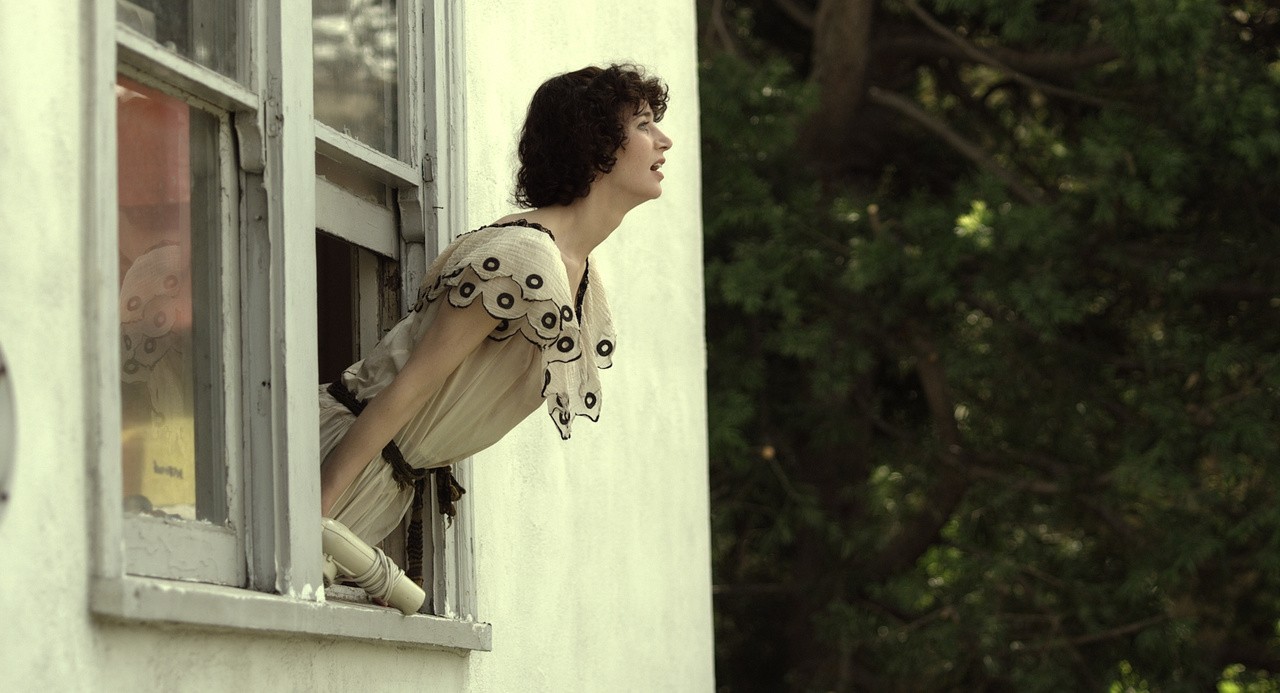
The Future begins one afternoon on a sofa. Sophie and Jason, a 30-something couple in Los Angeles, realize that in one month, their lives will change radically when they pick up a stray cat they’re adopting. Wanting to take advantage of their fleeting freedom, they quit their jobs, disconnect their Internet, and pursue new interests, all of which literally alter the course of time and space and test their faith in each other and themselves.
Miranda July’s work slips and slides whenever you try to pin it down. A truly original voice, she has an uncanny intuition for playful, figurative storytelling. The Future is narrated by a cat. One night Jason freezes time and talks with the moon. Sophie decides to settle with an older man in suburbia as if she were shopping for a potential future: trying it on to see if it fits. An exhilarating, funny, and wildly inventive second feature, The Future reflects a profound understanding of the existential fears that accompany relationships. –Sundance Film Festival
Miranda July is a filmmaker, artist, and writer. Her videos, performances, and web-based projects have been presented at sites such as the Museum of Modern Art, the Guggenheim Museum and in two Whitney Biennials. July wrote, directed and starred in her first feature-length film, Me and You and Everyone We Know(2005), which won a special jury prize at the Sundance Film Festival and the Camera d’Or at the Cannes Film Festival. Her fiction has appeared in The Paris Review, Harper’s, and The New Yorker, and her collection of stories, No One Belongs Here More Than You, (Scribner, 2007) won the Frank O’Connor International Short Story Award. In 2002 July created the participatory website, learningtoloveyoumore, with artist Harrell Fletcher, and a companion book was published in 2007 (Prestel). Eleven Heavy Things, an interactive sculpture garden she designed for the 2009 Venice Biennale, is on view in Union Square in New York for the summer of 2010. Raised in Berkeley, California, she currently… read more
Another ambitious feature does a good job of blending an insightful, character-driven relationship drama with some more fantastical elements - though the talking cat did get cloying at times. July and Hamish Linklater are strong in the leads, and there are a number of fine moments of playful surrealism. Not for everyone, but indie fans with a taste for the absurd should enjoy it. Great score by Jon Brion.
Miranda July is a particular type of writer for certain types of people, but once you get into her swing of things, the symbolism in The Future becomes really stunning, especially that which portrayed the indecisiveness and tragedy of life, commitment, and fading youth. The strong parts of the film, though, was the narration of PawPaw and the portrayal of relationships that are at a turning point.
it has some very important issues of relationships in it but the cat part made a bit too sad. i mean it describes well the fear of commitment, how we're scared of getting bored, how we want to be adored and how we need attention etc. in the first half i was like: are you serious? but i changed my mind during the middle and it's not such a bad movie afterall. it has very good points.
Kinda disapointed, but not really a bad Movie. Linklater was really good and the script is actually pretty interesting, but that paw paw shit almost ruined it for me. Also, Miranda can't fucking act. It doesn't get anywhere near her debut feature film.
Arguably the strangest study of artistic and parental anxiety since Eraserhead.
"Miranda July's new feature The Future revolves around a talking cat, a precocious little girl, a single father, a wise old man, and a hipster
Ralph Fiennes's adaptation of Shakespeare's Coriolanus is among six world premieres in the first round of Competition titles in the Berlinale
“The Future is, ironically enough, about the present and the longing for the future, rather than the future itself. One line that you’ll find in the trailer is when an old man tells Jason (played by… read review
When a couple decides to adopt a stray cat their perspective on life changes radically, literally altering the course of time and space and testing their faith in each other and themselves.