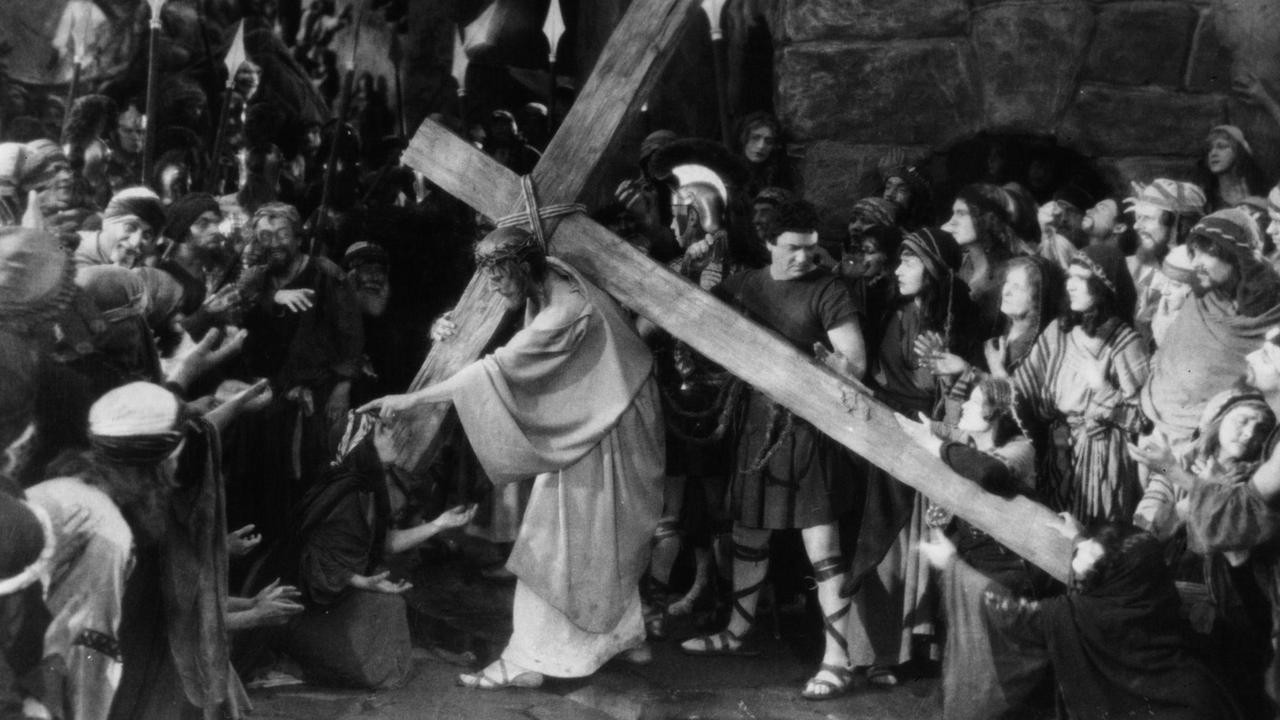
The King of Kings is the Greatest Story Ever Told as only Cecil B. DeMille could tell it. In 1927, working with one of the biggest budgets in Hollywood history, DeMille spun the life and Passion of Christ into a silent-era blockbuster. Featuring text drawn directly from the Bible, a cast of thousands, and the great showman’s singular cinematic bag of tricks, The King of Kings is at once spectacular and deeply reverent—part Gospel, part Technicolor epic. —The Criterion Collection
An actor and general manager with his mother’s theatrical troupe since the mid-1900s, Cecil B. DeMille formed a filmmaking partnership in 1913 with vaudeville artist Jesse L. Lasky and businessman Samuel Goldfish (soon to be known as Samuel Goldwyn). Their first venture was The Squaw Man (1914), which DeMille co-directed, co-wrote and co-produced with Oscar Apfel. This successful and elaborate six-reeler launched DeMille on a lifelong career in films. His first solo effort was the Western The Virginian (1914), which he also co-scripted. He edited and wrote (or co-wrote) almost all his successful films, with the notable exception of the popular melodrama The Cheat (1915). Writer Jeanie Macpherson began working for DeMille in 1914 with The Captive (1915), and wrote most of his later silent films: hits that included witty romantic farces (Don’t Change Your Husband); epic morality tales that combined modern dramas with visions of history (Joan the Woman 1916 read more
We all know that this movie is 100% Propaganda to instill the White Image of Christ into the subconcious of many people in the theatre at the time of 1927. Come on we all know that Cecil B Demille was a Freemason. But for a propaganda film, BEAUTIFUL CINEMATOGRAPHY and SPECIAL EFFECTS for it's time! The SCORE from the Criterion Version is outstanding. What else can I say it was pretty EPIC!
I've heard others refer to this film as schmaltzy, which is a great word to sum it up. This is big-budget, high gloss Hollywood filmmaking, but for what its worth, an important and intriguing piece of cinematic history. The opening and closing in their 1927 two-strip Technicolor are glorious, and the way Jesus is shot, usually with a halo and an ethereal glow, are well worth your time.
The big question about Chicago (1927), the first version of the famous play which later gave us Ginger Rogers as Roxie Hart and, ahem, some
I really like this film and really appreciate the treatment it got in its DVD release, even though in many respects it’s an anomaly within the Criterion Collection. Big budget Hollywood production… read review