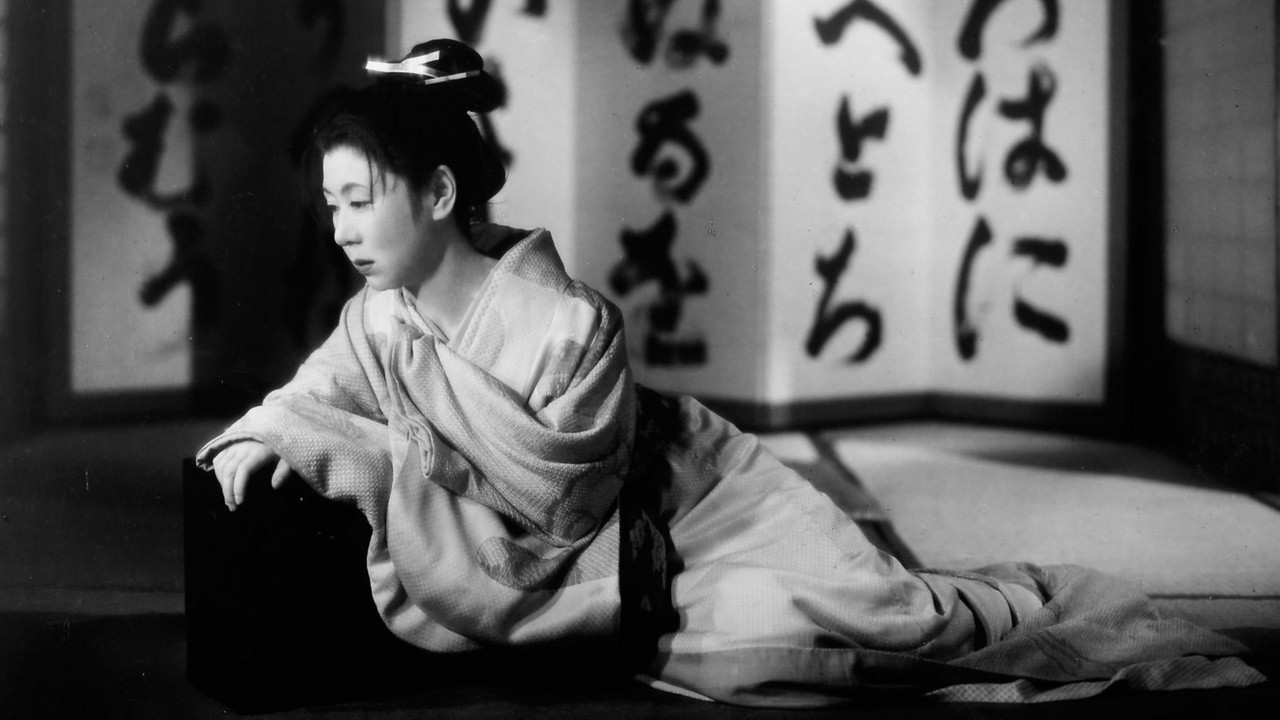
A peerless chronicler of the soul who specialized in supremely emotional, visually exquisite films about the circumstances of women in Japanese society throughout its history, Kenji Mizoguchi had already been directing movies for decades when he made The Life of Oharu in 1952. But this epic portrait of an inexorable fall from grace, starring the incredibly talented Kinuyo Tanaka as an imperial lady-in-waiting who gradually descends to street prostitution, was the movie that gained its director international attention, ushering in a new golden period for him. —The Criterion Collection
Kenji Mizoguchi entered the film world as a promoter of Western novelty in Japanese cinema and exited it as an acclaimed international director who exemplified Japan at its most traditional. After The Life of Oharu and Ugetsu won prizes in successive Venice Film Festivals in the early ‘50s, Mizoguchi became an icon for the nascent French New Wave. His mastery of mise-en-scène was lauded by Jacques Rivette, while Jean-Luc Godard praised his metaphysics and his stylistic elegance. Mizoguchi is still recognized as one of the 20th century’s greatest filmmakers. Born in Tokyo, in 1898, Mizoguchi was the middle child of a roofer/carpenter. His family’s financial situation went from modest to desperate when his erratic, dreamer father tried to make a killing by selling raincoats to the military during the Russo-Japanese war. Not having enough money for food, Mizoguchi’s older sister was put up for adoption at age 14. She was later sold to a geisha house. Mizoguchi himself… read more
Every relationship is humiliating, hierarchical and enslaving, and the only genuine emotion is fear. The Life Of Oharu is a completely iconoclastic rage against everything: authority, power, position, and manner. Every character is trapped, and Mizoguchi's usage of Japanese Architecture reeks more of German Expressionism if anything. Human beings are treated as though they are objects, by others and themselves, Really one of the most devastating, but most important films I have ever seen.
If any of this sounds defeatist or fatalist, its stark emotionality makes it the complete opposite. There is a tremendous sadness to a film where all human beings know is being bought and sold.
It's a film about objectification and dehumanization, but rather than via facism or capitalism (although it sorta does attack the latter), Mizoguchi implicates an entire culture.
Until watching this (on Hulu) I respected Mizoguchi's style but didn't particularly care for his finished products. Now I get it. This film would make for an excellent companion piece to Barry Lyndon. Towards the end I kept thinking of the "epilogue" title card to the Kubrick film. 5/5
A film designed to systematically and ruthlessly raise and then destroy the hopes of the viewer for a happy ending. Raise and destroy, repeatedly, in ever-tighter spirals up and then down; until you realise that hope and despair are illusions that lead to unhappiness, and acceptance marks the only true return to equilibrium. For that reason a hard film to take, but for the same reason a masterpiece.
These episodes from the life of Oharu lurch from segment to segment with only occasionally clear transitions. Some of the episodes are engaging or interesting, all of the episodes look good (great… read review
“The Life of Oharu” is a ravishing visual feast for the eyes. The beauty of Mizoguchi’s long takes and mise en scene makes “Oharu” glow. I fell deeply interested in the story from the get-go. My favorite… read review
The Life of Oharu is a period drama that traces the life of a woman in 17th century Japan who during her life loses her first love due to class differences, becomes a local ruler’s concubine and is… read review
The fact that this isn’t on DVD yet is a tragedy, for this is one of Mizoguchi’s best films. The story is told in vignettes of the unfortunate life of a beautiful woman, to whom happiness can never… read review