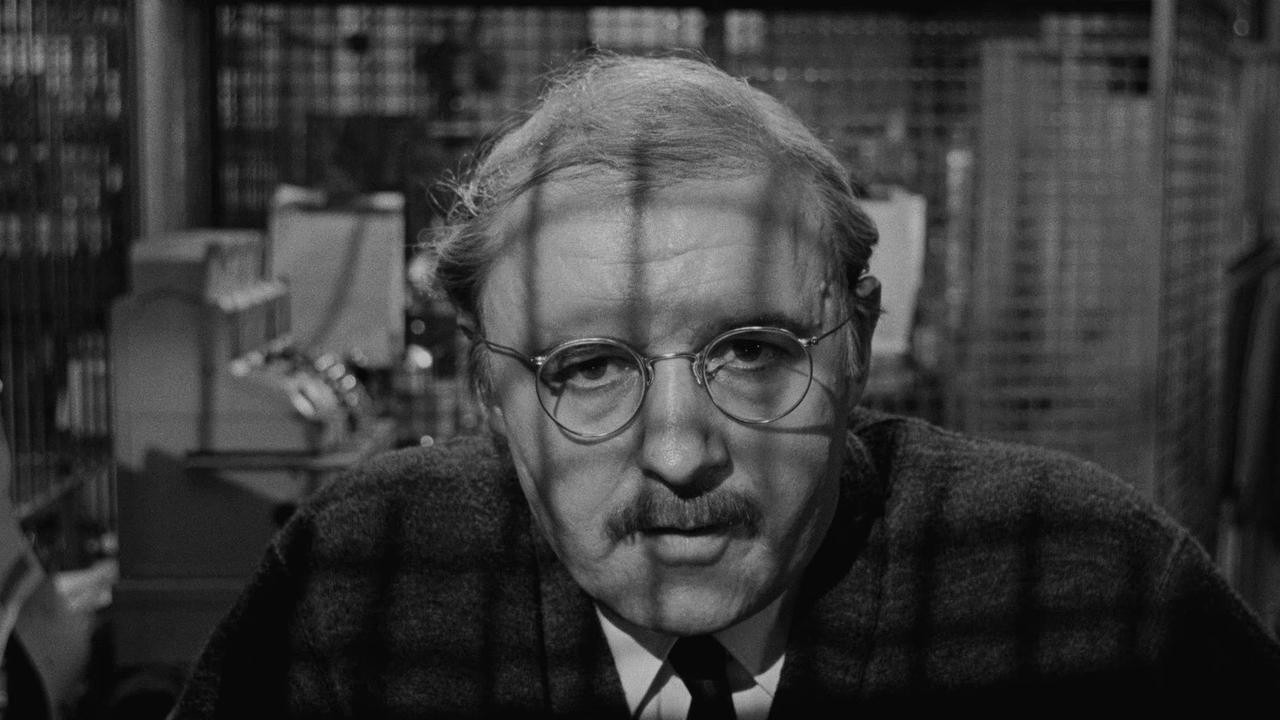
In a stunning, Oscar-nominated performance, Rod Steiger stars as a German-Jewish Holocaust survivor who operates a small East Harlem pawnshop, where his daily interactions with the desperate clientele further darken his already jaundiced view of humanity. As he engages in turf warfare with the local pimp (Brock Peters) who uses the shop as a front, Steiger’s haunted memories come flooding back in staccato bursts, rendered by Lumet and editor Ralph Rosenblum in a subliminal style unprecedented in mainstream movies of the time. —Film Society of Lincoln Center
Sidney Lumet (born June 25, 1924) is an American film director, with over 50 films to his name, including 12 Angry Men (1957), Serpico (1973), Dog Day Afternoon (1975), Network (1976) and The Verdict (1982), all of which, except for Serpico (1973), earned him Academy Award nominations for Best Director.
According to The Encyclopedia of Hollywood, Lumet is one of the most prolific directors of the modern era making more than one movie per year on average since his directorial debut in 1957. He is especially noted for his ability to draw major actors to his projects. “Because of his visual economy, strong direction of actors, vigorous storytelling and use of the camera to accent themes,” states Turner Classic Movies. “Lumet produced a body of work that could only be defined as extraordinary.”
One of his steady themes during his career has been the “fragility of justice and the police and their corruption,” according to Thomson’s Biographical Dictionary of Film. He can deliver… read more
"The Pawnbroker" is a stunning film about a Holocaust survivor that all film lovers should see. Rod Steiger gives one of the most powerful and challenging performances ever filmed. The black and white cinematography is mesmerizing complimented by a fantastic musical score. There is a story behind every face and this film puts a face on the Holocaust. Bravo to great film making that matters.
"Sidney Lumet, a director who preferred the streets of New York to the back lots of Hollywood and whose stories of conscience — 12 Angry
First things first: the writing can be a bit stagey—or at least prone to the kind of spontaneous, explosive, articulate monologues that work so much better in theater than they do in film. But then… read review