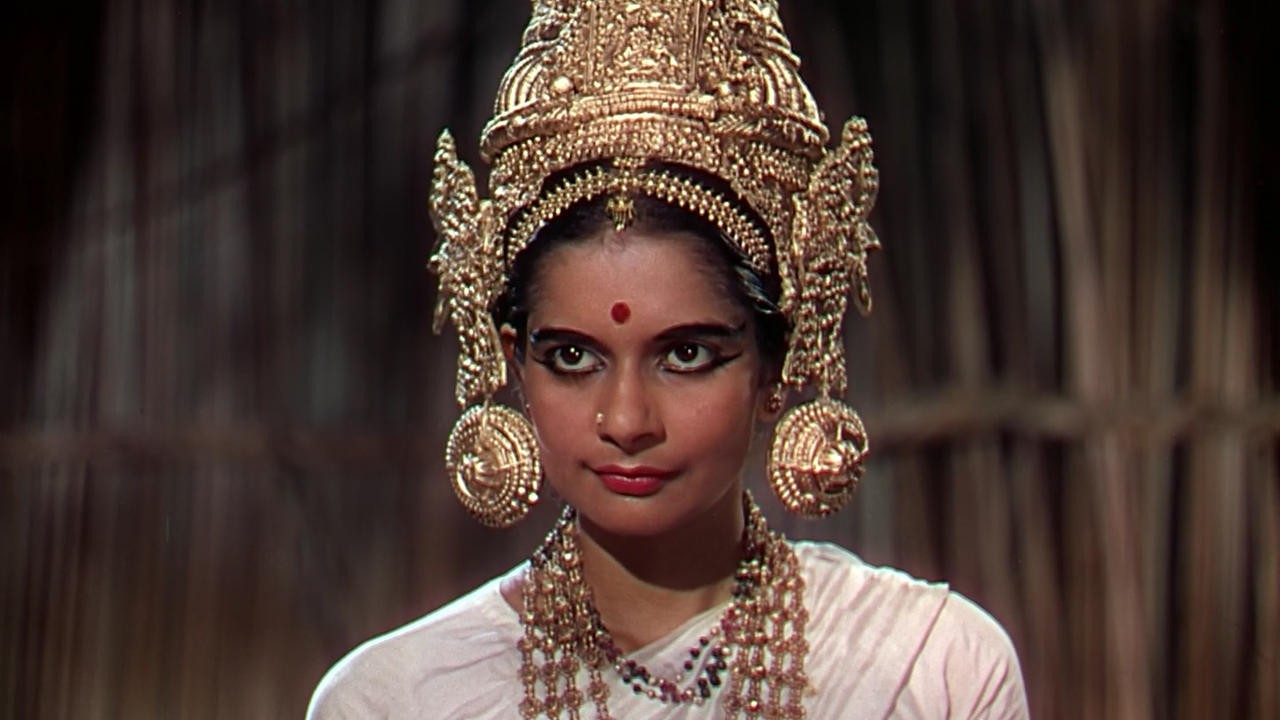
Director Jean Renoir’s entrancing first color feature—shot entirely on location in India—is a visual tour de force. Based on the novel by Rumer Godden, the film eloquently contrasts the growing pains of three young women with the immutability of the holy Bengal River, around which their daily lives unfold. Enriched by Renoir’s subtle understanding and appreciation for India and its people, The River gracefully explores the fragile connections between transitory emotions and everlasting creation. —The Criterion Collection
The son of the painter Auguste Renoir, Jean Renoir became one of France’s most important and respected filmmakers during the middle of the 20th century. A Philosophy and Math student, Renoir became a cavalryman, but was invalided out of the army before World War I. Later, he married a model and aspiring actress, and, following the death of his father and the acquisition of an inheritance, set up his own production company to produce movies for his wife. Renoir learned from these early experiences of financing movies and watching other films, and became a director in 1924. With the advent of sound, Renoir’s career was quickly made with a series of profitable films, including La Chienne (1931), a savage and dark drama about a man’s self-destruction, which was later remade by Fritz Lang as Scarlet Street. Renoir’s subsequent films, including The Lower Depths (1936) and Grand Illusion (1937), were among the finest made in France before the war, and were well acknowledged at the time of… read more
Truly wonderful. The moments in this film are so rich and naive to anything jaded that it takes me back to a felling of childhood.
I wasn't much impressed while watching this but I think it's growing on me. I feel like an idiot for not seeing the "beautiful colors" Scorcese talks about - it all looked really bland to me. Am I an idiot?
The River is a remarkable film about of a family's collective coming-of-age story and a Janusian nostalgic look at the twilight end of an era. Beautifully shot near the Bengal River, the happiest days always seem to be filtered with copper sunlight in the afternoon as work recedes for play. Fraternal bonds and young love shared, this ensemble portrait also wonderfully captures a glimpse at India's faded past.
"As soon as you make a theory, facts destroy it."”– Jean Renoir Jean Renoir is not "elegant." Jean Renoir was never a "master." Though he
It is very easy for a movie directed by a European about India to be pathetically condescending in its nature, coming in with the intention of unveiling some sort of truth about a foreign land to Western… read review