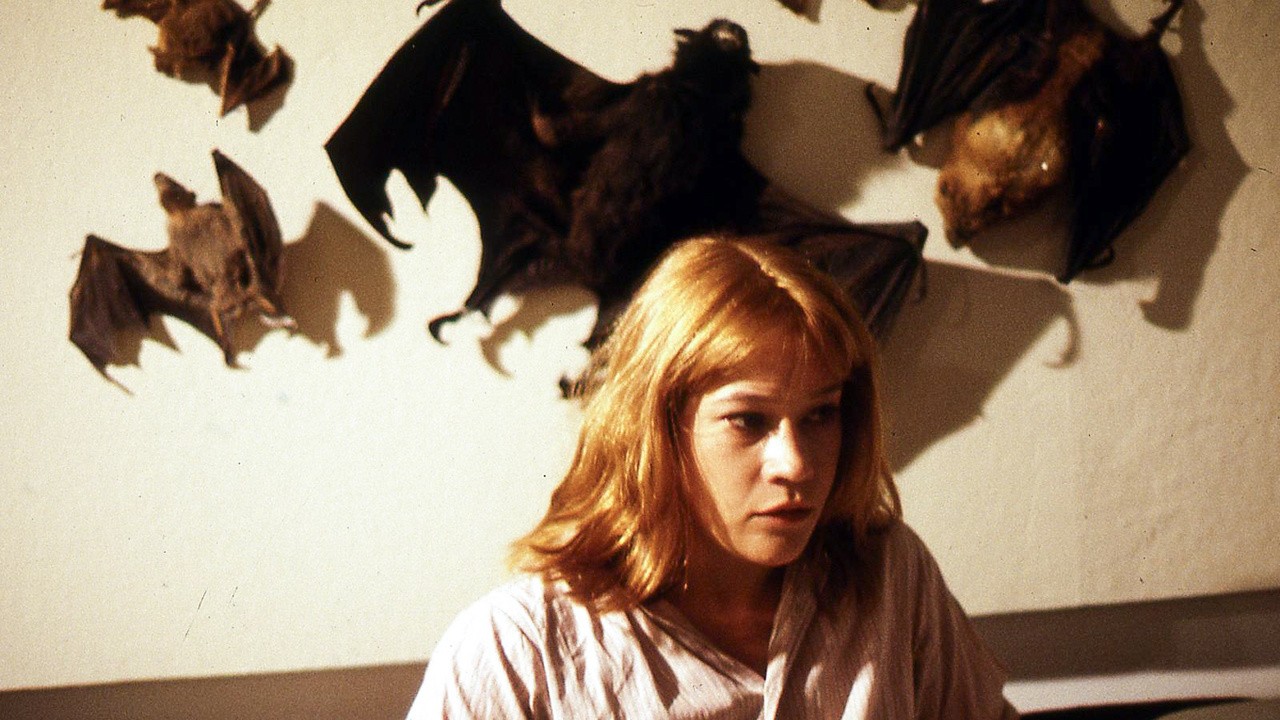
Three women: Christa, who has robbed a bank to help a children’s day care center out of their financial dire straits. Lena, who was Christa’s hostage and the only person who could identify her. And finally Ingrid, in the secure loneliness of her marriage and condominium, who renews her old friendship with Christa and almost succeeds in finding a new meaning of life. It is a story of desperation and courage that stimulates so many things; a story of escape, which almost signifies salvation; a story of returning and resignation, that teaches Lena that denouncement would only bring punishment to a single person, but nothing more – not even saving a poor children’s day care center. –Kinowelt
Margarethe von Trotta (born 21 February 1942, Berlin) is a German film director and a member of the New German Cinema movement.
The child of Elisabeth von Trotta and painter Alfred Roloff, she relocated to Paris in the 1960s, where she worked for film collectives, collaborating on scripts and co-directing short films.
In her early career, von Trotta was an actress, appearing in notable films of directors Fassbinder and Volker Schlöndorff. In 1971, she divorced her first husband to marry Schlöndorff. A few years later she presented her first feature film.
Von Trotta, often featuring prominent female characters, has become the foremost female director working in Germany. She is a Professor of Film at the European Graduate School in Saas-Fee and remains an important personality of German cinema. Von Trotta and Schlöndorff split in 1991. —wikipedia
She’s been called “narrative cinema’s foremost feminist filmmaker,” but of course, she’s also simply a great director.