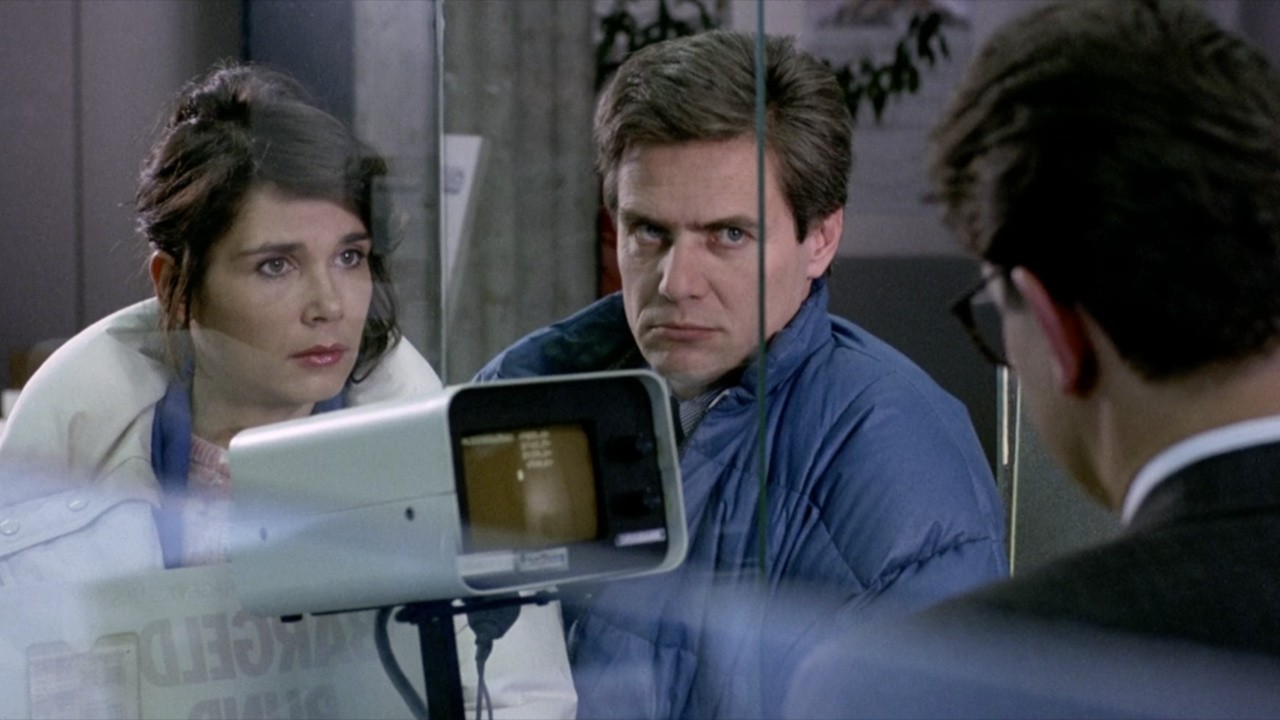
Based on a true story, Haneke’s first theatrical feature is a disturbing portrait of familial disintegration which he describes as a depiction of his native Austria’s ‘progressive emotional glaciation’. Set over a three year period, it documents how the mundane day to day routines of a middle class family alienate them from the world and each other until, suddenly and shockingly, their lives self- destruct.
Every day we read stories about family tragedies. Every day families take pleasure in their alienation, contenting themselves with information and a life on the cheap. Every day they have less to decide about and hate themselves for their fear. Every day they suffer more from their lives. Every day many of them wear themselves out fighting this fact. Every day they speak less and laugh louder. Every day they become more perfect. Every day the gap widens between human beings. Every day they feel they need to take a decision in order to be able to breathe. This film is a chronicle, an account of these decisions. It does not intend to bear any judgment. It knows no answers. It questions the causes. —Michael Haneke
Cheerfully wishing his audience a “disturbing evening” at a London retrospective of his films, director Michael Haneke insists that he is an optimist at heart, despite all of the relentlessly bleak carnage and deeply disturbing imagery so vividly painted and seared into the mind of anyone who has had the uncomfortable experience of viewing his work.
Practically born into show business, to an actress mother and director father, in Munich in March 1942, Haneke spent his early years in a working class suburb of Vienna before an early attempt at fame as an actor and pianist. Failing to achieve early success, Haneke attended the University of Vienna to study philosophy and psychology, and became a film critic and stage director before making his eventual debut as a television director with After Liverpool in 1973. Setting in motion a television career specializing in literary adaptations and small screen films, Haneke would work successfully in that medium until his feature debut… read more
Just saw this film and I'm still shaking. Ok, let's do this. I know that it doesn't requires a specific mindset to commit suicide. Most of the times it's just an impulsive decision; the result of some unfortunate events and a bad mood. And I felt that was the reason this film disturbed me so much: there was nothing impulsive about their decision. They planned it, they agreed to it, they did it. Together. As a family.
The warning signs were there. Cinema reduced to shocks and sentimentality. Haneke believes it is Bressonian to film close-ups of actions that serve no ellipsis. 24 years later and I suspect he still hasn’t overcome this aping and misunderstanding of his influences. He is Gaspar Noé with a better film library.
http://travissaves.blogspot.com/2012/03/seventh-continent-quite-possibly-most.html
If you’re someone (especially a hardcore cinephile) who “feels” easily, gets effected easily or is sensitive… read review
Which is more meaningless: a consumerist lifestyle that is slowly degraded into monotony and the definition of human experience in terms of the functions that we perform, or the utterly emotionless… read review
An affluent middle-class family in Austria goes about their daily duties. Father Georg works as an engineer, while mother Anna is an optician. When their young daughter Eva pretends to be blind at… read review
how can a man like michael haneke exist in the cinema world? hell, how can michael haneke exist on planet earth? everything that he captured for his film are always disturbing, even it was only a daughter… read review