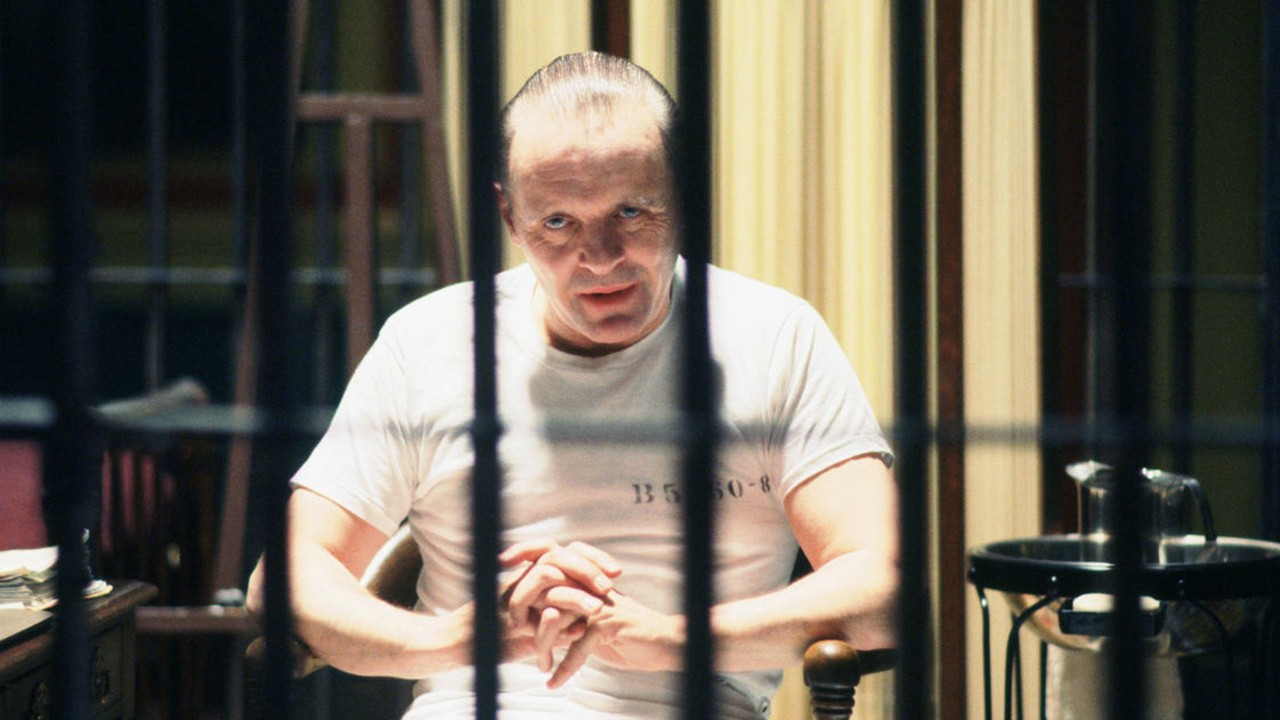
From Thomas Harris’s novel, director Jonathan Demme explodes and reconstructs a classic genre, laying a foundation of emotional and political commitment beneath a perfectly constructed psychological thriller. Fourteen years after her controversial role in Taxi Driver, Jodie Foster finally makes the transformation from helpless victim to rescuing hero in this dark, gender-bending fairy tale of an American obsession: serial murder. As Hannibal “the Cannibal” Lecter, Anthony Hopkins is the archetypal antihero—cultured, quick-witted, uncontainable—a portrait of all the sharpest human faculties gone diabolically wrong. Winner of five Academy Awards, including Best Picture and Best Screenplay Adaptation for Ted Tally. —The Criterion Collection
Robert Jonathan Demme (born February 22, 1944) is an American filmmaker, producer and screenwriter.
Demme was born in Baldwin, New York, the son of Dorothy Demme and a public relations executive father. Demme has three children: Ramona, Brooklyn, Josephine. He is a graduate of the University of Florida. He also was the uncle of director Ted Demme, who died in 2002.
Demme broke into feature film working for exploitation film producer Roger Corman from 1971 to 1976, co-writing and producing Angels Hard as They Come and The Hot Box, then directing three films (Caged Heat, Crazy Mama, Fighting Mad) for Corman’s studio New World Pictures. After Fighting Mad, Demme moved on to direct the comedy film Handle with Care for Paramount Pictures in 1977. The film was well-received by critics, but received little promotion, and performed poorly at the box office.
Demme’s 1980 film Melvin and Howard did not have a wide release, but received widespread critical acclaim, and led… read more
I do like this, but there's just something about it that prevents it from being great.
The ending of this film is brilliant. At least, from a male's perspective. The night vision tinted first-person sequence is surely one of the great statements on voyeurism. Jodie Foster is beautiful, sexy, and vulnerable as she swipes and stumbles through the dark. We have been ogling her the entire film and we ogle her now, except for one major difference: we now share our view with that of Buffalo Bill.
The film's central theme of transformation is here writ ultimate: despite whatever desires we have to advance ourselves we are all still subject to animalistic urges. At that moment we may as well all be serial killers.
I'll never forget the day my grandmother accidentally flipped her TV onto the part when Ted Levine is dancing with his penis tucked into his legs. Good times.
Anthony Hopkins with his roughly 16 minutes screen time truly takes the movie to a whole different level.
Also: Best of 2011 from the San Francisco Bay Guardian, In Review Online and more. And 11-year-old Scorsese’s storyboards.
Whenever a character breaks the so called fourth wall by looking into the camera and thus, into the audience of a film, its purpose varies from either being a direct confrontation or a kind of siding… read review
Foster and Hopkins give star performances. Levine is creepy as Buffalo Bill. But, this movie simply did not impress me as much as the other two movies to hold the honor of winning the Oscar big five… read review
“Memory, Agent Starling,is what I have instead of a view.”
The way the whole movie is shot essentially from Clarice’s POV, from the moment she enters Serial Killer Central and looks at the wall… read review