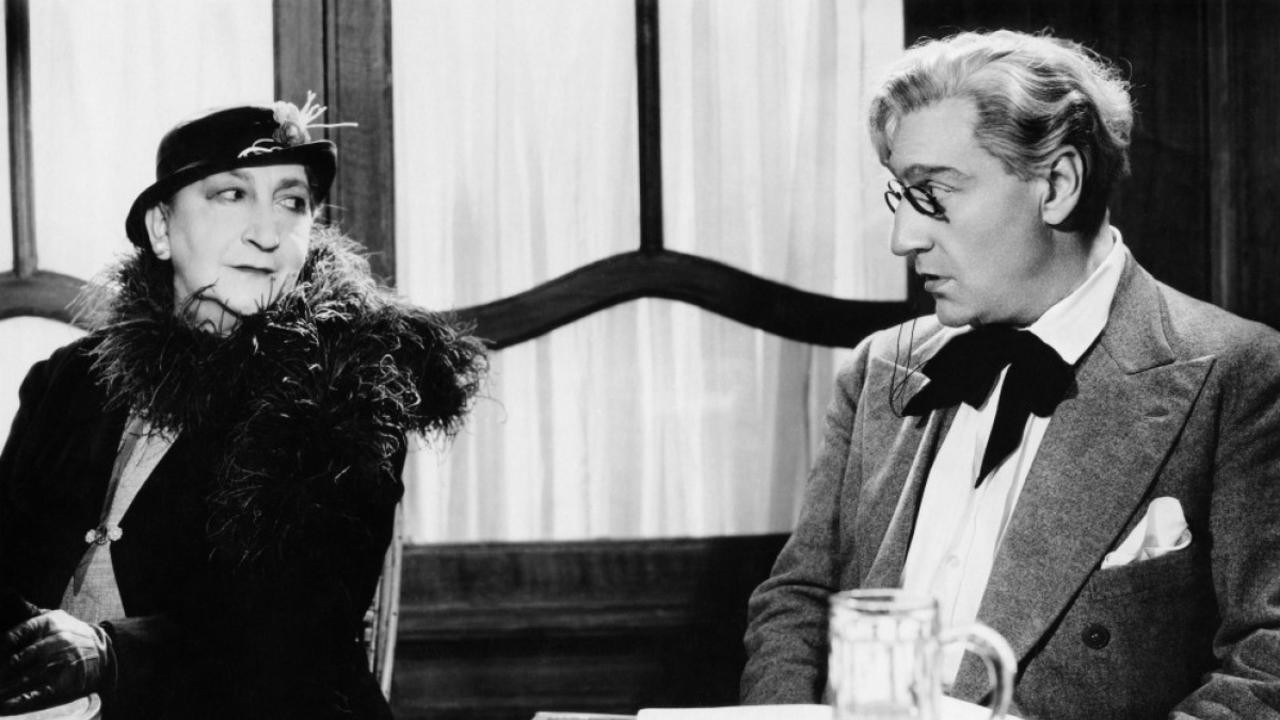
Considered Sacha Guitry’s masterpiece, this fleet, witty picaresque about a gambler and petty thief is a whimsical delight. Guitry himself stars as the “tricheur” looking back fondly on a life of crime, which he narrates with an effervescence matched by his clever editing and cinematography. With its rapid storytelling and inventive use of voice-over, The Story of a Cheat’s style has influenced filmmakers from Orson Welles to François Truffaut. —The Criterion Collection
Sacha Guitry (21 February 1885 – 24 July 1957) was a French film actor, director, screenwriter, and playwright. He was born in Saint Petersburg, Russia, in 1885, the son of the actor Lucien Guitry. Guitry wrote the libretto to the 1925 pastiche Mozart which contains a story about the fictional adventures of Mozart on a visit to Paris.
Except when mentioned, Guitry took part in all of his films as director, screenplay writer, dialogue writer, and actor. —Wikipedia
I had a decidedly mixed reaction. I can see why Truffaut would have loved this film. I thought the script was droll and extremely witty. And the camera work has moments of real joie de vivre. But I felt the whole technique of constant narration was kind of suffocating. It was hard to become really involved when what we're seeing is exactly what the narrator is describing. "Never use two violins, when one is enough."
In this light, witty comedy a retired scoundrel recounts the story of his misspent, but highly amusing and adventurous, life. Except for a few scenes with synchronized sound, the movie is silent with voice-over narration by central character, "the cheat", played by the film's writer/director. A thoroughly enjoyable film, very similar in theme and tone to another movie I love, Ernst Lubitsch's "Trouble in Paradise".
Not a scene is wasted in this 30s masterpiece. Highly, highly recommended. Magnifique!
A look at some of the best original French posters for the films in Film Forum’s current series: The French Old Wave.
"As seen in the quartet of effervescent, extroverted films from the mid-1930s featured in Criterion's boxed set Presenting Sacha Guitry