Nagisa Oshima’s career extends from the initiation of the “Nuberu bagu” (New Wave) movement in Japanese cinema in the late 1950s and early 1960s, to the contemporary use of cinema and television to express paradoxes in modern society. After an early involvement with the student protest movement in Kyoto, Oshima rose rapidly in the Shochiku company from the status of apprentice in 1954 to that of director. By 1960, he had grown disillusioned with the traditional studio production policies and broke away from Shochiku to form his own independent production company, Sozosha, in 1965. With other Japanese New Wave filmmakers like Masahiro Shinoda, Shohei Imamura and Yoshishige Yoshida, Oshima reacted against the humanistic style and subject matter of directors like Yasujiro Ozu, Kenji Mizoguchi and Akira Kurosawa, as well as against established left-wing political movements. Oshima has been primarily concerned with depicting the contradictions and tensions of postwar Japanese society. His… read more
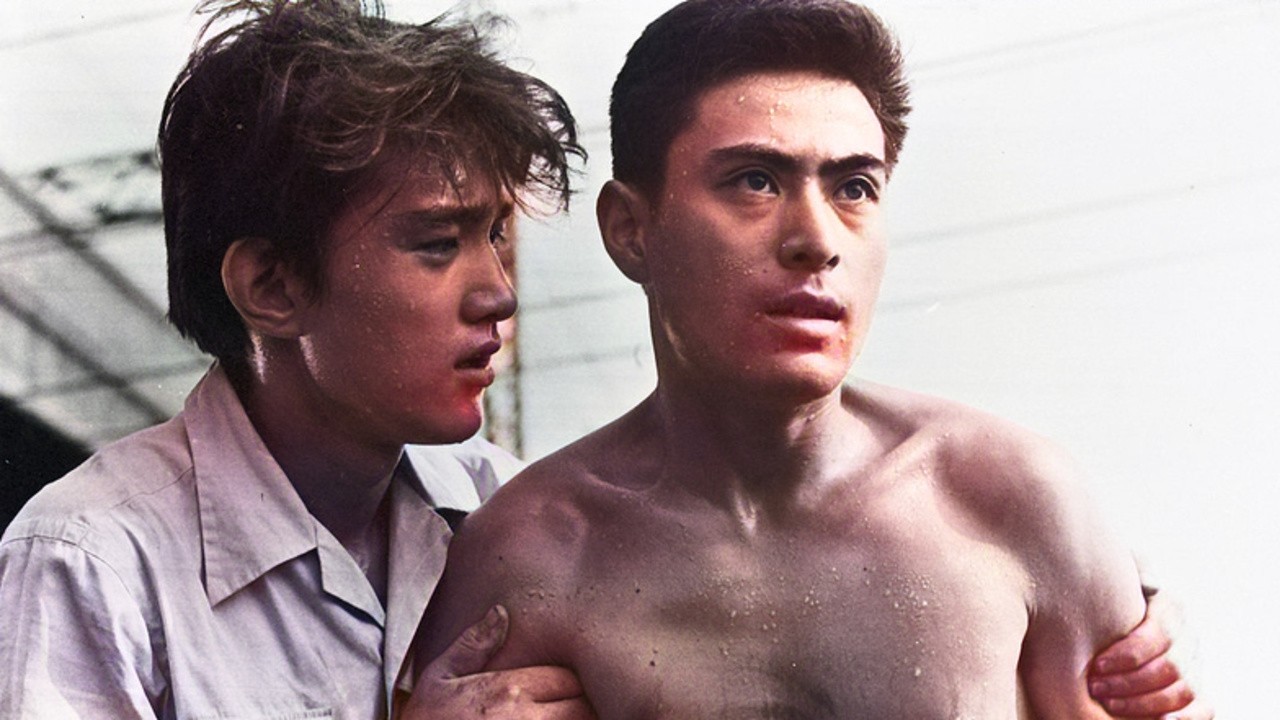
A brutal movie about a gang in Japan (Osaka) in the 60's. The violence, the misery, the hard life of Japan as rarely seen on movies, even now. You can make a parallel with "Mean Streets" of M. Scorsese. No redemption for the wicked.
Unfurling "like a scroll painting of hell" (Satō Tadao), this anatomy of Osaka's underbelly, comprised of those left behind by the country's postwar economic miracle, is just as raw and uncompromising as its heroine, who is both a victim and a survivor of Japan's larger historical narrative as it pertains to femininity and clearly an inspiration for Imamura's The Insect Woman.
Samuel Fuller in Japan, like tabloid ink sprayed on kakejiku scrolls.