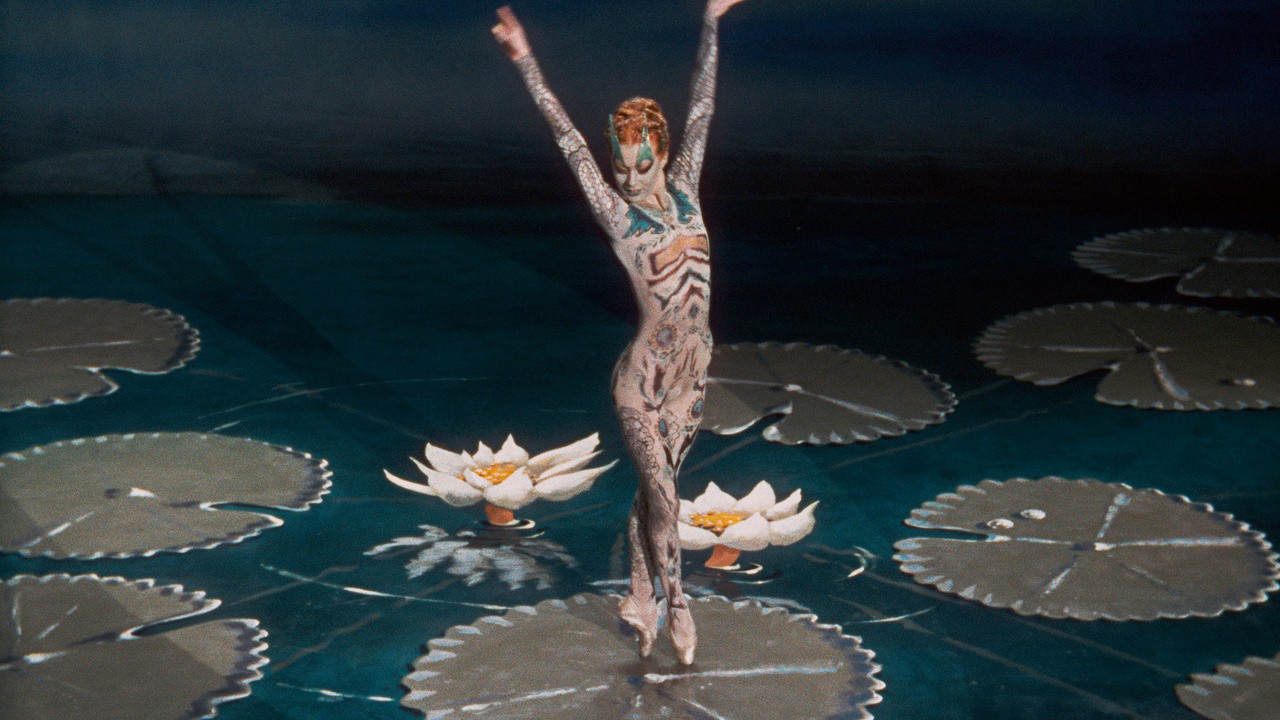
Michael Powell and Emeric Pressburger create a phantasmagoric marriage of cinema and opera in this one-of-a-kind take on a classic story. In Jacques Offenbach’s fantasy opera The Tales of Hoffmann, a poet dreams of three women—a mechanical performing doll, a bejeweled siren, and the consumptive daughter of a famous composer—all of whom break his heart in different ways. Powell and Pressburger’s feverishly romantic adaptation is a feast of music, dance, and visual effects, and one of the most exhilarating opera films ever produced. —The Criterion Collection
A one time studio gofer, still photographer, and comic actor, Michael Powell became one of the most celebrated and controversial directors ever to come out of England. Born in Canterbury, Powell became enamored of films while still a teenager and, after a start in the mid-’20s and a stint shooting stills and serving as a co-scenarist with Alfred Hitchcock in the early sound era, Powell broke into directing in low-budget British thrillers and comedies. After directing and writing his first notable movie in 1937, The Edge of the World, he moved to London Films where he began working with Emeric Pressburger, a gifted young author and screenwriter. Their two-decade association began shortly after they left London Films (where they collaborated on The Spy in Black and Powell co-directed The Thief of Bagdad). The wartime thrillers Contraband and Forty-Ninth Parallel, the latter attracted much attention (including Oscar nominations for Best Picture and best original story), resulted in the… read more
The screenwriter half of the Powell/Pressburger team in association with Michael Powell, Hungarian-born Emeric Pressburger was a journalist before coming to films as a screenwriter in the late ‘20s. After working at Germany’s UFA studios for several years, he fled after Hitler’s rise to power and eventually came to England, where he joined London Films as a screenwriter and began his association with Michael Powell, a gifted young English filmmaker. The two worked together on The Spy in Black, and after leaving London Films, formed a filmmaking partnership, known corporately as The Archers, in which they shared joint screenwriter-producer-director credit. Their collaborations together included 49th Parallel, One of Our Aircraft Is Missing, The Life and Death of Colonel Blimp, A Canterbury Tale, I Know Where I’m Going, Stairway to Heaven (A Matter of Life and Death), Black Narcissus, The Red Shoes, The Small Back Room, and The Tales of Hoffmann, most of which were extremely successful… read more
My first really expressive of opera as an adult and coming into this film looking for the powell and pressburger traits certainly helped. The visuals are a feast for the senses. There was some narrative confusion induced by the episodic nature of the tale (s) it seemed almost as if the separate stories where squeezed rather loosely under one arc. Also, Must all dialogue be sung? I am still open but not won over.
I guess I have to say I'm not one to judge this film, as opera is an art form I have yet to understand or appreciate - and this film is not much more than a filmed opera. As bizarre and phantasmagoric as the imagery is, it really isn't enough to sit through two and a half hours for. If you can appreciate opera, it might be for you, but it doesn't really work as a film, even for fans of director Michael Powell.
Despite some gorgeous visuals and effective sequences, TTOH ultimately fails in its hubristic attempt to present opera in a cinematic manner and follow-up the successful marriage of ballet and film… read review