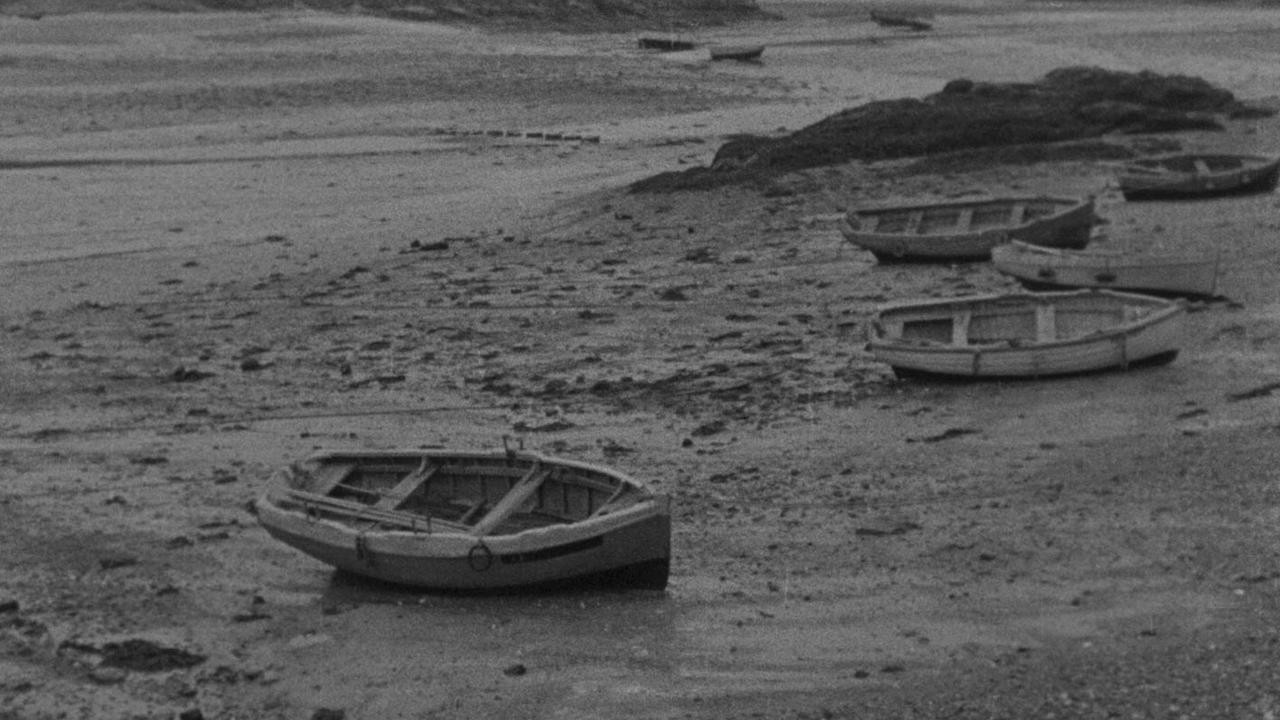
Despite her protestations and concerns over ominous signs a young woman’s lover leaves for the sea to fish for sardines, but while he is out a terrible storm strikes. The woman’s mother tells her of a mysterious old man known as Le Tempestaire, or Tempest Master, who has the power to speak to the wind and subdue it. The young woman seeks him out and at first the old Tempestaire is reluctant to help, but accedes to work his magic, and suddenly the young woman’s lover appears safe and in good health as if the tempest never was. — World Cinema Directory
Jean Epstein (March 25, 1897, Warsaw – April 2, 1953, Paris) was a film director and early film theoretician.
He started directing his own films in 1922 with Pasteur, followed by L’Auberge rouge and Coeur fidèle (both 1923). Famous film director Luis Buñuel worked as an assistant director to Epstein on Mauprat (1926) and La Chute de la maison Usher (1928). Epstein’s criticism appeared in the early modernist journal L’Esprit Nouveau.
During the making of Coeur fidèle Epstein now chose to film a simple story of love and violence “to win the confidence of those, still so numerous, who believe that only the lowest melodrama can interest the public”, and also in the hope of creating “a melodrama so stripped of all the conventions ordinarily attached to the genre, so sober, so simple, that it might approach the nobility and excellence of tragedy”. He wrote the scenario in a single night.
Epstein had been much impressed… read more
Donald Richie passes, Michael Mann prepares a new project, Miyazaki concept sketches & more.
An essay by Nicole Brenez on maverick filmmaker-critic Jean Epstein.
Serge Bromberg celebrates Georges Méliès. Also recognized will be Peter Kubelka, Pablo Ferro, Jean Epstein, Raúl Ruiz and Bart Vegter.