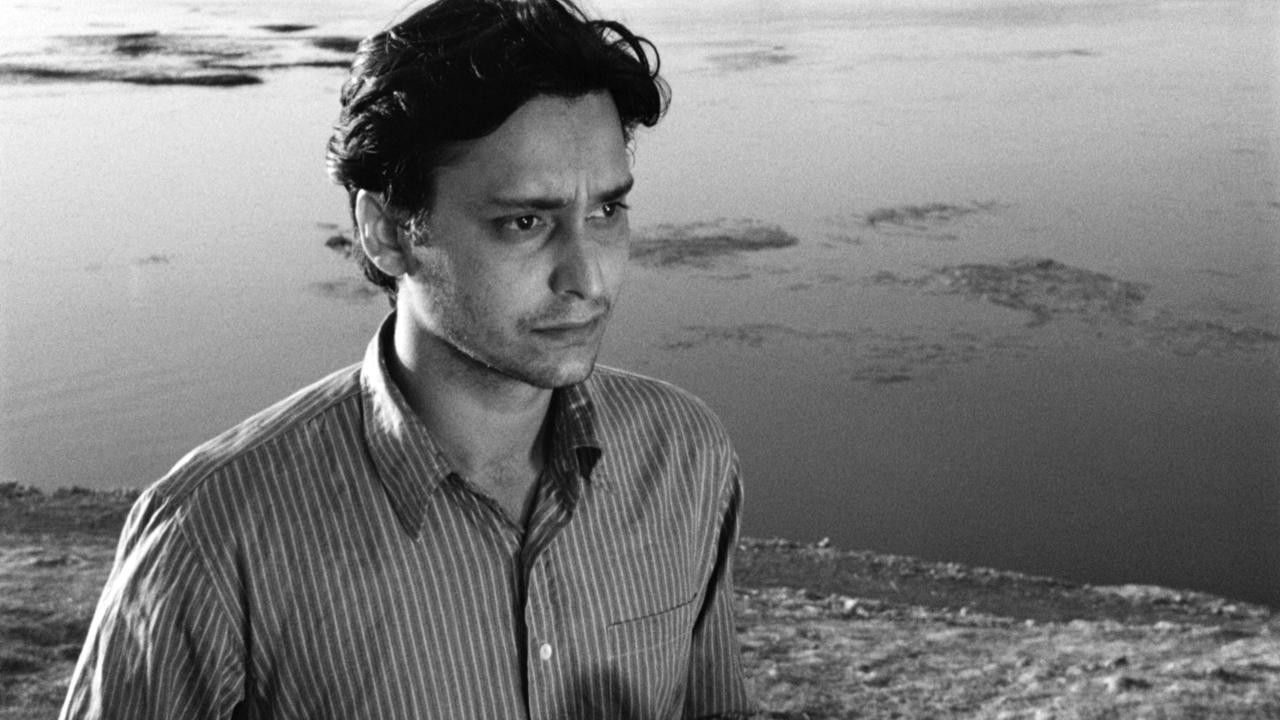
The World of Apu has often been called the most tender love story ever produced. The film describes Apu’s marriage, the loss of his beloved wife, his descent into deep depression and his eventual regeneration through the love of his son and Pulu.
The story begins in Calcutta, around 1930. Apu has to give up the pursuit of his studies and looks for work, but without success. He is writing a novel based on his life. His friend Pulu, who is from a well-to-do background, proposes a stay in the country with his family. Obliged to attend a wedding, Apu unexpectedly becomes the groom. Initially his young wife is depressed by his poverty but accepts her new life and the realities of town-life with dignity and courage. Pregnant, she departs to be with her family, but dies while bringing her child into the world. Apu, who blames the infant for its mother’s death, refuses to see it and leaves the child to grow-up in his grandparent’s house. At last he gives up his novel and goes to meet his son in an attempts to come to grips with his loss. Reunited, the two of them leave for Calcutta. –Satyajit Ray Film and Study Center
Satyajit Ray is one of cinema’s truest Renaissance men. In addition to his films, he is a reputed writer of short stories, a music composer (scores for his own films and other film-makers, notably Merchant-Ivory’s Shakespeare Wallah) and a painter and graphic designer of considerable skill. Appropriately enough, Ray derived from a background of great culture, the son of poet Sukumar Ray who died when he was three years old. His interest in fine arts, literature and painting led him to reside at Rabindranath Tagore’s Santiniketan (an intellectual retreat for artists and thinkers) for a significant period of time. Ray’s true love however was the cinema. The cinema of 30s Hollywood, which included Fred Astaire musicals and comedies by Ernst Lubitsch; Russian films he devoured in repeated viewings at the Calcutta Film Society (which he co-founded in 1947) and later the Italian neorealist films which he discovered in London.
At the time of the Second World War, and the final period of… read more
I knew Ray only by name, and the fact that I started my exploration of his Cinema from the final film of the trilogy says it all about my ignorance... However I am devastated. The beauty of Art is that as soon as you begin to lose faith... Whenever you think you know well enough the boundaries of the medium, you suddenly find a new jem before your very eyes, that makes you dream again. What a brilliant, perfect film!
The Apu trilogy and Kiarostami's Koker trilogy both have the same level of artistry and beauty. I see many similarities between "Where is the Friends House?" and "Song of the Little Road". I hope that more people get a chance to see these wonderful films, it is quite an experience I can tell you.
I have always loved Satyajit Ray’s films, right from the beginning. Part of it may be the way he gets to the core feelings of things but doesn’t degrade the feelings with sentimentality. Also, his… read review