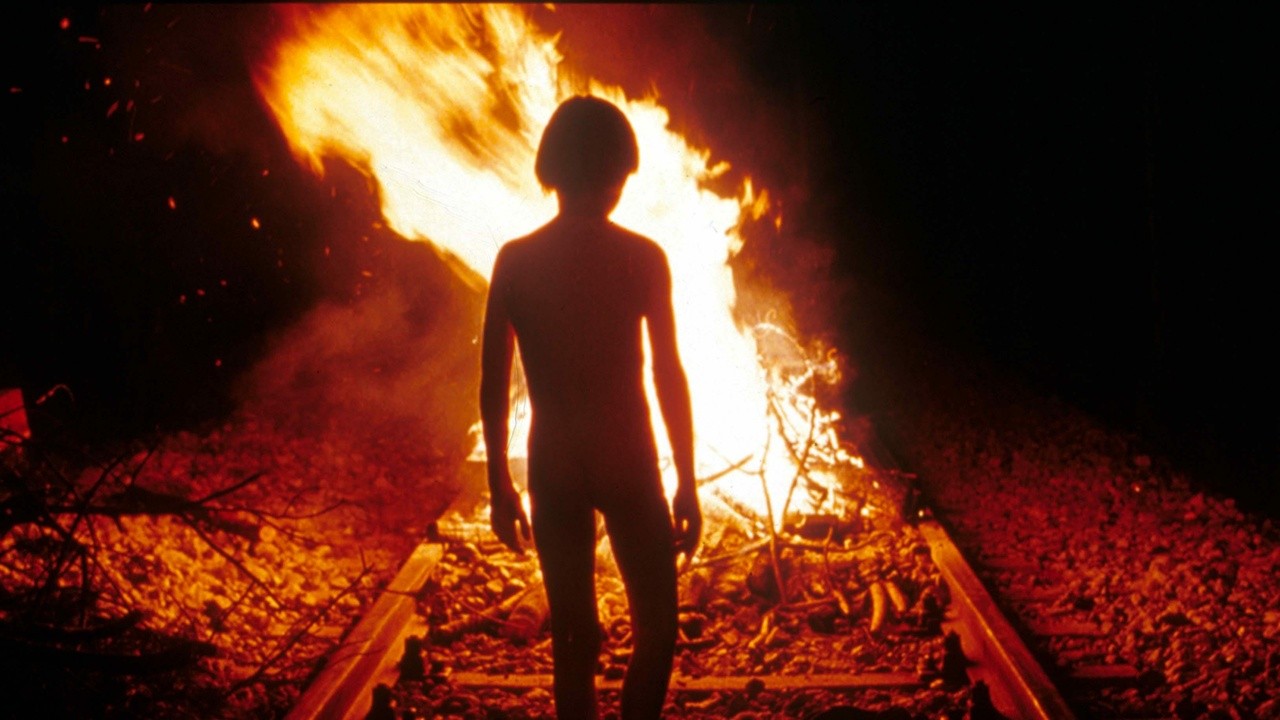
When Anna and her family arrive at their holiday home, they find it occupied by strangers. This confrontation is just the beginning of a painful learning process. Nothing is as it was. We are in a silent world. What starts out as the story of one family quickly develops into a collective tragedy. But it is also a legend, and as such the story of a sacrifice and, perhaps, the story of a saint… –Cannes Film Festival
Cheerfully wishing his audience a “disturbing evening” at a London retrospective of his films, director Michael Haneke insists that he is an optimist at heart, despite all of the relentlessly bleak carnage and deeply disturbing imagery so vividly painted and seared into the mind of anyone who has had the uncomfortable experience of viewing his work.
Practically born into show business, to an actress mother and director father, in Munich in March 1942, Haneke spent his early years in a working class suburb of Vienna before an early attempt at fame as an actor and pianist. Failing to achieve early success, Haneke attended the University of Vienna to study philosophy and psychology, and became a film critic and stage director before making his eventual debut as a television director with After Liverpool in 1973. Setting in motion a television career specializing in literary adaptations and small screen films, Haneke would work successfully in that medium until his feature debut… read more
Anche in un genere super-inflazionato come il post-apocalittico,Haneke riesce a mostrare la sua grandezza e il suo stile originale,non spiegando quasi nulla,con la sua camera distante e fissa per mettere più angoscia e inquietitudine allo spettatore e far sì che sia lui a calarsi nella realtà.Freddo,asciutto ed essenziale, disegna una condizione agghiacciante di un'umanità allo stremo.Splendida l'idea del treno.
Se Amour racconta del tramonto dell'essere umano, Il Tempo dei Lupi si concentra sul tramonto dell'umanità. Spinta alla sopravvivenza, costretta alla rinuncia del futile per il necessario, la società è perfida perfino nella situazione di crisi. Haneke, privo di romanticismo ed edulcorazione, decide di mostrare tutto. Il finale è agghiacciante, bugie consumate nella speranza di un domani migliore.
Has a lot of shades of Tarkovsky. The ending is by far more hopeful and uplifting than is usual for Heneke. It doesn't reach the level of perfection that he reached with Cache, but there are some amazing moments. I need to watch more of his movies. He says that he rapes the viewer with his films, but here he doesn't force himself, it's more consensual and contemplative. Great stuff.
With an earthquake and a hurricane on the horizon all in the same week, I cant help but think the end is near (relax, I’m just joking…kinda). I’m in somewhat of a post apocalyptic mood right now and… read review