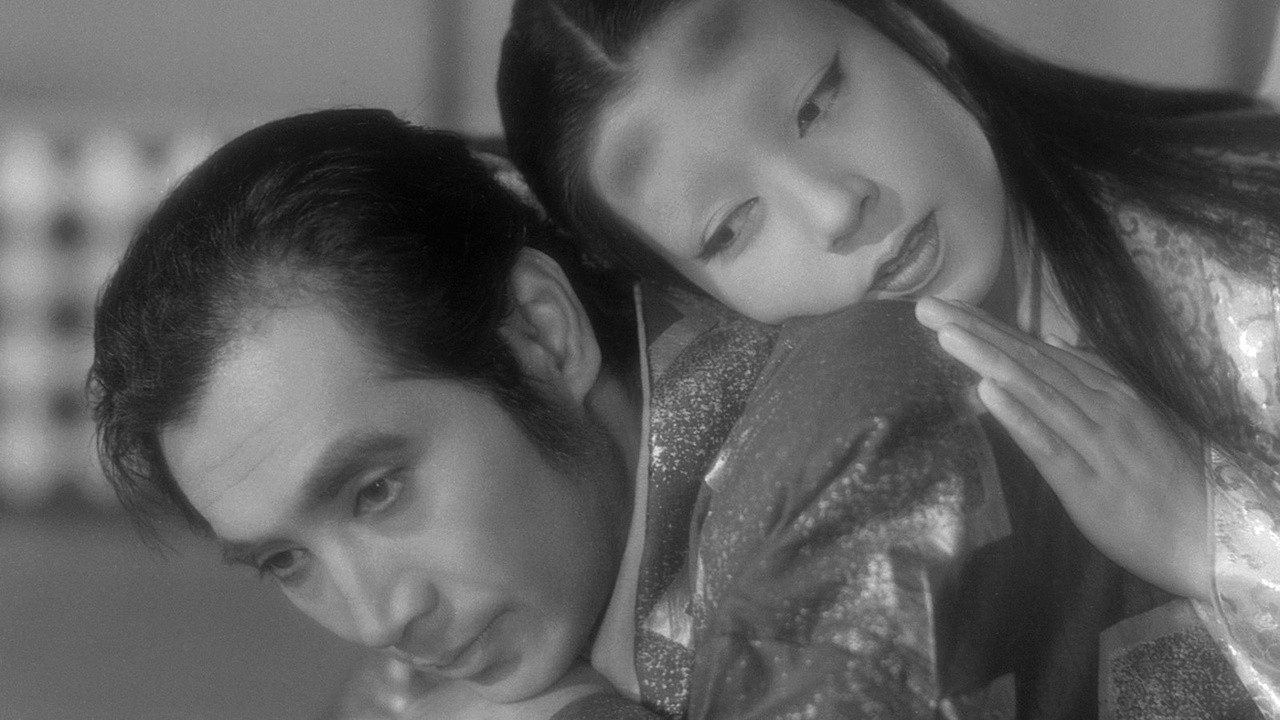
“Quite simply one of the greatest of filmmakers,” said Jean-Luc Godard of Kenji Mizoguchi. And Ugetsu, a ghost story like no other, is surely the Japanese director’s supreme achievement. Derived from stories by Akinari Ueda and Guy de Maupassant, this haunting tale of love and loss—with its exquisite blending of the otherworldly and the real—is one of the most beautiful films ever made. –The Criterion Collection
Kenji Mizoguchi entered the film world as a promoter of Western novelty in Japanese cinema and exited it as an acclaimed international director who exemplified Japan at its most traditional. After The Life of Oharu and Ugetsu won prizes in successive Venice Film Festivals in the early ‘50s, Mizoguchi became an icon for the nascent French New Wave. His mastery of mise-en-scène was lauded by Jacques Rivette, while Jean-Luc Godard praised his metaphysics and his stylistic elegance. Mizoguchi is still recognized as one of the 20th century’s greatest filmmakers. Born in Tokyo, in 1898, Mizoguchi was the middle child of a roofer/carpenter. His family’s financial situation went from modest to desperate when his erratic, dreamer father tried to make a killing by selling raincoats to the military during the Russo-Japanese war. Not having enough money for food, Mizoguchi’s older sister was put up for adoption at age 14. She was later sold to a geisha house. Mizoguchi himself… read more
Movies don't get any better than this. With the classical Japanese directors there's a sense of complete efficiency, no waste, that every cubic centimeter of the shot was absolutely planned, and nowhere is that more apparent than Ugetsu.
My absolute favourite film. Mizoguchi made films for everyone and no one: if you choose to really take note of the exquisite camera movement and extended takes, that's fine, but he doesn't care if you just want to watch it as a story. It's that detachment that elevates him far above others, such as Angelopooulos and Kubrick. As mean-spirited as it sounds, perhaps that's the difference between art and craft.
قصهای کلاسیک را به سبکی میتوان گفت مدرن روایت میکند. داستان دو برادر که یکی در پی ثروت و دیگری در پی قدرت به تعالی توام با قهقرا میرسند. خانوادههایشان را از دست میدهند و به درکی عمیق از زندگی میرسند. به سینما در آوردن افسانهای کهن؛ افسانه ازدواج با یک روح شیطانی صحنهای درفیلم هست که آدم را میخکوب میکند. صحنهای که جنجوری از شهر برمیگردد روستا پیش زن و بچهاش و شب با زنش حرف میزند و صبح که بیدار میشود
El año de 1954 representò una nueva etapa en la carrera del director japonès Kenji Mizoguchi. A raiz del arrollador triunfo tres años atras de su compatriota Akira Kurosawa y su film Rashomon (1950… read review
I cant say enough about this film. In 97 minutes, Mizoguchi was able to decimate the entire enigma that is human desire. The film itself is of absolute perfection, saturated in emotional truths and… read review
Everyone knows the Japanese film-maker Akira Kurosawa, but how many have seen the films of his contemporary Kenzi Mizoguchi? His films didn’t receive the international attention that Kurosawa’s did… read review
Kenji Mizoguchi made over 90 films in his long and brilliant career, but it would be with his last few films that he would reach his creative apex. Specifically, it was two films made consecutively… read review