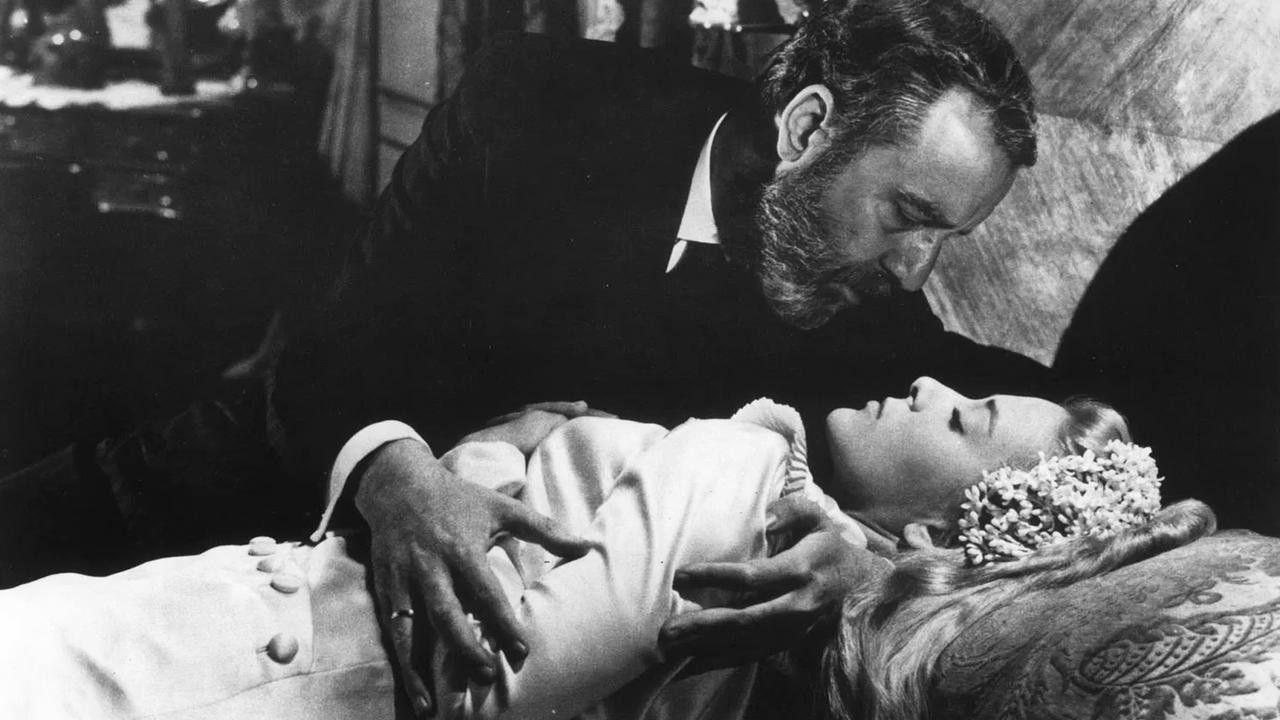
Banned in Spain and denounced by the Vatican, Luis Buñuel’s irreverent vision of life as a beggar’s banquet is regarded by many as his masterpiece. In it, novice nun Viridiana does her utmost to maintain her Catholic principles, but her lecherous uncle and a motley assemblage of paupers force her to confront the limits of her idealism. Winner of the Palme d’or at the 1961 Cannes Film Festival, Viridiana is as audacious today as ever. —The Criterion Collection
Although regarded as the greatest artist of Spanish cinema Luis Buñuel only made three films that are Spanish by nationality. His exile from his homeland at the end of the Spanish Civil War resulted in extended periods in Mexico and France. Despite this displacement, Spain was never far from Buñuel’s mind. The peasant culture of the villages of Calanda and Zaragoza, many of them dating to the Middle-Ages, greatly influenced his imagination during his childhood. The Spanish literary tradition, represented by Lope de Vega, Cervantes and the writers of picaresque stories, remained constant touchstones. Strongest of all was the distinctly Spanish nature of his Catholicism; he would retain its influence long after he renounced the teachings of the Church. At the University of Madrid his friendship with poet Federico Garcia Lorca and painter Salvador Dalí would play a major role in the avant-garde of the 1920s. It was during this period that he discovered the works of Sigmund Freud. His insight… read more
Bunuel mette in scena una pellicola destinata a far discutere,con un forte intento provocatorio; la rappresentazione del percorso spirituale di una donna,Viridiana, in procinto di entrare in convento, la cui fede viene messa in discussione dalla debolezza e dalla malvagità dell'animo umano.Un film d'autore, dall'indole creativa e coraggiosa,con immagini dure come l'Ultima Cena o la corona di spine che brucia.Notevole
There were some memorable sequences in this film (such as the re-enactment of the Last Supper). However, I found this film to be overall lacklustre and sloppily realised. The plot didn't interest me at all either. It really feels like watching a black-and-white telenovela more than a serious arthouse picture.
Thanks to Natalia Caballero for introducing me to the work of Luis Garcia Berlanga. The Executioner. It doesn't sound much like the title
Viridiana es uno de esos filmes que no pueden verse sino con placer. No importa si se exhibe en algun festival junto a peliculas más recientes ó bien, se trate de algún pase perdido en la television… read review
Viridiana is easily Bunuel’s most concrete film and perhaps, his most direct and scathing work. He attacks organized religion and poverty in an unsettling way but somehow, the various details ring… read review
In a need to fix a grave wrong, the fact that I have seen zero Luis Bunuel films, I started my adventure with his 1961 effort Viridiana. It seems, to me at least, that I picked a great place to start… read review
This is one of my favorite films, an opinion I’ve long based solely on a VHS dub of a fairly terrible print: washed-out, pan and scan, abysmal sound — none of which prevented me from watching it over… read review